-
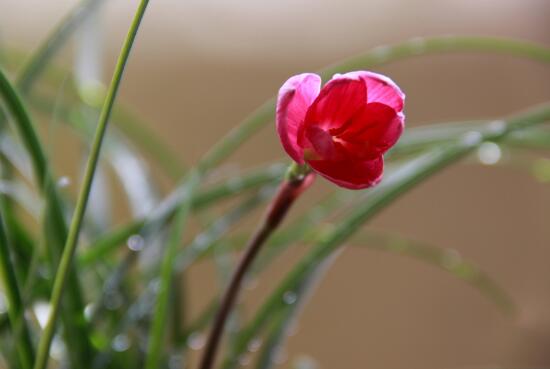
What to do when Lycoris radiata gets pests? Spray dichlorvos to control the planthopper
Lycoris radiata, from the name you would think it is a leek, but it is actually a beautiful potted plant loved by many people. In daily life, many people grow Lycoris radiata, but during cultivation, due to improper care, Lycoris radiata can suffer from pest and disease damage, which affects its ornamental value. So what should you do when Lycoris radiata gets pests?
-
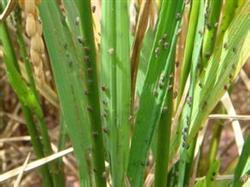
Control Methods for the Brown Planthopper Infestation in Rice
The brown planthopper, also known as the brown rice planthopper, is commonly called ascarid worm, soft-shelled ascarid, yóu worm, and midge. Scientific name Nilaparvata lugens (Stdl), order Homoptera, family Delphacidae. The brown planthopper is one of the major pests of rice in China, causing damage in all major rice-growing regions across the country, north and south, and every year it occurs and causes damage mixed with the white-backed planthopper. The two planthoppers...
-
Occurrence Characteristics of Rice Planthoppers and Control Strategies
Baohe Township is located in the southwest of Jing County and belongs to a hilly area. The township has 9144 mu of cultivated land, including 7813 mu of paddy fields, and is a typical mountainous agricultural township. Rice planthoppers are a frequent pest that seriously damages rice in our township and cause losses of varying degrees every year. Especially in the past 2 years, due to the influence of a series of factors such as climate, rice production...
-
Occurrence of Rice Blast and Rice Planthopper and Their Control Methods
I. OccurrenceRice blast: Rice leaf blast has now appeared in Helan, Qingtongxia and other places. The first appearance date was June 13, about 10 days earlier than last year. Especially after the rainfall on July 7 and 12, the field humidity was relatively high, which was very favorable for the development of leaf blast. A recent general survey in Qingtongxia showed an average diseased field rate of 16.7%, a diseased plant rate of 2.2%, and a diseased leaf rate of 0.68%. In Helan, it occurred sporadically in some drill-seeded fields. Ear-neck blast will appear at the end of July and the beginning of August. The meteorological forecast shows that in August the temperature across the region will be relatively high and precipitation in the irrigation area will be relatively low, which is unfavorable for the occurrence and development of ear-neck blast. It is expected that ear-neck blast will generally occur at a mild-to-moderate level, with moderate to severe occurrence in fields where large areas of susceptible varieties are planted in some localities. Even so, all rice-growing counties still must not take it lightly and should strengthen monitoring. For fields with disease centers, farmers should immediately be organized to spray pesticides to block the disease centers and control the spread of fungal spores. In mid- and late July, general control should be carried out in fields where leaf blast has already occurred and in fields with high density and vigorous growth, to control the development of leaf blast and prevent the occurrence of ear blast. In early and mid-August, fields where ear-neck blast has already occurred should be sprayed promptly to control the spread of the disease. Rice planthopper: A survey in Wuzhong on July 10 found a 42% insect-hole rate; in 50 sweep-net passes, there were 32 adult brown-backed planthoppers, 10 white-backed planthoppers, 37 long-winged forms, and 5 short-winged forms. There were 60 white-backed planthopper nymphs and 151 brown-backed planthopper nymphs. A survey in Qingtongxia on July 10 found 24 insects per 100 hills.
-
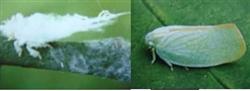
How to control the white moth planthopper and the mealybug in longan orchards
Both the white moth planthopper and the mealybug belong to the order Homoptera, the former to the family Flatidae and the latter to the family Pseudococcidae, and they mainly damage fruit trees such as citrus, longan, lychee and mango. In the past, the populations of these pests were often naturally controlled by large numbers of natural enemies and rarely reached the level of economic loss. In recent years, because some longan orchards in our region have been extensively managed, ...
-
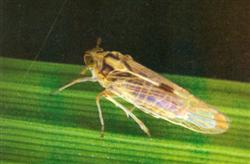
How can rice planthoppers be controlled effectively?
How are rice planthoppers best controlled? What harm do rice planthoppers do to rice? Please provide an introduction. Harm of rice planthoppers to rice: Rice planthoppers are a frequently occurring pest that seriously harms rice. In the early stage of damage, many irregular brown spots appear on the stems; when the damage is severe, the whole plant withers and gradually spreads into patches; during the booting stage of rice...
-

Rice planthopper outbreaks: how to apply pesticide more effectively?
Summary: When rice planthoppers are severe, timely chemical control is the only option. Rice planthoppers are one of the pests and diseases in rice, and the pests reproduce rapidly, with a tendency toward outbreaks. Therefore, the control of rice planthoppers is definitely not something that can be solved by pesticide alone...
-
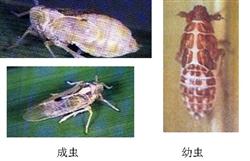
How to control the brown planthopper and white-backed planthopper in rice?
How to control the brown planthopper and white-backed planthopper in rice? Please provide an explanation of the methods. The brown planthopper has occurred at level 5 for two consecutive years, with strong pesticide resistance, while the white-backed planthopper has occurred at levels 3 to 4 for many consecutive years; the main factors affecting their occurrence are the amount of immigration and the summer-autumn climate conditions. In the winter of 2006, the brown planthopper broke out massively in the rice-growing areas of Vietnam, indicating that this...
-
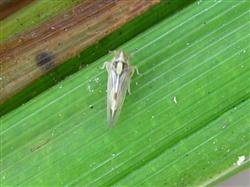
How to control rice planthoppers? A detailed guide to practical methods
How do you control rice planthoppers? Please provide an introduction to control methods. To control rice planthoppers, you can refer to the following methods: 1. Plant at a reasonable density, improve the field microclimate, and increase the rice plant's disease resistance. 2. Fertilize reasonably, control nitrogen fertilizer, increase phosphorus and potassium fertilizer, and apply topdressing skillfully, so that the rice grows and develops early and quickly,...
-
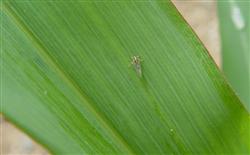
What pesticide should be used to control the small brown planthopper at the rice heading stage?
What pesticide should be used to spray for the small brown planthopper at the rice heading stage? Please note that for the small brown planthopper at the rice heading stage, the following pesticides can be used for reference: the small brown planthopper not only transmits the virus and causes viral diseases such as rice stripe virus disease, but also concentrates on the panicles to cause damage during the heading stage of late rice. The experiment set up per mu with 40% chlorpyrifos emulsifiable concentrate 100 ml, 10% nitenpyram aqueous solution 3...
条件筛选