-
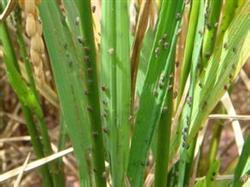
Control Methods for the Brown Planthopper Infestation in Rice
The brown planthopper, also known as the brown rice planthopper, is commonly called ascarid worm, soft-shelled ascarid, yóu worm, and midge. Scientific name Nilaparvata lugens (Stdl), order Homoptera, family Delphacidae. The brown planthopper is one of the major pests of rice in China, causing damage in all major rice-growing regions across the country, north and south, and every year it occurs and causes damage mixed with the white-backed planthopper. The two planthoppers...
-

Identification and Control Methods for the White-backed Planthopper on Rice
Hosts include rice, wild rice, corn, barley, wheat, sugarcane, sorghum, barnyard grass, and Kentucky bluegrass. The damage characteristics are the same as those of the brown planthopper. Morphological features: The macropterous male is 3.2-3.8mm long, pale yellow, with dark brown spots. The top of the head protrudes forward; on the outer side of the lateral ridges of the pronotum and mesonotum, behind the compound eyes, there is a crescent-shaped dark brown spot; the lateral areas of the mesonotum are dark brown with a yellow longitudinal band in the middle; the forewings are semi-transparent with brownish halo spots at the tips; the wing veins, face, thorax, and ventral surface of the abdomen are dark brown. The macropterous female is 4-4
-
Fuyang's stretcher-type high-pressure sprayers achieve remarkable results in controlling brown planthopper
This year is the most severe year for late rice brown planthopper infestation in Fuyang City in more than a decade. Doing a good job in controlling late rice brown planthopper concerns food production security, farmers' income growth and rural social stability. Government departments at all levels in Fuyang City attach great importance to this, truly treating the control of late rice brown planthopper as the top priority in current agriculture and rural work, and making concerted efforts to fight this battle against brown planthopper. The Fuyang City Agricultural Machinery Extension Station introduced and promoted a new type of stretcher-type high-pressure sprayer that had once made great contributions to increasing the yield and income of Dongqiao Chinese torreya (Torreya grandis), and now it has once again rendered outstanding service in brown planthopper control.
-
What are the control methods for the white-backed planthopper on rice?
Scientific name Sogatella furcifera (Horvath), belonging to the order Homoptera, family Delphacidae. Distributed in the water bamboo and rice-growing areas of China. Hosts include rice, water bamboo, corn, barley, wheat, sugarcane, sorghum, barnyardgrass, bluegrass, and others. Damage characteristics are the same as those of the brown planthopper. Morphological features: macropterous male body length 3.2-3.8 mm, light yellow, with dark brown spots. Vertex projecting forward; on the outer side of the lateral carinae of the pronotum and mesonotum, behind the compound eyes, there is 1 crescent-shaped dark brown spot; the lateral area of the mesonotum is dark brown
-
Which varieties can be used to control the white-backed planthopper in rice?
To control the white-backed planthopper in rice, the varieties that can be used are: (1) Buprofezin. The recommended dosage is 7.5-12.5 grams of active ingredient per mu. The key application technique is: spray at the early outbreak stage of the brown planthopper, and it is best to maintain a water layer in the field when applying. (2) Imidacloprid. The recommended dosage is 1-2 grams of active ingredient per mu. The key application technique is: spray at the early outbreak stage of the brown planthopper.
-
Control recommendations for the fourth generation of white-backed planthopper in rice issued, please carry out timely prevention and control
For the pesticide, use 40% chlorpyrifos (Xinnongbao, Saiben) 100 ml/mu plus 25% buprofezin (Puhsiling) 50 g/mu plus 5% jinggangmycin 200 ml/mu (or 30% Aimiao 15 ml/mu), mix with 30 kg of water for fine spraying.
-
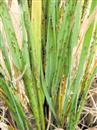
Occurrence Characteristics of Rice Planthoppers and Control Strategies
Baohe Township is located in the southwest of Jing County and belongs to a hilly area. The township has 9144 mu of cultivated land, including 7813 mu of paddy fields, and is a typical mountainous agricultural township. Rice planthoppers are a frequent pest that seriously damages rice in our township and cause losses of varying degrees every year. Especially in the past 2 years, due to the influence of a series of factors such as climate, rice production...
-
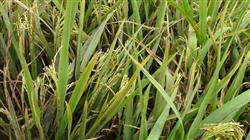
Occurrence of Rice Blast and Rice Planthopper and Their Control Methods
I. OccurrenceRice blast: Rice leaf blast has now appeared in Helan, Qingtongxia and other places. The first appearance date was June 13, about 10 days earlier than last year. Especially after the rainfall on July 7 and 12, the field humidity was relatively high, which was very favorable for the development of leaf blast. A recent general survey in Qingtongxia showed an average diseased field rate of 16.7%, a diseased plant rate of 2.2%, and a diseased leaf rate of 0.68%. In Helan, it occurred sporadically in some drill-seeded fields. Ear-neck blast will appear at the end of July and the beginning of August. The meteorological forecast shows that in August the temperature across the region will be relatively high and precipitation in the irrigation area will be relatively low, which is unfavorable for the occurrence and development of ear-neck blast. It is expected that ear-neck blast will generally occur at a mild-to-moderate level, with moderate to severe occurrence in fields where large areas of susceptible varieties are planted in some localities. Even so, all rice-growing counties still must not take it lightly and should strengthen monitoring. For fields with disease centers, farmers should immediately be organized to spray pesticides to block the disease centers and control the spread of fungal spores. In mid- and late July, general control should be carried out in fields where leaf blast has already occurred and in fields with high density and vigorous growth, to control the development of leaf blast and prevent the occurrence of ear blast. In early and mid-August, fields where ear-neck blast has already occurred should be sprayed promptly to control the spread of the disease. Rice planthopper: A survey in Wuzhong on July 10 found a 42% insect-hole rate; in 50 sweep-net passes, there were 32 adult brown-backed planthoppers, 10 white-backed planthoppers, 37 long-winged forms, and 5 short-winged forms. There were 60 white-backed planthopper nymphs and 151 brown-backed planthopper nymphs. A survey in Qingtongxia on July 10 found 24 insects per 100 hills.
-
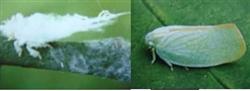
How to control the white moth planthopper and the mealybug in longan orchards
Both the white moth planthopper and the mealybug belong to the order Homoptera, the former to the family Flatidae and the latter to the family Pseudococcidae, and they mainly damage fruit trees such as citrus, longan, lychee and mango. In the past, the populations of these pests were often naturally controlled by large numbers of natural enemies and rarely reached the level of economic loss. In recent years, because some longan orchards in our region have been extensively managed, ...
-
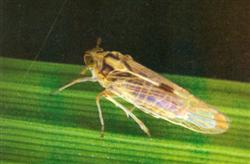
How can rice planthoppers be controlled effectively?
How are rice planthoppers best controlled? What harm do rice planthoppers do to rice? Please provide an introduction. Harm of rice planthoppers to rice: Rice planthoppers are a frequently occurring pest that seriously harms rice. In the early stage of damage, many irregular brown spots appear on the stems; when the damage is severe, the whole plant withers and gradually spreads into patches; during the booting stage of rice...
条件筛选