How can rice planthoppers be controlled effectively?
How are rice planthoppers best controlled? What harm do rice planthoppers do to rice? Please provide an introduction. Harm of rice planthoppers to rice: Rice planthoppers are a frequently occurring pest that seriously harms rice. In the early stage of damage, many irregular brown spots appear on the stems; when the damage is severe, the whole plant withers and gradually spreads into patches; during the booting stage of rice...
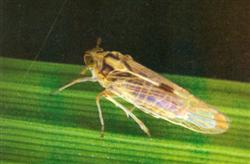 How are rice planthoppers best controlled? What harm do rice planthoppers do to rice? Please provide an introduction.
Harm of rice planthoppers to rice:
Rice planthoppers are a frequently occurring pest that seriously harms rice. In the early stage of damage, many irregular brown spots appear on the stems; when the damage is severe, the whole plant withers and gradually spreads into patches. If rice is damaged at the booting stage, it cannot head; if damaged after heading, the plumpness of the grain is affected, the 1000-grain weight decreases, and the rate of empty grains is high.
Occurrence period of rice planthoppers:
Generally, rice planthoppers can occur from the early rice seedling bed to early October. Early rice generally has 2 nymph peaks; the 1st appears from late May to early June;
the 2nd appears from late June to early July; for middle rice, the 1st nymph peak appears from mid-to-late June to early July, and the 2nd appears from mid-to-late July to early-to-mid August; for late rice, the 1st nymph peak appears from mid-to-late August to late September, and the 2nd appears from mid-to-late September to early October. Generally, after double-cropping late rice is transplanted, which is exactly from late July to early August, the number of rice planthoppers increases abnormally and large-scale control is needed.
The main damage generation peak is dominated by the white-backed planthopper, with the white-backed planthopper accounting for more than 70% of the total insect population. In the early stage of late rice, the white-backed planthopper is dominant, after which the proportion of the brown planthopper rises, reaching as high as 70% of the total planthopper population.
Causes of rice planthopper outbreaks:
1. Climatic factors---In mid-to-late August, the average temperature was 2-3°C lower than in normal years, and in mid-to-late September the temperature was higher than in previous years. At this time, rice was exactly at the peak tillering stage to the booting stage, with abundant food conditions, and combined with the hot and humid climate, this was very favorable for the occurrence and damage of this pest.
2. Daily control factors---When farmers control other pests such as the striped stem borer, they also inhibit the increase of rice planthoppers to a certain extent; on the other hand, because farmers are relatively independent and scattered, differences in the types and frequency of pesticide use also affect rice planthoppers.
Control methods for rice planthoppers:
1. Rice variety control method---Choose hybrid rice combinations such as Weiyou 191, II You 6078, and Guofeng No. 1, which play a role in controlling rice planthopper damage with twice the result for half the effort.
2. Fertilization method---Pay attention to the rational application of nitrogen, phosphorus, and potassium, apply base fertilizer heavily, apply topdressing early, control excessive vegetative growth and lodging of seedlings, improve the insect resistance of rice, and create a paddy field environment unfavorable to the occurrence of rice planthoppers.
3. Method of eliminating overwintering insect sources---The eggs of this pest overwinter in the stems of gramineous weeds beside fields, ditches, and ponds. In winter, combine with manure accumulation and remove weeds beside fields and ponds to eliminate overwintering insect sources.
4. Method of using natural enemies---Reduce the use of pesticides in the early stage of rice fields and try not to use chemical pesticides that are harmful to natural enemies.
5. Pesticide control method---When applying pesticides, the water volume must be sufficient to ensure that the pesticide solution reaches the lower part of the rice plants, and maintain a shallow water layer of about 6 cm in the field to improve the control effect. Generally, low-toxicity and low-residue pesticides such as pymetrozine or Zhuang'ai are used.
Click to get more rice cultivation techniques
Click to get more food crop cultivation techniques