What to do when Lycoris radiata gets pests? Spray dichlorvos to control the planthopper
Lycoris radiata, from the name you would think it is a leek, but it is actually a beautiful potted plant loved by many people. In daily life, many people grow Lycoris radiata, but during cultivation, due to improper care, Lycoris radiata can suffer from pest and disease damage, which affects its ornamental value. So what should you do when Lycoris radiata gets pests? Below are 4 common pests and diseases of Lycoris radiata, along with control methods. Let's take a look together.
1. Lycoris radiata gets pests, spray with pesticide
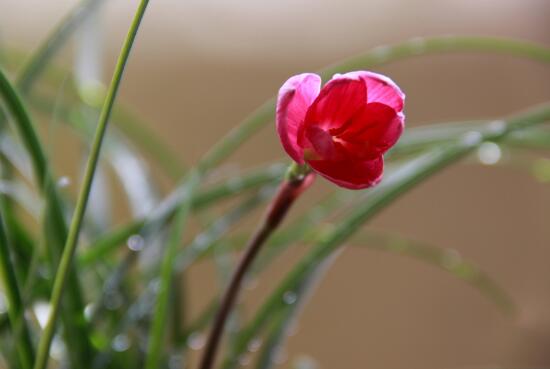
The beauty of Lycoris radiata lies in its beautiful flower shape and bright flower colors. However, because most people growing it are beginners, they do not follow the proper cultivation methods for Lycoris radiata, and as a result pests and diseases appear. As for what to do when Lycoris radiata gets pests, we first need to identify the pest, then deal with it accordingly. For this, the editor has summarized 4 common pests and diseases of Lycoris radiata, along with control methods. Let's continue reading.
2. Pest and disease control for Lycoris radiata
1. Planthopper
In daily life, many people grow Lycoris radiata. But during cultivation, quite a few flower lovers find that their Lycoris radiata has small white insects that look like cotton on it, and these are planthoppers. This pest mainly sucks the sap from branches and tender tips, causing poor plant growth.
Control method: when there are relatively few planthoppers, they can be caught by hand; when there are many pests, spray with 80% dichlorvos at 1000 times dilution for control. It is worth noting that adult planthoppers have strong jumping ability and easily spread to surrounding areas, so flower lovers should carry out coordinated control.
2. Leaf spot disease
When indoor temperatures fluctuate greatly in a short period, or when too much water is given during the dormant period, Lycoris radiata is prone to leaf spot disease. Symptoms: in the early stage of the disease, many small brown spots appear on the leaves of Lycoris radiata, and in severe cases the spots spread across the entire leaf.
Control method: promptly remove diseased leaves and destroy them in a concentrated way to reduce the source of disease; during the disease period, spray with 65% zineb at 500 times dilution or 25% myclobutanil emulsifiable concentrate at 800 times dilution for control. Spraying 1 to 2 times every 10 to 15 days can be effective. Note that when spraying, alternate the two agents to avoid the pathogen developing resistance.
3. Dry rot
Dry rot, also known as wilt disease, is one of the common diseases of Lycoris radiata. It mainly harms the bulb, and also harms leaves, flowers, and roots. When the bulb is affected, water-soaked reddish-brown to dark brown small spots appear on the surface. In severe cases, the entire bulb turns dark brown and dry-rots.
Control method: after discovering the above symptoms, promptly spray with 50% zineb solution, once every 7 days, 3 to 5 times is sufficient. When fertilizing normally, pay attention to controlling the nitrogen content and apply more phosphorus and potassium fertilizer to enhance the plant's disease resistance.
4. Spot disease
In the pest and disease control of Lycoris radiata, spot disease is also something to watch out for. It mainly harms leaves and can also damage tender branches. Symptoms: in the early stage, nearly round brown water-soaked small spots appear on the leaf surface of Lycoris radiata, which later expand into oval to irregular shapes; in severe cases, the lesions merge, causing localized drying and death of the leaves.
Control method: when the above symptoms occur, immediately remove the diseased leaves to reduce the source of disease; then spray once with 65% zineb wettable powder at 500 times dilution to prevent spread.
Overall, Lycoris radiata is still quite easy to grow, but ensuring it is not affected by pests and diseases is not something everyone can do. So for its healthy growth, everyone should remember the above pest and disease control methods for Lycoris radiata, so that when pests and diseases really appear, you can control them immediately. Only then can your Lycoris radiata bloom with beautiful flowers~
What to do when Medinilla gets pests? Pest and disease control for Medinilla / 4 pests and 1 disease
When growing Medinilla, the last thing we want to encounter is pests and diseases. Such problems are extremely harmful to the plant, not only affecting its beautiful form, but in severe cases causing the plant to wither and die. So what should you do when Medinilla gets pests? How should pest and disease control for Medinilla be done? Below the editor will walk everyone through it.
1. What to do when Medinilla gets pests, find the cause
To know what to do when Medinilla gets pests, we first need to understand what kind of pest it is, and only then can we deal with it in a targeted way, because the control methods for different pests and diseases are also different. Detailed information is provided below. Friends troubled by this can take a look.
2. Pest and disease control for Medinilla
1. Noctuid moth
The noctuid moth is a phytophagous pest of the order Lepidoptera. It mainly harms the leaves and flowers of Medinilla. Its larvae continuously chew the leaves and flowers, causing many holes to appear on them, which greatly affects the ornamental value, and in severe cases can cause the plant to wither and die.
Control method: for this pest and disease of Medinilla, we can use 2.5% trichlorfon powder or 1.5% parathion (1605) powder to spray and kill them directly.
2. Red spider mite
Among the pests and diseases of Medinilla, red spider mite is one of the more common ones. Its peak period is every summer, so everyone must pay extra attention at this time. When this pest appears, the plant's leaves gradually turn yellow and whitish. If not dealt with for a long time, it can also cause the plant to wither.
Control method: when dealing with this red spider mite pest, we can directly use 40% dicofol emulsifiable concentrate at 1000 to 1500 times dilution for spraying. Generally, three consecutive sprays can completely kill this pest.
3. Scale insect
Scale insects are insects of the order Homoptera and are harmful to many plants, and Medinilla is no exception. They spend their whole lives clinging to the branches, leaves, and fruits of the plant, causing leaves to turn yellow and the plant to weaken, and in severe cases causing the plant to wither and die.
Control method: when dealing with this pest and disease of Medinilla, the most direct method is to use 40% omethoate at 1000 times dilution or 2.5% deltamethrin at 3000 times dilution to spray and kill the pests.
4. Aphid
Aphids are a relatively common phytophagous insect, with more than 4000 species worldwide. Their body length is often less than 10 mm, making them relatively hard to spot. They leave honeydew on the plant's leaves and suck the leaf sap, causing Medinilla leaves to wither, turn yellow, and lose their luster, and can also cause sooty mold and other diseases.
Control method: for this pest and disease of Medinilla, we can directly use 2.5% fenpropathrin emulsifiable concentrate at 3000 times dilution to spray and kill them.
5. Soft rot
Among the pests and diseases of Medinilla, soft rot is a relatively common disease. When it occurs, many water-soaked lesions appear at the root of the plant, and over time the rhizome gradually rots and gives off waves of foul odor, eventually causing it to gradually rot to death.
Control method: when controlling this disease, we can use 38% oxadixyl and copper bactericide diluted at 1000 times for root drenching. Generally, apply once a week, and after 2 to 3 times it can be controlled.
What to do when Zamioculcas zamiifolia gets pests? Pest and disease control for Zamioculcas zamiifolia / 1 pest and 3 diseases
When growing Zamioculcas zamiifolia, the last thing we want to encounter is problems like pests and diseases. Such problems are extremely harmful to the plant, not only affecting its ornamental value, but in severe cases causing it to gradually wither and die. So what should you do when Zamioculcas zamiifolia gets pests? And how should pest and disease control for Zamioculcas zamiifolia be done? Below the editor will walk everyone through it.
1. What to do when Zamioculcas zamiifolia gets pests, find the cause
To understand what to do when Zamioculcas zamiifolia gets pests, we first need to know what kind of pest it is, so that we can deal with it in a targeted way, because the control methods for each pest and disease are different. Specific details are described in detail below. Let's take a look.
2. Pest and disease control for Zamioculcas zamiifolia
1. Scale insect
Scale insects generally appear in poorly ventilated, dim environments. They mainly harm the leaves, branches, and fruits of Zamioculcas zamiifolia. At the beginning, the leaves show loss of green and yellowing, and over time the plant gradually withers and dies.
Control method: when controlling this pest and disease of Zamioculcas zamiifolia, if there are few pests, we can use transparent tape to stick off the pests, then disinfect the plant. If there are many pests, we can use 20% buprofezin wettable powder at 1000 times dilution for direct spraying.
2. Southern blight
Southern blight is a disease caused by fungi. It mainly harms the seedlings and rhizome parts of the plant. When it occurs, water-soaked yellowish-brown wet rot appears on the affected parts, and the surface becomes covered with white silky mycelium, which gradually spreads, ultimately causing the entire Zamioculcas zamiifolia plant to wilt and die.
Control method: when dealing with this pest and disease of Zamioculcas zamiifolia, we can use 25% carboxin wettable powder 50 g, add 50 kg of water to irrigate the root of the diseased plant, generally once every 10 days. After 1 to 2 times it can recover.
3. Brown spot disease
This disease mainly harms the plant's leaves. As its name suggests, when it occurs, many brown lesions appear on the leaves, and over time they gradually spread, ultimately causing the plant to gradually wither and die.
Control method: for this pest and disease of Zamioculcas zamiifolia, we can use 40% chlorothalonil suspension concentrate at 500 times dilution to spray the diseased plant. Generally, spray once every 10 to 12 days, and after about 3 to 4 times it can recover.
4. Root rot
Root rot is a disease with a relatively high incidence in spring, and we must pay extra attention at this time. This disease mainly threatens the roots of Zamioculcas zamiifolia, causing the roots to rot, gradually weakening their ability to absorb water and nutrients, and ultimately causing the whole plant to die.
Control method: when controlling this pest and disease of Zamioculcas zamiifolia, we can use metalaxyl and hymexazol or copper preparations to carry out root drenching treatment on the diseased plant.