-
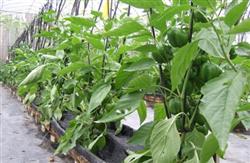
How to promote color change in bell peppers? Introduction to common methods
What methods are there to promote color change in bell peppers? Please give guidance. There are four methods to promote color change in bell peppers: 1. Through topdressing, supplement potassium fertilizer and boron fertilizer, and do not use excessive nitrogen fertilizer. Usually the amount of potassium fertilizer is about 1.5 times the amount of nitrogen fertilizer. This promotes color change in bell peppers and gives good color. 2. Improve light conditions and avoid insufficient light...
-
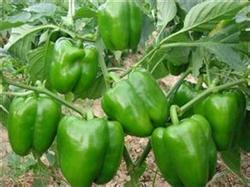
What are the control methods for sweet pepper plant death
What controls sweet pepper plant death? Please introduce the control methods. 1. Main causes of sweet pepper plant death: First, the soil temperature is too high within 0-15 cm of the topsoil near the root system; second, the soil moisture is too heavy within 0-20 cm of the topsoil near the root system. As long as one condition is met, a small number of plants will die; if both...
-
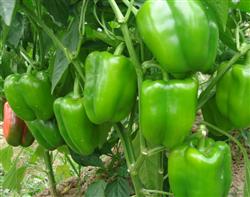
How to manage bell peppers during the color-changing stage? Key technical points explained in detail
How should bell peppers be managed during the color-changing stage? Please give guidance. Bell pepper management during the color-changing stage can refer to the following methods: First, pay attention to ensuring a reasonable temperature. Bell peppers have relatively strict temperature requirements during the color-changing stage. When the daytime greenhouse temperature is 28-30°C, it is most favorable for bell pepper color change. However, recently the temperature inside the greenhouse has often exceeded 40°C, causing bell...
-
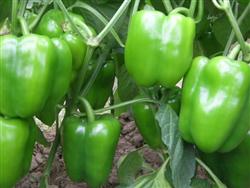
How to Increase the Fruit-Setting Rate of Greenhouse Bell Peppers
How can you increase the fruit-setting rate when growing bell peppers in a greenhouse? Please give guidance. During the flowering and fruiting stage, greenhouse bell peppers often encounter cloudy, snowy, and low-temperature weather, which causes severe flower and fruit drop in the greenhouse and affects yield and income. Here are several methods to increase the fruit-setting rate of greenhouse bell peppers: 1. Improve light conditions and raise the temperature. When encountering cloudy...
-
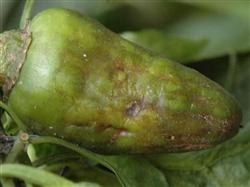
What diseases need to be prevented and controlled when growing sweet peppers?
What diseases need to be prevented and controlled when growing sweet peppers? Please give an introduction. When growing sweet peppers, the following diseases need to be prevented and controlled: Phytophthora blight. In the early stage of the disease, fumigate each mu with 110 g to 180 g of 45% chlorothalonil smoke agent, once every 7 days, 3 to 4 times depending on the severity of the disease, or dust each mu with 1 kg of 5% chlorothalonil dust, once every 7 days,...
-
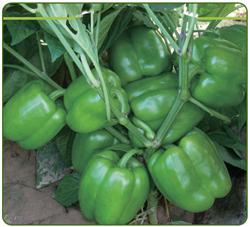
How should field management be carried out before harvesting bell peppers?
How should bell peppers be managed before harvest? Please give an introduction. Growers who plant bell peppers all know that the second crop of bell peppers is especially important in the management of the entire growth period, because this period is the key period that determines the level of income. At present, most of the first crop of bell peppers has already been harvested. How can the yield and quality of the second crop be ensured? The reporter believes...
-
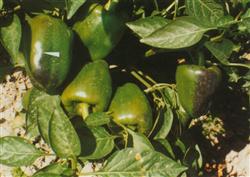
What are the common types of physiological diseases in sweet peppers?
What are the common physiological diseases of sweet peppers? Please give an introduction. The common physiological diseases of sweet peppers are: 1. Sunscald. 1. Symptoms. The cause of this disease is direct strong sunlight, and symptoms appear only on the sun-facing side of the fruit. In the early stage, the affected part fades in color, becomes slightly wrinkled, and appears grayish-white or slightly yellow. The flesh of the affected part loses water and becomes thin,...
-
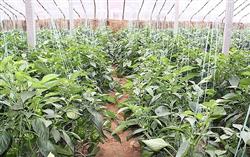
How to Fertilize Bell Peppers to Increase Yield? Practical Tips Shared
How can bell peppers be fertilized to increase yield? Please explain the fertilization methods. Bell peppers have a long growing period, an underdeveloped root system, few roots, and shallow soil penetration, and they are neither drought-tolerant nor waterlogging-tolerant. Their fertilizer requirement is greater than that of tomatoes and eggplants, and they have a strong tolerance for fertilizer. The fertilizer requirement characteristics of bell peppers are the highest potassium uptake, followed by nitrogen, and the lowest phosphorus. In vegetables, bell peppers...
-
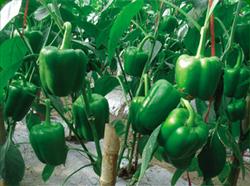
How to fertilize sweet peppers to increase yield? These fertilization methods you need to master
How should sweet peppers be fertilized to increase yield? Please give an introduction. Sweet peppers have a long growth period, an underdeveloped root system, few roots, and shallow soil penetration; they are neither drought-tolerant nor waterlogging-tolerant. Their fertilizer demand is greater than that of tomatoes and eggplants, and they have a strong tolerance for fertilizer. The fertilizer demand characteristics of sweet peppers are: the highest potassium uptake, followed by nitrogen, and the lowest phosphorus. Among vegetables, sweet peppers...
-
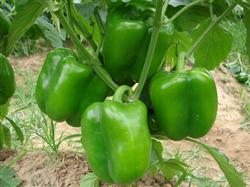
Detailed Explanation of Sweet Pepper Pruning Methods and Technical Points
How to prune sweet peppers properly? Please explain the reasons. For late-autumn cultivation of sweet peppers, if moderate pruning is carried out, old plants can be renewed and rejuvenated, and another peak fruiting period will occur in autumn, thereby increasing the per-mu yield of sweet peppers. The specific method is: after the peak fruiting period, around late July to early August, cut the second or third...
条件筛选