How to manage bell peppers during the color-changing stage? Key technical points explained in detail
How should bell peppers be managed during the color-changing stage? Please give guidance. Bell pepper management during the color-changing stage can refer to the following methods: First, pay attention to ensuring a reasonable temperature. Bell peppers have relatively strict temperature requirements during the color-changing stage. When the daytime greenhouse temperature is 28-30°C, it is most favorable for bell pepper color change. However, recently the temperature inside the greenhouse has often exceeded 40°C, causing bell...
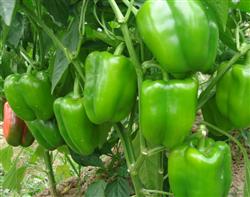
How should bell peppers be managed during the color-changing stage? Please give guidance
Bell pepper management during the color-changing stage can refer to the following methods:
First, pay attention to ensuring a reasonable temperature. Bell peppers have relatively strict temperature requirements during the color-changing stage. When the daytime greenhouse temperature is 28-30°C, it is most favorable for bell pepper color change. However, recently the temperature inside the greenhouse has often exceeded 40°C, making it difficult for bell pepper pigments to form, resulting in incorrect color and poor brightness after the bell peppers change color. Vegetable growers should increase ventilation, splash mud slurry, spray cooling agents, set up shade nets, etc., to lower the temperature inside the greenhouse and ensure normal color change. When opening the side vents, vegetable growers should note that a 40-50 cm wide film should first be installed around the perimeter of the arched greenhouse to prevent sweeping wind inside the greenhouse, which can easily cause rough skin on bell peppers during the color-changing stage.
Second, do not remove the leaves around bell peppers that are changing color. Because the light is strong, the fruit is easily damaged when exposed to direct sunlight, and may even develop sunscald fruit. When summer light is strong, bell peppers can meet their color-changing needs using only scattered light, so vegetable growers should appropriately retain leaves on bell peppers in the color-changing stage to prevent sunscald fruit.
Third, supplement water and fertilizer in time. Many vegetable growers believe that watering will affect bell pepper color change, so they reduce the number of waterings. This causes insufficient water and nutrient supply to the plants, forcing the bell peppers to change color faster, but the fruit color becomes darker, the peel becomes thinner, and yield decreases. Vegetable growers should water reasonably according to the growth condition of the bell peppers (watering can also lower the temperature inside the greenhouse), increase the amount of potassium fertilizer used, and promote normal color change of bell peppers. Vegetable growers can apply high-potassium fertilizer with water each time at 5-10 kg of Fangrun per mu.
Click to get more bell pepper cultivation techniques
Click to get more vegetable cultivation techniques