-
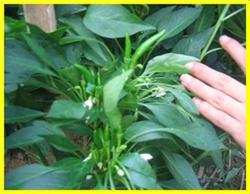
High-Efficiency Cultivation Technique for Multiple Cropping of Winter Lettuce Followed by Early Spring Peppers in Greenhouses
For lettuce, choose the disease-resistant, high-yielding, cold-tolerant lettuce variety Shuiguasi. Sow and raise seedlings in a small arch shed from late August to late September. After sowing, lower the temperature during the day by ventilating the shed film from the bottom and covering with a shade net; on rainy nights, cover the shed film properly. From pricking out to the seedling recovery stage, shade during the day to create an ambient temperature suitable for lettuce growth...
-
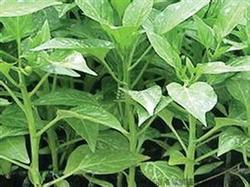
To grow strong pepper seedlings, you need to change your seedling-raising methods.
Using greenhouses to raise seedlings can advance the pepper marketing time and greatly increase economic returns. During the seedling-raising process, several key steps should not be overlooked: (1) Choose the seedling site well. Choose land that is high and dry, sunny, well-drained, not planted with the same crop repeatedly, and free of disease sources for raising seedlings. (2) Handle the seeds strictly. ...
-
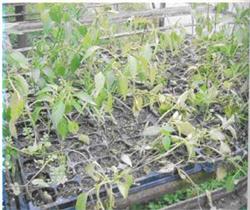
How to prevent and control pepper (bell pepper) seedling death
The problem of pepper plant death gives vegetable growers a real headache, especially in greenhouses with more than 3 years of continuous cropping, as there are not a few cases where plant death leads to reduced or total loss of yield. Right now is the critical period for raising and transplanting pepper seedlings, and it is also the key stage for preventing plant death. Preventing plant death at this key point is much more effective than drenching roots to prevent plant death during the full fruit stage...
-
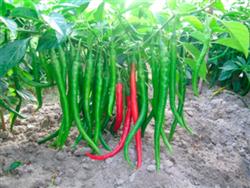
How to remedy herbicide damage in peppers?
Producing 1000 kg of peppers requires 5.2 kg of pure nitrogen, 1.2 kg of phosphorus pentoxide, and 6.5 kg of potassium chloride. Before planting, apply 5000 kg of high-quality farmyard manure and 50 kg of phosphate fertilizer per mu as a base fertilizer. Start the first topdressing at the early stage of pepper fruit enlargement to promote fruit swelling. Apply 15-18 kg of pure nitrogen and 18-20 kg of phosphate fertilizer per mu, ...
-

Catch a cold when the seasons change? Soak your feet in Sichuan pepper water to quickly drive away the chill
When the seasons are changing, many people catch colds easily. At times like this, you might want to try soaking Sichuan pepper in water to drive away the chill. Not only does the cold get better faster, but it also strengthens your body. And it is not just Sichuan pepper that can be used for foot soaks - ginger, vinegar and salt all work too, and their benefits are all...
-
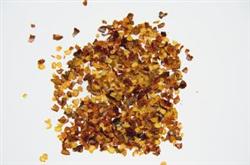
Pepper Seed Treatment by Chemical Soaking: Methods and Key Technical Points
Chemical soaking of seeds. To control pepper anthracnose and bacterial spot disease, pre-soak the seeds in clean water for 5-6 hours, then place them in a 1% copper sulfate solution (that is, 1 gram of copper sulfate mixed with 99 parts clean water) and soak for 5 minutes, then remove them, rinse with clean water, and proceed to sprouting; formalin (40% formaldehyde) at a 150-fold dilution can also be used to soak the seeds for 15 min...
-
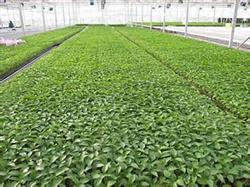
Pepper Fertilization Ratios Matter: The Right Balance Is Key
1. Seedbed selection. For raising pepper seedlings, choose loose soil on high, dry ground with good drainage, good ventilation and light, and rich organic matter. The soil should not have grown solanaceous vegetables within 1-2 years to prevent disease transmission. For seedling raising, reserve enough seedbed at a ratio of 1:20. Plow the seedbed soil 1 week before sowing, and apply high-efficiency compound fertilizer per mu...
-
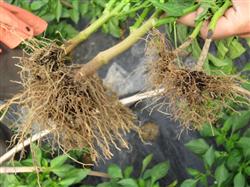
Three precautions when replanting peppers after dead plants
Recently, some vegetable growers came to the Qingzhou Denong Supermarket to report that the peppers they had just transplanted were dying off severely, and even the replanted pepper seedlings grew poorly and were prone to disease infection, causing further dead plants. The author observed in the vegetable growers' arched sheds and found that this situation was mainly caused by improper replanting methods. So how...
-
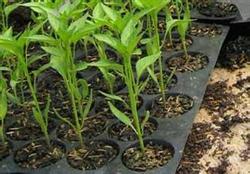
What to do when pepper seedling transplanting to control excessive growth goes wrong
Soilless cultivation for raising seedlings mainly means that instead of using soil and farmyard manure in the seedling tray as the seedling substrate, peat and vermiculite are mixed at a ratio of 3:1 and used as the seedling substrate. Put the mixed seedling substrate into the seedling trays, stack several seedling trays filled with the seedling substrate together, place a wooden board on top, press down with a little force,...
-
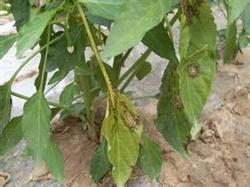
Detailed Guide to Identifying and Controlling Phytophthora Blight in Peppers
Control methods: 1. Phytophthora blight in peppers mainly damages leaves, fruits and stems, and is most likely to occur at the base of the stem. When the disease occurs at the seedling stage, infection mostly starts from the base of the stem; the affected part shows water-soaked soft rot, the lesion is dark green, and the plant lodges above the diseased part. Control methods: 1. Practice crop rotation and deep plowing to improve the soil, and combine...
条件筛选