Pepper Fertilization Ratios Matter: The Right Balance Is Key
1. Seedbed selection. For raising pepper seedlings, choose loose soil on high, dry ground with good drainage, good ventilation and light, and rich organic matter. The soil should not have grown solanaceous vegetables within 1-2 years to prevent disease transmission. For seedling raising, reserve enough seedbed at a ratio of 1:20. Plow the seedbed soil 1 week before sowing, and apply high-efficiency compound fertilizer per mu...
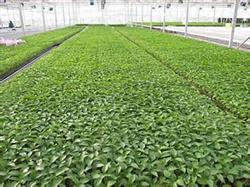 Peppers are a crop with a relatively high fertilizer demand. According to research, producing 2000 kg of peppers requires the absorption of 10.38-11.60 kg of nitrogen, 1.16-2.20 kg of phosphorus, and 12.92-14.80 kg of potassium. Experiments have shown that peppers should be fertilized with a moderate amount of more nitrogen, followed by potassium, while phosphorus can be applied sparingly. A fertilization plan with more nitrogen, medium potassium, and less phosphorus increased yield by 24.9% compared with equal ratios of nitrogen, phosphorus, and potassium, and by 26.8% compared with medium nitrogen, less phosphorus, and more potassium.
To obtain high pepper yields, it is generally recommended to apply 50-60 kg of nitrogen-phosphorus-potassium compound fertilizer per mu, about 50 kg of calcium magnesium phosphate fertilizer, 15-25 kg of urea, and 10-20 kg of potassium sulfate or potassium chloride (or 200 kg of plant ash). The specific amount of fertilizer should be increased or decreased according to soil fertility. Among these, calcium magnesium phosphate fertilizer is slow-release, has poor mobility in soil, and is easily fixed by soil, so it should all be used as base fertilizer and applied in concentrated furrows. Urea easily burns roots and is also easily lost, so it can only be used in small amounts (generally 5 kg/mu) as base fertilizer. Potassium fertilizer is also easily lost, and peppers absorb large amounts of potassium during the fruiting period; potassium fertilizer can promote fruit expansion, so potassium fertilizer is mainly used as a topdressing during the fruiting period. Compound fertilizer is mostly used as base fertilizer. If cultivating with plastic film mulching, more than 80% of the total amount should be used as base fertilizer; for clay soil with good fertilizer retention and no plastic film mulching, 50%-60% should be used as base fertilizer; for sandy soil prone to fertilizer loss, 30%-40% should be used as base fertilizer.
In addition to nitrogen, phosphorus, and potassium, peppers also need various nutrient elements. Applying farmyard manure gives relatively good results; if there is no farmyard manure, biological organic fertilizer can be purchased. If peppers are grown entirely with chemical fertilizers, in addition to conventional fertilization, foliar spraying is also needed, mainly to supplement the trace elements it needs, such as boron, zinc, iron, and copper.