Three precautions when replanting peppers after dead plants
Recently, some vegetable growers came to the Qingzhou Denong Supermarket to report that the peppers they had just transplanted were dying off severely, and even the replanted pepper seedlings grew poorly and were prone to disease infection, causing further dead plants. The author observed in the vegetable growers' arched sheds and found that this situation was mainly caused by improper replanting methods. So how...
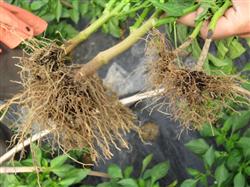
Recently, some vegetable growers came to the Qingzhou Denong Supermarket to report that the peppers they had just transplanted were dying off severely, and even the replanted pepper seedlings grew poorly and were prone to disease infection, causing further dead plants. The author observed in the vegetable growers' arched sheds and found that this situation was mainly caused by improper replanting methods.
So how can replanting be done to reduce the occurrence of dead plants?
First, the pepper seedlings to be replanted must be disinfected before transplanting. Amistar can be used together with chitosan-based products for root dipping, so that the solution forms a protective layer around the seedling roots and prevents infection by pathogens.
Second, do not replant the seedlings in the original planting holes. At the same time, use phosethyl-Al and carbendazim to disinfect the original planting holes where the peppers died, so as to prevent pathogens from spreading with water during later irrigation and infecting other seedlings.
Third, after transplanting, use drugs such as Previcur and hymexazol to drench the roots. The period 10-15 days after transplanting pepper seedlings is an important time for disease occurrence. Therefore, vegetable growers can drench the roots with the above drugs 7-10 days after transplanting peppers to prevent and control diseases in advance, thus reducing the probability of dead plants.
For greenhouses with only a small number of dead plants, there is no need to replant after the diseased plants are pulled out. Vegetable growers can instead leave 1-2 more branches on the peppers on both sides of the dead plants, thereby ensuring pepper yield.