-
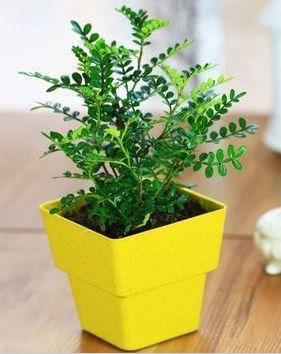
Tired of the usual green plants? Try something different with a pepperwood bonsai
?I wonder where everyone feels is the happiest place at home. If you ask Huahua, the happiest place is of course the kitchen! The first thing Huahua does every day when getting home is rush to the kitchen to make something tasty and treat...
-
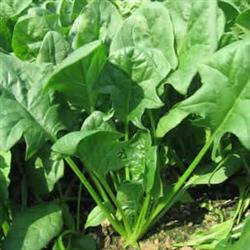
Key Techniques for Three-Dimensional Intercropping of Greenhouse Green Peppers, Loofah, and Cilantro
Summer spinach, also known as fu spinach, is difficult to cultivate and can only be grown on a small scale because it tends to bolt prematurely, and it also has the shortest leaf growth period of any crop in the year, resulting in unsatisfactory quality and yield, with pests and diseases hard to control. 1. Variety selection: It is advisable to choose varieties with strong drought resistance, heat tolerance, rapid growth, and low sensitivity to day length...
-

Soaking Your Feet in Sichuan Pepper and Ginger Water for a Week, and Your Body Changes This Much
When the seasons are changing, many people catch colds easily. At times like this, you might want to try soaking Sichuan pepper in water to drive out the cold. Not only does it help you get over a cold faster, it can also boost your overall health. And it's not just Sichuan pepper that works for foot soaks - ginger, vinegar and salt can all be used too, and each has different benefits...
-
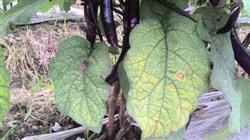
How to prevent and treat wilting and death in chili peppers and eggplants
For magnesium deficiency in eggplants, the first thing is to clarify what the symptoms of magnesium deficiency in eggplants are. The general characteristics are chlorosis and yellowing of the lower leaves, while the leaf veins remain green, and sometimes the leaves are also accompanied by orange-yellow, purple-red and other mixed colors. The difference from potassium deficiency is that magnesium deficiency chlorosis tends to become yellow-white or white; the difference from physiologically aging leaves is that with magnesium deficiency the leaf veins do not turn chlorotic,...
-
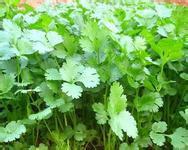
Detailed Explanation of the Intercropping Cultivation Technique for Chili Pepper, Loofah and Cilantro
By intercropping loofah and cilantro with chili pepper in greenhouses, greenhouse space can be used rationally, with a per-mu yield of 3000 kg of chili pepper, 1500-1800 kg of loofah and 550-600 kg of cilantro, giving considerable economic benefits. The cultivation technique is introduced as follows: 1. Variety selection. For chili pepper, choose the early-maturing superior varieties Wan Jiao No. 4 or Su Jiao No. 5...
-
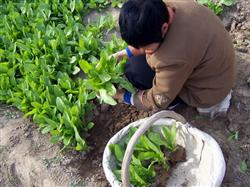
High-Efficiency Multiple Cropping Technique for Winter Lettuce and Early Spring Peppers in Greenhouses
1. Select good varieties: For greenhouse cultivation of early spring lettuce, it is advisable to choose early-maturing pointed-leaf varieties with strong cold resistance, such as Hefei pointed-leaf duck-egg lettuce and Beijing crucian carp lettuce. 2. Grow strong seedlings: Sow and raise seedlings in a greenhouse in mid-to-late January. Before sowing, first soak the seeds in clean water at 20°C for 3-4 hours, rub and wash them, then remove and drain the water, and put them into...
-
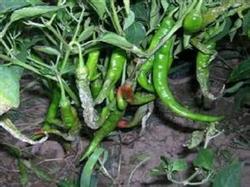
Why do a large number of rotten fruits appear when keeping peppers fresh on the living plant?
Recently, a large number of rotten fruits appeared in peppers stored by vegetable growers using the "living plant preservation" method. After in-depth investigation, the main causes were summarized. The greenhouse temperature was too high. After the beginning of winter, the weather had been relatively warm, and the temperature inside the small arched greenhouse was relatively high. Because after the pepper plants were pulled down and laid over, a layer of film was covered on top, at noon on sunny days the temperature under the film exceeded 25°C, ...
-
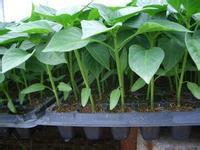
Detailed Explanation of Key Techniques for Raising Pepper Seedlings in Protected Cultivation
Seedling raising time and seedling stage. For spring cultivation of peppers in protected cultivation, sowing and seedling raising is generally carried out from January to February, with a seedling age of 90 to 110 days. Sow at the appropriate time according to the planting period. Seedling raising facilities. (1) High-efficiency energy-saving solar greenhouse; (2) Insulated improved solar seedbed; (3) Plastic greenhouse, small arch shed plus plastic film mulching and straw curtains. Seed...
-
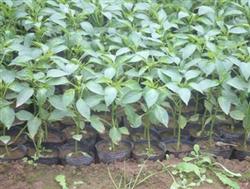
How to raise seedlings for spring-planted peppers? Key technical points explained
(1) Preparing the cold frame Select a plot with fertile soil, sheltered from the wind and facing the sun, where eggplants and tomatoes have not previously been grown, and build a cold frame. For each mu to be planted, raise seedlings using 150 grams of seed, and the cold frame should be more than 10 sq m. Apply plenty of base fertilizer, water heavily to build up soil moisture, and use a small amount of urea, phosphate fertilizer and active potassium fertilizer. Because the cold frame is sealed...
-
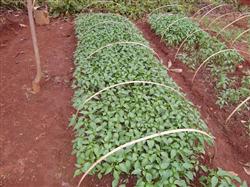
Detailed Explanation of Key Techniques for Raising Chili Pepper Seedlings in Spring
Site selection and bed preparation: Choose a plot of fertile land, sheltered from the wind and facing the sun, where eggplants and tomatoes have not been grown in the previous crop, and build a hotbed. For each mu planted, raise seedlings using 150 grams of seed. Scientific fertilization: Apply sufficient base fertilizer, irrigate heavily to build up soil moisture, and use a small amount of urea, phosphate fertilizer and active potassium fertilizer. Because the hotbed is sealed, do not apply...
条件筛选