-
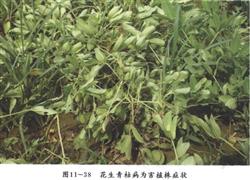
How to prevent and control peanut bacterial wilt? Understanding the patterns of occurrence is key
Peanut bacterial wilt, commonly known as "green wilt", "seedling death", "plague", and "vine death", is a major disease in peanut-growing areas. In ordinary plots, the disease incidence is 10%-25%, and in severely affected plots the incidence reaches over 50%. Peanut bacterial wilt is a typical vascular disease that can occur throughout the entire growth period of peanuts, but...
-
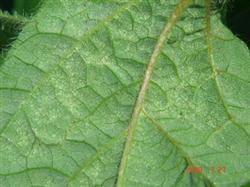
Occurrence Patterns and Control Methods of Soybean Red Spider Mites
Red spider mites is the collective name for red leaf mites, a composite population of several leaf mite species belonging to the family Tetranychidae. In Huachuan County, they occur to varying degrees every year, though these are generally light occurrence years. However, according to this year's surveys, due to the effects of recent high temperatures and drought, the damage caused by red spider mites to soybeans in Huachuan County has risen from a secondary position to a primary...
-
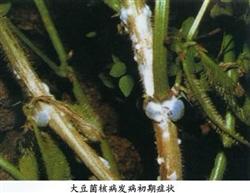
Occurrence Patterns and Control Methods of Soybean Sclerotinia Stem Rot
Soybean Sclerotinia stem rot is a common disease on soybean crops, mainly causing stalk rot, with pale white lesions, hollow stems containing black sclerotia, and easy breakage. In the past two years, soybean Sclerotinia stem rot has shown a trend of increasing severity year by year. Causes and characteristics: 1. Large number of sclerotia in the field. The pathogen of soybean Sclerotinia stem rot is a fungus...
-
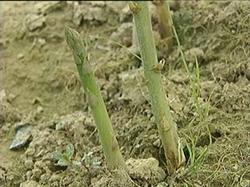
Occurrence Patterns and Control Methods of Asparagus Stem Rot
I. Symptom Characteristics Asparagus stem rot mainly affects young spears. Young spears may be infected as soon as they emerge from the soil. Water-soaked, irregular lesions appear on the young stems, expand around the stem, causing the stem tissue to disintegrate and rot, ultimately leading to the death of the young spears. Even if mildly affected plants do not die, their vigor is greatly reduced, the above-ground stems and leaves are weakened, the young stems are thin and weak, and the yield...
-
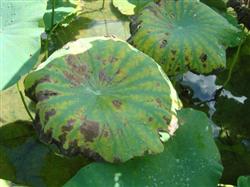
Occurrence Patterns and Control Methods of Lotus Root Brown Spot Disease
Brown spot disease is a major disease of lotus root, widely distributed, and can occur in spring, summer, and autumn. Generally, diseased plants account for 30%-50%, and in severe cases, the incidence rate can reach over 80%, significantly affecting lotus root yield and quality. 1. Symptoms This disease mainly affects the leaves and leaf stalks of lotus root. In the early stage of leaf infection, small brownish-green...
-

How to fertilize napa cabbage? Master the fertilization patterns and methods
Fertilization patterns and methods for napa cabbage
-
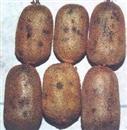
Occurrence Patterns and Control Methods of Kiwifruit Gray Mold
Kiwifruit gray mold mainly occurs during the flowering stage, young fruit stage and storage period of kiwifruit. In severe years, the incidence rate in orchards and during storage can reach more than 50%. Kiwifruit gray mold has become one of the main diseases affecting the healthy development of the kiwifruit industry. 1. Symptoms When young fruit (late May to early June) is affected, residual stamens and petals are densely covered with gray spores. At the initial stage, the fuzz on young fruit turns brown, the skin is infected, and in severe cases it can cause fruit drop. Contaminated stamens and petals attach to leaves and form concentric ring lesions centered on them; the lesions expand and leaves drop. If rain occurs, the disease develops more severely. After fruit is affected, gray-brown mycelium and spores form on the surface, followed by black sclerotia. During storage, fruit is easily infected by diseased fruit.
-
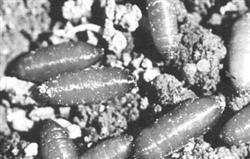
A Detailed Explanation of the Occurrence Patterns and Control Methods of Garlic Root Maggots
Root maggots is the collective term for the larval stage of Diptera pests that damage garlic and other crops. In recent years, the occurrence of garlic root maggots has shown a trend of increasing year by year. Root maggot damage can cause garlic yield reduction and has a major impact on garlic quality, with severe damage leading to serious economic losses. Garlic root maggots (larvae) generally gather on garlic roots and...
-

Downy Mildew in Lisianthus: Occurrence Patterns and Control Methods
Lisianthus plants grow 30-100 cm tall. The leaves are opposite, broadly elliptic to lanceolate, nearly sessile, with the leaf base slightly clasping the stem; the leaf surface is blue-green. The stamens and pistils are prominent, the bracts are narrow and lanceolate, and the petals are arranged in overlapping fashion. Flower colors are rich, including solid and bicolor forms, with single and double petal types.
-

Master the five patterns of scientific duck raising for better returns
Only reasonable duck raising brings good returns; scientific duck raising requires mastering five patterns
条件筛选