Master the five patterns of scientific duck raising for better returns
I. Duck feeding patterns.Under natural light, a flock of ducks has 3 feeding peaks in a day, respectively in the morning, at noon and in the evening. Accordingly, the following should be done: (1) Strengthen morning feeding. At dawn the flock has a strong appetite; feeding them until full and feeding them well at this time can make egg ducks lay more eggs and meat ducks put on more weight. (2) Fixed-time herding. Herding should be carried out in combination with the ducks' feeding peaks, and at other times the flock should be allowed to rest or be driven into the water, alternating work and rest. If drinking water, administering medicine, or mixing medicine into feed is needed, this should also be done during the ducks' feeding peaks.
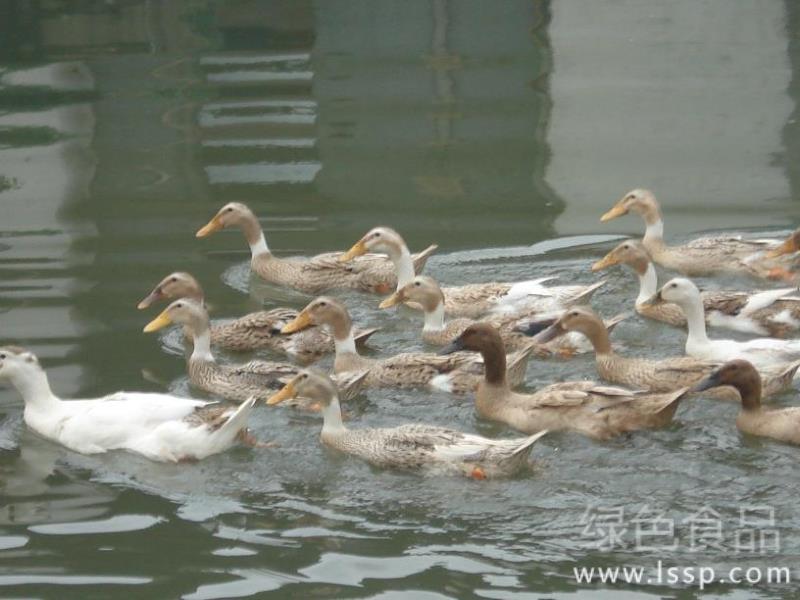
Duck
II. Duck egg-laying patterns:From after midnight to before dawn is the peak egg-laying period for egg ducks; they do not lay eggs during the day. To increase the egg-laying rate, the following should be done: (1) At 10 pm, turn off the lights on time and stop lighting to ensure the egg ducks lay eggs in a quiet environment. (2) If the ducks lay eggs later than 5 o'clock and the eggs are relatively small, it indicates that the concentrated feed is insufficient, and more concentrated feed should be added. (3) If the ducks lay eggs during the day, it is caused by a single feed type, insufficient nutrition, herding too early in the morning, or high temperature and high humidity in the duck house. The duck raising and management conditions should be improved in a targeted way, and the ducks' daily morning herding time should be temporarily postponed (to 8 o'clock).
III. Duck mating patterns:According to reports, breeding ducks generally choose morning or evening to mate, and mate on a broad water surface. Therefore, full use should be made of the breeding ducks' morning or evening mating peak by driving them to deeper water areas to increase the fertilization rate of breeding ducks.
IV. You-hour disease pattern:You-hour disease is named because ducks develop the disease at the you hour every afternoon (17-19 o'clock). When the disease strikes, the ducks become violently restless and quickly huddle together, causing some weak ducks to be trampled to death, with a mortality rate often reaching about 20%. This disease is caused by transport stress, so various stresses before and after long-distance transport of ducks should be minimized as much as possible. Within several days after transport, add anti-stress drugs to the daily ration 1-2 hours before the you hour every day, so as to promptly stop the occurrence of you-hour disease.
V. Immune response patterns:Ducks' sensitivity to immune preparations such as vaccines and bacterial vaccines shows a day-night periodic change: sensitivity is poor during the day and the immune response is sluggish; at night approaching dawn, adrenaline secretion is at its highest and the immune response is most sensitive. Therefore, duck immunization works well when carried out at dawn. There are two benefits: (1) Ducks stop activity at night, are easy to catch, and have a small stress response. (2) Carrying out inoculation at dawn every day, when ducks' immune response occurs, can make them produce immunity faster and better.