-

Downy Mildew in Lisianthus: Occurrence Patterns and Control Methods
Lisianthus plants grow 30-100 cm tall. The leaves are opposite, broadly elliptic to lanceolate, nearly sessile, with the leaf base slightly clasping the stem; the leaf surface is blue-green. The stamens and pistils are prominent, the bracts are narrow and lanceolate, and the petals are arranged in overlapping fashion. Flower colors are rich, including solid and bicolor forms, with single and double petal types.
-
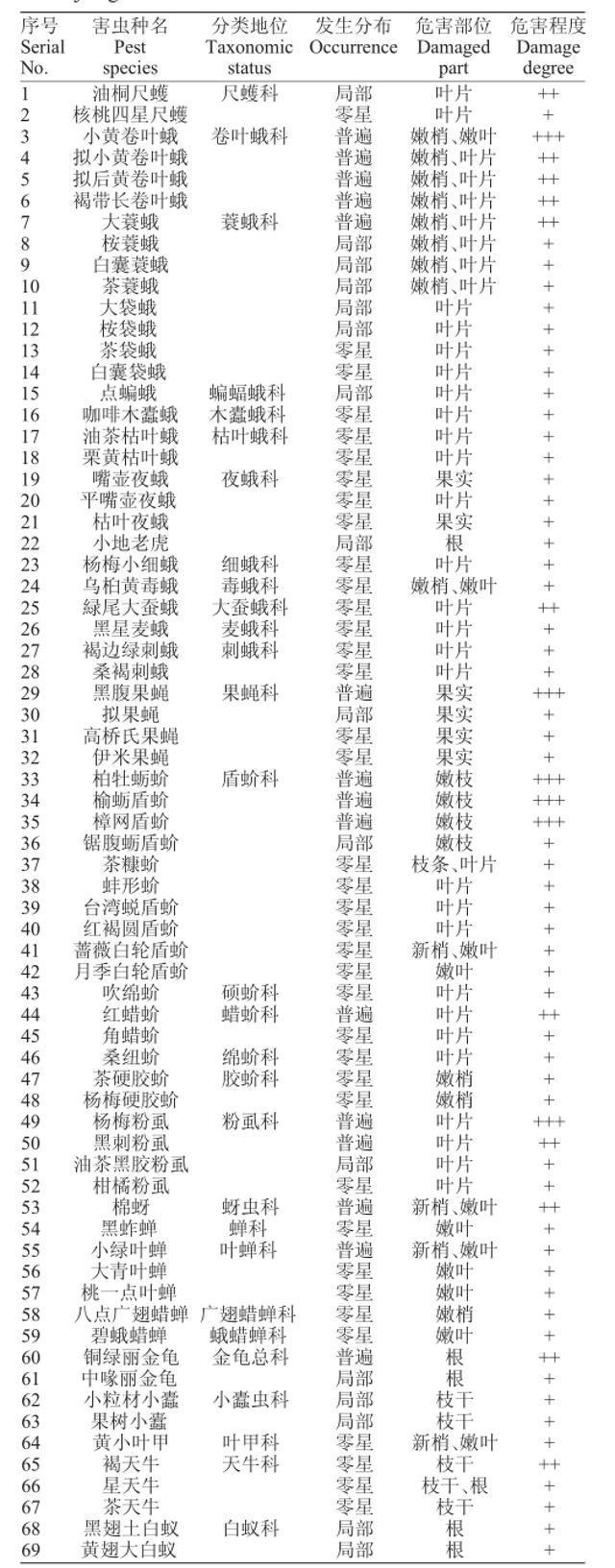
What types of pests and diseases affect bayberry? Occurrence patterns and green control techniques in Zhejiang
Species and Occurrence Patterns of Bayberry Pests and Diseases in Zhejiang Province and Their Green Control Techniques 0 Introduction [Research significance] Bayberry [Myrica rubra (Lour.) Sieb. et Zucc.] is a distinctive fruit of southern China, with a sweet-and-sour taste and unique flavor, enjoying a high reputation both domestically and internationally. Zhejiang Province is the main bayberry production area in China, with a total planting area of 86,500 ha, accounting for about one-third of the national total, an annual output of about 500,000 t, and an output value of 4.83 billion yuan, ranking first in output value among fruits in Zhejiang Province. It is the leading industry for farmers in mountainous and semi-mountainous areas of Taizhou, Wenzhou, Ningbo, Lishui, and Jinhua. In recent years, the bayberry industry in Zhejiang has developed rapidly, especially with the continuous expansion of the planting area of Dongkui bayberry, and the occurrence of pests and diseases has shown an increasingly severe trend, with heavy control tasks and great safety hazards. Therefore, identifying the main pest and disease species and their occurrence and damage patterns in Zhejiang bayberry, and proposing control strategies and green control techniques, is of great significance for ensuring the sustainable and healthy development of the bayberry industry and increasing farmers' income. [Previous research progress] To date, there have been many studies on the main pests and diseases, occurrence patterns, and control techniques of bayberry in various main production areas of Zhejiang Province. Wang Hongxiang et al. (1999), Gong Jieqiang and Wang Hongxiang (2002) reported that the main diseases damaging bayberry in Taizhou City, Zhejiang Province include brown spot disease, cancer disease, red coat disease, dieback disease, branch rot disease, and shoot blight disease, and the main insect pests include scale insects, whiteflies, oil tung geometer moths, leaf roller moths, bagworm moths, and termites. They analyzed the reasons for the increase in pest and disease occurrence and proposed corresponding control measures, but did not go deep into specific pest and disease species investigation and green control techniques. Liu Yougao et al. (2006) reported the occurrence characteristics and control techniques of bayberry cancer disease, brown spot disease, scale insects, and moths in Wenzhou City, Zhejiang Province, but there has not yet been a systematic investigation of other pest and disease species of bayberry, and most of the chemicals introduced in chemical control are not registered on bayberry, making safe pesticide use a difficult problem. Liu Gaoping et al. (2013) and Zou Xiuqin et al. (2015) reported simple net-room cultivation and green control techniques for Dongkui bayberry. Ren Haiying et al. (2014) reported the occurrence and control of bayberry wilt disease and slug moth pests. [Entry point of this study] From the overall research status, the investigation of bayberry pest and disease species and control techniques in Zhejiang is still not systematic and in-depth enough, and the various measures of agricultural, biological, physical, and chemical control still lack organic coordination and matching, thus affecting the implementation of integrated control techniques and the improvement of economic, social, and ecological benefits. [Key problems to be solved] Using a combination of systematic general survey and fixed-point monitoring, experimental research, and demonstration and extension, the main pest and disease species, distribution, and damage conditions of bayberry in the main production areas of Zhejiang Province were investigated, and the green control techniques and integrated management strategies for main bayberry pests and diseases were explored, providing a scientific basis for bayberry pest control.
-

Occurrence Patterns and Control Methods of the Rice Water Weevil
The rice water weevil is an internationally recognized agricultural plant quarantine pest. It first occurred in the Americas, and the countries in Asia where it occurs include Japan, South Korea, North Korea, and others. The place where the rice water weevil was first discovered in China was Tanghai County, Hebei Province, in 1987. The area where the rice water weevil was first discovered in our province was Ji'an City in the Tonghua region in August 1993. At present, this pest occurs to varying degrees in most areas of Heilongjiang Province. I. Degree of damage caused by the rice water weevil. The rice water weevil mainly damages rice, and also damages some
-
Occurrence Patterns and Control Methods of the Azalea Lace Bug
The azalea lace bug (Stephanitis scotti) belongs to the order Hemiptera, family Tingidae. It is extremely widely distributed and is a major pest of azalea flowers. Its host plants are azaleas (Rhododendron spp.) and pieris (Pieris spp.), and it seriously affects the growth, reproduction and ornamental value of flowers in both genera. 1. Damage symptoms The azalea lace bug mainly damages the leaves of host plants as nymphs and adults, sucking sap and excreting feces, causing the undersides of the leaves to appear rust-yellow and the upper surfaces to show needle-point-like white spots; in severe cases the entire leaf loses its green color and turns pale, affecting plant
-
-
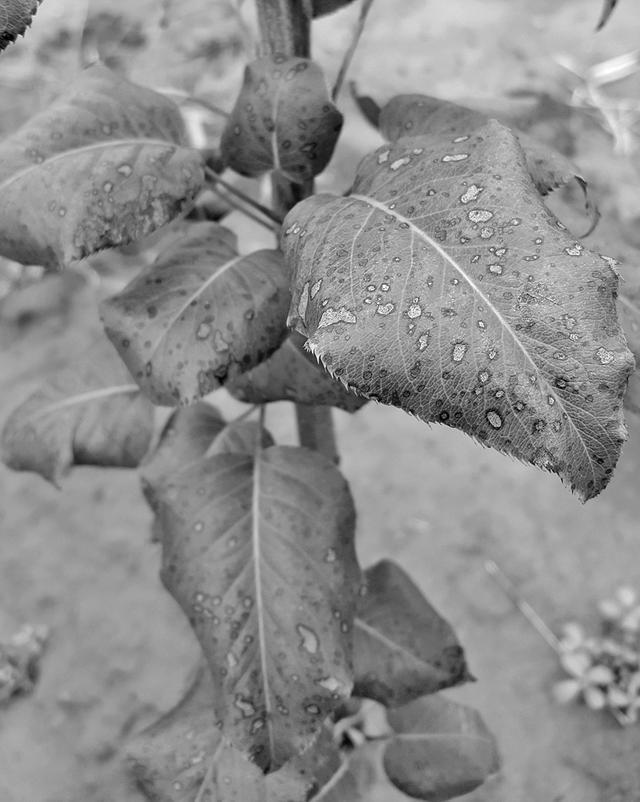
Symptoms, Occurrence Patterns and Causes of Pear Brown Spot Disease and Its Control Measures
Symptoms and Patterns of Pear Brown Spot Disease, Causes of Occurrence and Control Measures 1 Symptoms and Patterns of Occurrence 1.1 Symptoms In the early stage, the leaves of affected pear trees show grayish-white dot-like spots measuring 1-2mm with clear edges, which gradually expand into...
-
Occurrence Patterns and Control Methods of Viral Diseases in Solanaceous Crops
In the southern Guangxi region, the winter climate is warm with no obvious frost, making it a great place for growing winter vegetables to be shipped from the south to the north. Therefore, after harvesting the late rice, farmers grow winter vegetables to supply the market after the Spring Festival, achieving relatively high economic returns and writing a new chapter of "the plan for the year lies in autumn and winter." This has become another way for local farmers to get rich and move toward a moderately prosperous life. Among the many vegetable varieties grown, solanaceous vegetables (tomato, pepper, eggplant) are favored by local farmers for their unique planting advantages. According to statistics, the perennial planting area is around 80,000 mu, and the planting area is predicted to keep rising year by year.
-
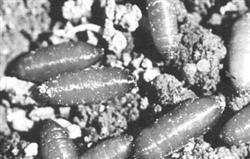
A Detailed Explanation of the Occurrence Patterns and Control Methods of Garlic Root Maggots
Root maggots is the collective term for the larval stage of Diptera pests that damage garlic and other crops. In recent years, the occurrence of garlic root maggots has shown a trend of increasing year by year. Root maggot damage can cause garlic yield reduction and has a major impact on garlic quality, with severe damage leading to serious economic losses. Garlic root maggots (larvae) generally gather on garlic roots and...
-
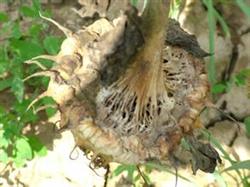
Occurrence patterns and control methods of sunflower sclerotinia rot
As the pace of planting structure adjustment accelerates, market demand for confectionery-type sunflower seeds is increasing day by day. Sunflower is an economical crop that is easy to manage and saves labor and effort. Because field management is too extensive and because of years of continuous cropping on the same land, many diseases have occurred and spread and have worsened year by year, directly causing sunflower yields to decline...
-
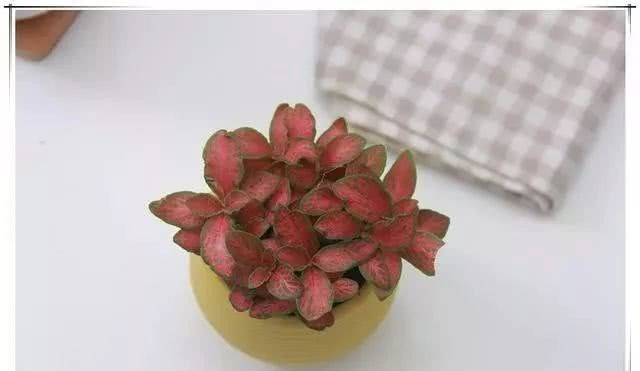
Fittonia has elegant, delicate leaf colors with clearly defined veins and well-proportioned patterns.
Naodong Handmade You have 40 friends following this official account! Fittonia is a fairly popular small potted plant right now. It is compact and comes in many varieties, and is deeply loved by plant enthusiasts. A short little plant, it has striking red and green leaves, pink...
条件筛选