-

Identification, Occurrence and Control of Neurospora Disease in Edible Mushrooms
Occurrence and Control of Neurospora in Edible Mushrooms
-
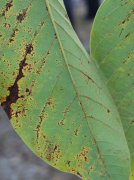
Symptoms and Control Methods of Rust Disease in Atemoya Orchards
Because orchards in mountainous areas and river valleys have high humidity, they are prone to triggering the spread and expansion of "annona rust." The Taitung District Agricultural Research and Extension Station of the Council of Agriculture (hereinafter referred to as the Taitung Station) recently monitored Beinan, Luye, and Donghe, among other areas, and found that some atemoya orchards
-
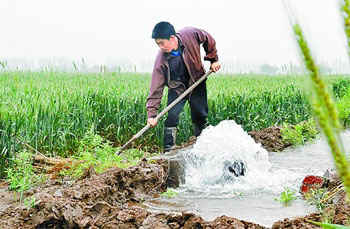
Hebei Province expects moderate occurrence of pests in the first half of the year
Moderate occurrence of pests predicted in Hebei Province in the first half of the year
-
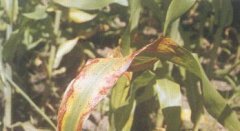
Causes, Symptoms and Control Methods of Sorghum Sheath Blight
What causes sorghum sheath blight? What are its symptoms? How should it be controlled? Let's take a look together. Symptoms: It mainly damages the leaves and the base of the stem. On the leaf sheaths near the ground level, small white-green water-soaked lesions first appear, then expand into oval shapes, with brown margins and lighter centers. Lesions on the leaves appear grayish-green or grayish-white and cloud-like, and most of the lesions merge into a tiger-stripe pattern, causing the entire leaf to wither and die.
-
Forecast for the occurrence trend of the first generation of the striped stem borer in rice is released
1. Occurrence level: The first generation of the striped stem borer, the main rice pest in our city, is expected to occur at a moderate-to-severe level, with the affected area in the city reaching more than 250,000 mu, of which more than 50,000 mu are early-planted idle fields. 2. Occurrence period: Moths seen under light on April 11, the beginning of the peak moth emergence period 5/9-12, the peak moth emergence period 5/20-24; the peak egg hatching period 5/27-5/30, the peak period of first and second instar larvae 6/4-6/10, the occurrence period is 3 days later than the average of the past three years. 3. Forecast basis 1. Development progress: This year 4/2
-
Occurrence and Control Methods of the Black Velvet Chafer in Fengxiang County, Shaanxi
The black velvet chafer (commonly known as "louhu") has a body length of 7-8 mm, a blackish-brown or purplish-brown body color, and blackish-brown fine hairs on its body surface. It has one generation per year and overwinters as an adult. In April of the following year, it emerges and becomes active, then feeds on the leaves of weeds, poplar, willow, and elm trees. After crop seedlings emerge, it migrates to sunflowers, beans, and other crops to feed and cause damage. During the day, it hides in weeds and soil cracks. It mostly flies out in groups in the evening to cause damage, biting the tender leaves of willow, elm, and fruit trees, as well as the seedlings of crops such as alfalfa, sunflower, sweet potato, potato, and kidney bean. Adults have a death-feigning habit and phototaxis. From May to
-
Disease Occurrence and Prevention Methods for Pigs at Different Feeding Stages
Disease occurrence in pigs at different feeding stages. The incidence of the three major infectious diseases of pigs. Swine fever, swine erysipelas and swine pasteurellosis are collectively known as the three major infectious diseases of pigs. In our country, the total mortality rate of affected pigs accounts for about 8% of the total raised population, and in areas with better prevention and control the pig mortality rate is also 5%. Therefore, the level of pig disease prevention and control should be raised. If the total pig mortality rate could be reduced by one percentage point each year, that would be equivalent to an additional 5 million pigs sent to market - what a huge fortune that would be. According to relevant statistics,
-
How to prevent and control cotton root rot in northern Xinjiang? Understanding the patterns of occurrence is key
In 2007, northern Xinjiang suffered varying degrees of cooling and rainfall in April, May and August respectively, and cotton root rot occurred rather severely, with the disease incidence in cotton fields reaching 20%-50%, causing a certain impact on cotton yield in northern Xinjiang. 1. Disease symptoms The pathogen overwinters as chlamydospores on plant residues in the soil and germinates to infect the following year. After cotton is infected, the leaves shrink or wilt, and soon afterward the plant lodges and dies. The stem base and roots of diseased seedlings are purplish brown and gradually rot, with the cortex drying and rotting; when pulled from the soil, the roots are decayed brown.
-
Occurrence and Control Methods of the Comstock Mealybug in Pear Orchards
(1) Occurrence patterns The Comstock mealybug belongs to the order Homoptera, family Pseudococcidae. Also known as the pear mealybug, plum mealybug, and mulberry mealybug. It generally produces three generations per year, overwintering as eggs and nymphs in hidden places such as cracks in the rough bark of tree trunks, bagged diseased and pest-infested fruits scattered in the orchard, weeds around the root zone, soil clods, and fallen leaves. Adults and nymphs suck the sap of tender buds, tender shoots, and fruits. Before bagging, it mainly damages tender buds and tender shoots, causing leaves to twist, swell, and shrivel, leading to branch dieback. After bagging, it burrows into the bags to damage the fruit, gathering in the calyx depression and stem depression, secreting white wax powder, contaminating the fruit, and sucking
-
Occurrence of Tulip Diseases and Integrated Control Methods
Tulip is a perennial bulbous herbaceous plant of the genus Tulipa in the family Liliaceae, also known as foreign lotus, grass musk, peony lily, etc., and is one of the most popular cut flowers in the world. With the adjustment of industrial structure, many places in Jiangsu Province have formed tulip fresh cut flower bases. However, in the production process, we found that every stage may be harmed by fungal, bacterial and viral diseases, thereby affecting the normal growth of plants, reducing the quality and ornamental value of cut flowers, and in severe cases causing devastating damage. Therefore, preventing the occurrence and development of tulip diseases is the
条件筛选