-
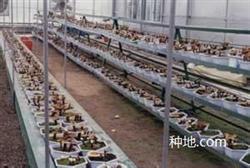
How are lingzhi (Ganoderma lucidum) bonsai cultivated in a greenhouse?
Question: How are lingzhi bonsai cultivated in a greenhouse? Lingzhi bonsai is a shaped handicraft that has emerged in recent years, made by processing dried mature lingzhi. By using foam plastic greenhouse technology to pot living lingzhi at the growth stage, live lingzhi bonsai can be made, just like potted flowers, allowing you to observe the lin...
-
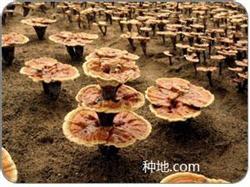
Lingzhi (Ganoderma lucidum) cultivation technique: How do you grow lingzhi using short-log sterilized substrate?
How do you grow lingzhi using short-log sterilized substrate? Please explain the method. For the short-log sterilized substrate cultivation method of lingzhi, you can refer to the following method: 1. Lingzhi cultivation season. Lingzhi belongs to the medium-to-high temperature type of fungi, and its yield is related to the tree species of the logs, cultivation time and cultivation technique. Inoculation time can be arranged from late October to December, or from early February to early March. Logs buried in the same year can all produce 2-3 flushes of fruiting bodies. For those inoculated before early to mid-December, the logs can be arranged and buried in March of the following year, and the yield in that year accounts for more than 70% of the total yield. For those inoculated in early February, the logs are arranged and buried in April, accounting for 55% of the total yield in that year.
-
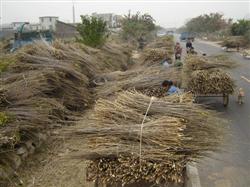
How is Lingzhi (Ganoderma) cultivated using mulberry branches? A detailed guide to the growing technique
How is Lingzhi (Ganoderma) cultivated using mulberry branches? Please explain the method. To grow Lingzhi using mulberry branches, you can refer to the following method: 1. Mulberry branch Lingzhi cultivation method. The artificial cultivation process for mulberry branch Lingzhi is: collecting mulberry branches - cutting into sections - crushing - blending ingredients - bagging - sterilization - inoculation - cultivation management - harvesting Lingzhi - sun-drying...
-
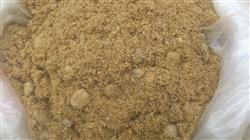
What are the key points to note when growing lingzhi (Ganoderma lucidum)?
What are the key things to note when growing lingzhi? Here is an introduction. There are 4 points to note when growing lingzhi, listed in detail below for reference: 1. Preparation of lingzhi growing substrate: ① about 75% mixed sawdust, about 25% wheat bran, about 0.2% ammonium sulfate, water content of the mixed substrate 70%; ② about 75% mixed sawdust...
-
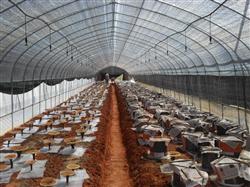
Ganoderma lucidum Cultivation Techniques: How to Grow It for High Yield?
How do you grow Ganoderma lucidum for high yield? Here is an introduction to the methods. To achieve high yield when cultivating Ganoderma lucidum, you can refer to the following methods: 1. Preparation of the Ganoderma lucidum shed. According to the biological characteristics of Ganoderma lucidum, choose a dedicated Ganoderma lucidum shed or a residential house with good insulation, moisture retention, good ventilation, appropriate light, and smooth drainage, with a clean floor, ...
-
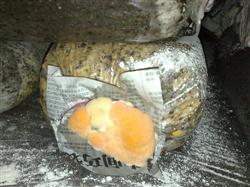
What is Ganoderma Neurospora? An Analysis of Ganoderma Cultivation Techniques
What is Ganoderma Neurospora? What harm does Neurospora do to Ganoderma? How to prevent and control it? Please give an introduction. Neurospora is also called Neurospora sitophila or red bread mold, bread mold, Neurospora, and Monilia. It belongs to the subdivision Ascomycotina, order Sordariales, genus Neurospora. It is a contaminant fungus that poses a great threat in the production of Ganoderma edible mushroom spawn. It spreads relatively quickly.
-
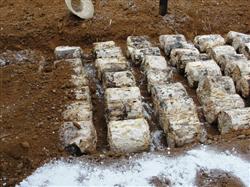
What should be noted in Ganoderma lucidum cultivation techniques?
What should be noted in Ganoderma lucidum cultivation techniques? Please introduce the key points of Ganoderma lucidum cultivation techniques as follows: 1. Choose a suitable cultivation period: the most suitable cultivation period for Ganoderma lucidum is from April 10 to May 10, and after May 20 the bags are gradually opened for fruiting. Every year June to July is the plum rain season, therefore, it is necessary to ensure that all bags are opened for fruiting before June 10...
-
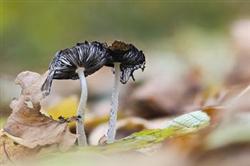
Ganoderma (Reishi) Cultivation Techniques: How to Control Coprinus Mushrooms When Growing Ganoderma?
How to control Coprinus mushrooms when growing Ganoderma? Please introduce 1. Morphological characteristics The common morphological features of Coprinus species are that the cap is initially bullet-shaped or oval, jade white, grayish white, or grayish yellow, and most of the surface has scaly hairs. The stipe is slender and hollow. After maturity, the cap expands, the gills change from white to black, and finally autolyze together with the cap into ink-like liquid. The spores are black, oval, and mixed within the ink-like liquid.
-
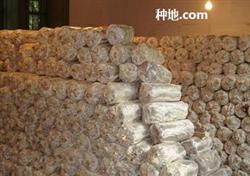
How do you grow Ganoderma lucidum in indoor bag cultivation to achieve high yields?
How can high yields be achieved in indoor bag cultivation of Ganoderma lucidum? Is there a technique to refer to? For indoor bag cultivation of Ganoderma lucidum, you can refer to the following Ganoderma lucidum cultivation technique: Bag cultivation process flow: culture material preparation → mixing the material → bagging → sterilization → inoculation with spawn after mother spawn production and stock spawn production → cultivation → fruiting body management → harvesting → processing...
-
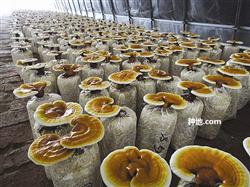
How to grow Ganoderma lucidum in bags? Detailed explanation of the key cultivation techniques
How to grow Ganoderma lucidum in bags? What are the key techniques? Bag cultivation of Ganoderma lucidum requires attention to the following points: 1. Replace sawdust with wood blocks in the substrate. Ganoderma lucidum is tough in texture and needs to absorb large amounts of lignin and cellulose during growth. When sawdust or cottonseed hulls are used as the substrate, because the texture is loose, the lignin in the substrate is easily decomposed by the mycelium...
条件筛选