Ganoderma lucidum Cultivation Techniques: How to Grow It for High Yield?
How do you grow Ganoderma lucidum for high yield? Here is an introduction to the methods. To achieve high yield when cultivating Ganoderma lucidum, you can refer to the following methods: 1. Preparation of the Ganoderma lucidum shed. According to the biological characteristics of Ganoderma lucidum, choose a dedicated Ganoderma lucidum shed or a residential house with good insulation, moisture retention, good ventilation, appropriate light, and smooth drainage, with a clean floor, ...
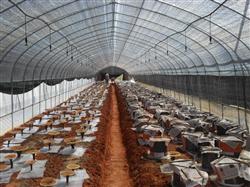 How do you grow Ganoderma lucidum for high yield? Here is an introduction to the methods.
To achieve high yield when cultivating Ganoderma lucidum, you can refer to the following methods:
1. Preparation of the Ganoderma lucidum shed
According to the biological characteristics of Ganoderma lucidum, choose a dedicated Ganoderma lucidum shed or a residential house with good insulation, moisture retention, good ventilation, appropriate light, and smooth drainage, with a clean floor and walls that are smooth and resistant to moisture. Before the Ganoderma lucidum is brought into the shed for cultivation, the shed must be strictly disinfected. For every cubic meter of space, use 5 milliliters of formaldehyde and 10 grams of potassium permanganate for sealed fumigation for 24 hours before use.
2. Selection of Ganoderma lucidum cultivation substrate formulas
Each place can adapt to local conditions and use local materials, choosing a formula suited to its own region. 1. 77% cottonseed hulls, 10% wheat bran, 10% cornmeal, and 1% each of sugar, phosphate fertilizer, and gypsum; 2. 89% cottonseed hulls, 10% wheat bran, and 1% gypsum; 3. 70% sawdust, 25% wheat bran, 2% soybean powder, 1% phosphate fertilizer, 1.5% gypsum, and 0.5% sugar; 4. 50% corncobs, 35% mixed sawdust, and 15% wheat bran.
3. Preparation of the Ganoderma lucidum cultivation substrate
For the cultivation spawn medium, do not use sawdust from pine, cypress, fir, camphor, and other trees, because they contain harmful substances that are unfavorable to the growth of Ganoderma lucidum. When preparing the cultivation substrate, first mix the cottonseed hulls, sawdust, wheat bran, gypsum powder, and other materials evenly, with a moisture content of 60%-65%. Once the materials are mixed, they can be bagged. Each bag holds about 400 grams of dry material.
Polyethylene bags are sterilized at normal pressure for 10 hours, while polypropylene bags are sterilized under high pressure for 2 hours. Wait until the material cools to below 30°C, then move it into a sterile box or sterile room for inoculation. Before inoculation, fumigate and disinfect with formaldehyde and potassium permanganate, and at the same time turn on the ultraviolet lamp and keep it on for 40 minutes, then inoculate under sterile operating conditions.
Generally, one bottle of wheat-grain mother spawn can inoculate about 40 bags, and one bottle of cottonseed-hull mother spawn can inoculate about 30 bags. Move the inoculated spawn bags into a disinfected cultivation room and arrange them in layers. Generally, 6-7 layers are placed per row, with walkways left between the racks.
4. Ganoderma lucidum management techniques
1. Mycelial growth stage. During the mycelial growth period, keep the cultivation room at 20-30°C and the relative air humidity at 40-60%, ventilate for half an hour every day, and move the spawn bags up and down once every 3-4 days to keep the bag temperatures balanced from top to bottom, and check for and prevent contamination by competing microorganisms. When the mycelium has grown over 2/3 of the bag, move it into the cultivation shed, untie the bag opening, lift and loosen it by hand once, and leave a small gap. Diffused indoor light is sufficient; avoid strong light exposure. Generally after about 25-30 days, the mycelium will have fully grown through the spawn bag.
2. Fruiting body management. When the Ganoderma lucidum fruiting bodies emerge, keep the shed temperature at 26-30°C, raise the relative air humidity to 90-95%, and provide diffused light and sufficient oxygen; keep a shallow layer of water on the floor and spray water onto the walls and into the air 3-4 times a day. Ventilate once before 10 a.m. and once after 4 p.m.; when the temperature is low, ventilate and exchange air from 11 a.m. to 2 p.m. The primordium enlarges for 3-5 days and gradually forms a cap. When the cap grows 2-3 concentric rings, increase the amount of water sprayed. The cap changes from white to light yellow to yellow to reddish brown. When the white edge of the cap disappears, the edge turns red, and reddish-brown spore powder is released from the underside, it indicates that the fruiting body is mature and can be harvested promptly.
3. Harvesting and post-harvest management. Stop spraying water 5-7 days before harvesting Ganoderma lucidum, close the ventilation openings, and lay plastic film over the floor walkways so that the released spore powder can be collected. When harvesting Ganoderma lucidum, cut it off from the base of the stipe with scissors or gently pick it by hand, dry it in the sun to a moisture content of 10-12%, bag it, and store it in a dry room or sell it.
After harvesting the first flush of Ganoderma lucidum, remove the old mycelial skin at the opening of the substrate bag, stop spraying water for 2-3 days, then raise the humidity to about 90-95%, while keeping the temperature at 26-29°C. After 7-10 days, fruiting bodies can grow again from the original stipe location, and cultivation and management are carried out according to the methods of the previous stage. After about 25 days, the second flush of Ganoderma lucidum can be harvested; generally 2-3 flushes can be harvested.
The first flush has the best growth, and later flushes grow somewhat worse. Climate and temperature vary from place to place. Using natural temperatures, the North China region is suitable for planting in April and May and finishing in July and August, planting once a year.
Click to get more Ganoderma lucidum cultivation techniques
Click to get more medicinal herb cultivation techniques