How are lingzhi (Ganoderma lucidum) bonsai cultivated in a greenhouse?
Question: How are lingzhi bonsai cultivated in a greenhouse? Lingzhi bonsai is a shaped handicraft that has emerged in recent years, made by processing dried mature lingzhi. By using foam plastic greenhouse technology to pot living lingzhi at the growth stage, live lingzhi bonsai can be made, just like potted flowers, allowing you to observe the lin...
Question: How are lingzhi bonsai cultivated in a greenhouse?
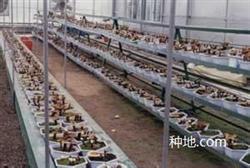
Lingzhi bonsai is a shaped handicraft that has emerged in recent years, made by processing dried mature lingzhi. By using foam plastic greenhouse technology to pot living lingzhi at the growth stage, live lingzhi bonsai can be made, just like potted flowers, allowing you to observe a whole series of growth and development processes: the lingzhi stipe elongating, the cap unfolding and growing larger, releasing spore powder, and finally growing into lingzhi fruiting bodies of various shapes. The key cultivation techniques are as follows:
1. Cultivation substrate
Lingzhi is a wood-rotting fungus and is suitable for growing on substrates such as mixed wood sawdust and cottonseed hulls. The medium formula is: mixed wood sawdust or cottonseed hulls 78%, wheat bran 20%, gypsum powder 1%, white sugar 1%, water content 60-62%, pH natural.
2. Cultivation season
Lingzhi is a constant-temperature, medium-to-high-temperature type fungus. Both the mycelium growth temperature and the fruiting temperature are 22-28°C, and fruiting requires relatively high air humidity; therefore, in southern regions, fruiting should preferably be scheduled for late spring and early summer. Inoculation can begin after mid-January, fruiting can begin after mid-March, and potting for sale can be done after mid-April. For autumn fruiting, inoculation can be done in early August, fruiting in mid-September, and potting for sale in late September. This helps to catch the two golden market periods.
3. Greenhouse construction
The greenhouse is rebuilt from an ordinary plastic greenhouse. The outer layer is covered with a shade net to achieve a light intensity of 70% shade and 30% light; the middle layer is 0.5 cm thick foam plastic board, which provides insulation; the inner layer is non-toxic plastic film, which enhances moisture retention. The wooden frame doors at both ends are sealed with plastic film so that ventilation and light transmission can be adjusted.
4. Selecting varieties
According to the different characteristics of various lingzhi varieties, different types and colors can be selected for potted live lingzhi. Generally, varieties with many branches, relatively long stipes, small caps, slow growth, and little spore powder are preferred. For example, Yuanzhi No. 6, Yuanzhi No. 9, Jingda, Shinshu, Zizhi (purple lingzhi), and others.
5. Bagging and inoculation
Prepare the culture material according to the above formula, then use 17 x 33 x 0.04 cm polypropylene or polyethylene plastic gusseted bags for filling, with 400 grams of dry material per bag. Seal with sponge double rings, sterilize under high pressure for 2 hours or under normal pressure for 10 hours, cool, then move into the inoculation room, disinfect with ultraviolet light and aerosol disinfectant respectively, and inoculate inside the inoculation box.
6. Mycelium growth culture
After inoculation is completed, move into the culture room and arrange on culture shelves, with shading, insulation, and mycelium growth. Maintain the indoor temperature at 20-25°C. When the temperature is low, use an electric stove to heat appropriately, and maintain ventilation and air exchange. After about 2 months, the mycelium will have grown throughout the bag.
7. Fruiting management
After the mycelium has grown throughout the bag, it can be moved into the foam greenhouse for fruiting management. Remove the sponge covers, arrange the bags upright, and cover with plastic film to promote primordia. After 3-6 days, lingzhi begins to form primordia; then uncover the covering film, spray water on the ground, and maintain the relative air humidity in the greenhouse at 85-96%. At this time, ventilate as much as possible. When the lingzhi stipe elongates and shows phototropism, the door should be shaded while the greenhouse roof remains light-transmitting, so that lingzhi grows upward. When the stipe has grown to a certain extent, ventilate for half an hour each morning and evening, and remove the shading material from the door to encourage the cap to grow. By using the temperature difference between day and night, lingzhi bodies of various shapes can be produced.
8. Transplanting and potting
About 20 days after primordia formation, when the cap has grown to a size that already has the preliminary shape of a bonsai and the cap edge is still yellow-white, it can be transplanted into a pot. Use a knife to cut around and remove the lower half of the lingzhi bag, then place it into a flower pot, add disinfected fine river sand, and it becomes potted live lingzhi.
9. Potted management
During the continued growth period, potted live lingzhi should be misted 2-3 times a day to retain moisture and keep the cap moist, so as to prevent it from maturing too early.
Click to get moreLingzhi cultivation techniques
Click to get more medicinal herb cultivation techniques