How is Lingzhi (Ganoderma) cultivated using mulberry branches? A detailed guide to the growing technique
How is Lingzhi (Ganoderma) cultivated using mulberry branches? Please explain the method. To grow Lingzhi using mulberry branches, you can refer to the following method: 1. Mulberry branch Lingzhi cultivation method. The artificial cultivation process for mulberry branch Lingzhi is: collecting mulberry branches - cutting into sections - crushing - blending ingredients - bagging - sterilization - inoculation - cultivation management - harvesting Lingzhi - sun-drying...
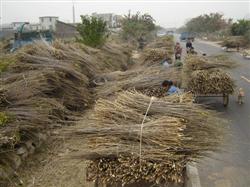 How is Lingzhi (Ganoderma) cultivated using mulberry branches? Please explain the method
To grow Lingzhi using mulberry branches, you can refer to the following method:
1. Mulberry branch Lingzhi cultivation method
The artificial cultivation process for mulberry branch Lingzhi is: collecting mulberry branches - cutting into sections - crushing - blending ingredients - bagging - sterilization - inoculation - cultivation management - harvesting Lingzhi - sun-drying - packaging.
1. After the mulberry branches are pruned, cut and crushed, pack them in special edible fungus plastic bags measuring 18 cm x 20 cm, then inoculate after high-pressure steam sterilization. Take a small piece of the purchased Lingzhi spawn and inoculate it into the fungus bag, place it in a clean room for dark cultivation; the room temperature in the early stage is 24-26°C, and in the later stage 22-24°C; the indoor relative air humidity is 60%-70%, and air flow should be maintained. Cultivate for about 40 days, and after the mycelium has fully grown, move it outdoors and bury it in soil.
2. Selection of the cultivation site, building the shed, and making beds: choose sandy loam soil with good drainage, ventilation and light transmission to build the site. Set up an inverted-V shaped shade shed, cover it with plastic sheeting, and add a shade net; three parts sun and seven parts shade is preferable, and the light brightness should be uniform. The beds run east-west, with a bed width of 1.3 m, a length of 1.3 m, and a height of 30 cm, with walkways left between the beds. Disinfect the soil in the beds.
3. Burying the fungus bags in soil: when a few primordia appear on the fungus bags and the air temperature rises above 15°C, tear open the plastic bag on the surface of the fungus sticks, arrange them upright on the prepared beds with the inoculation surface facing up, with a spacing of 4-6 cm between the fungus sticks; keep the tops of the fungus bags level, fill the gaps between the fungus sticks with fine soil, and cover the top end with about 2 cm of soil.
2. Management methods after Lingzhi fruiting in mulberry branch cultivation
1. Regulating light: Lingzhi fruiting bodies have relatively high light requirements and strong phototropism. Light that is too strong or too weak will cause the caps to merge or become deformed; too strong light will also wither young fruiting bodies, while too weak light will cause the stipes to grow excessively. Uneven light, or two-way light exposure in the morning and afternoon, will cause the fruiting bodies to tilt. Therefore, the light brightness in the shed should be adjusted to the range of 400-600 lux and the light source should be fixed.
2. Regulating temperature: Lingzhi is a fungus of the medium to high temperature type, with a growth temperature of 12.36°C and an optimum temperature of 25-30°C. Below 20°C, close the shed door tightly and cover with plastic film to keep warm; above 30°C, open the shed door, uncover the surrounding plastic film, strengthen ventilation to cool down, and spray water on the shed roof to lower the temperature.
3. Regulating humidity: Lingzhi prefers a moist environment. The water content of the artificially prepared culture medium is preferably 60%-65%; the fruiting bodies can differentiate between 18-32°C, but differentiation is fastest and development best at around 25°C. The optimum relative air humidity for growth is 80%-90%, and the soil humidity is around 50%. If the humidity is too high, use ventilation to reduce it and stop watering the beds; if the humidity is too low, spray into the air to increase the relative air humidity in the shed.
4. Improving aeration conditions: Lingzhi is an aerobic fungus, and the fruiting bodies are extremely sensitive to carbon dioxide. The carbon dioxide concentration in the air should be controlled below 0.03%; if it is too high, deformities will occur. During the growth and development of the fruiting bodies, regularly open the shed door, uncover the surrounding plastic film, improve aeration conditions, and reduce the carbon dioxide concentration.
5. In the cultivation of mulberry branch Lingzhi, in order to reduce production costs, the mulberry branches can be used for two purposes: one part as the culture material for Lingzhi, and the other part as fuel for sterilization.
Click to get more Lingzhi cultivation techniques
Click to get more medicinal herb cultivation techniques