How to grow Ganoderma lucidum in bags? Detailed explanation of the key cultivation techniques
How to grow Ganoderma lucidum in bags? What are the key techniques? Bag cultivation of Ganoderma lucidum requires attention to the following points: 1. Replace sawdust with wood blocks in the substrate. Ganoderma lucidum is tough in texture and needs to absorb large amounts of lignin and cellulose during growth. When sawdust or cottonseed hulls are used as the substrate, because the texture is loose, the lignin in the substrate is easily decomposed by the mycelium...
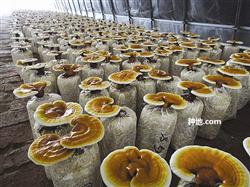
How to grow Ganoderma lucidum in bags? What are the key techniques?
Bag cultivation of Ganoderma lucidum requires attention to the following points:
1. Replace sawdust with wood blocks in the substrate. Ganoderma lucidum is tough in texture and needs to absorb large amounts of lignin and cellulose during growth. When sawdust or cottonseed hulls are used as the substrate, because the texture is loose, the lignin in the substrate is easily decomposed by the mycelium, and often after one to two flushes the mushroom log simply disperses and falls apart. If wood blocks mixed with coarse sawdust are used instead as the substrate, the same volume contains more lignin, and the spaces between the wood blocks are numerous, giving good aeration, which is favorable for the growth of Ganoderma lucidum, resulting in high yield and excellent quality.
2. Change indoor cultivation to outdoor casing soil cultivation. In indoor bag cultivation of Ganoderma lucidum, a relatively thick layer of mycelial skin easily forms on the surface of the mushroom log, making artificial watering difficult and greatly affecting the yield of the second flush. Changing indoor cultivation to outdoor casing soil cultivation can better solve the problem of watering the mushroom log; the log can absorb water and beneficial trace elements from the soil, making it easy to obtain high and stable yields. In addition, the light source is evenly distributed in the field, so the Ganoderma lucidum grown is large, round and regular, and bright in color, and the proportion of first-grade products is clearly higher than indoors.
3. Change horizontal placement of the mushroom log to upright placement. When the log is placed horizontally, a large surface is stimulated by light, and the primordia are dense but small. Even if thinning measures are taken, the primordia at the base are small and fine, and it is always difficult to cultivate high-quality Ganoderma lucidum with large caps and thick flesh. When the log is placed upright, the light-receiving surface is concentrated at the top of the log, the primordia produced are sparse but thick, and the caps accordingly become thicker and larger, and the yield per unit planting area can also more than double.
4. Change picking the Ganoderma lucidum to cutting it. Mature Ganoderma lucidum is generally lignified or cutinized, and the stipe is tightly connected to the substrate. If the fruiting body is directly broken off by hand, the log is severely damaged, which is unfavorable for the growth of the second flush, and the wound is also easily infected by contaminating microorganisms. Change picking to cutting, harvesting with pruning shears; the cut is smooth and the stipe base is undamaged. For the second flush, the stipe base of the first flush can be used as a primordium to quickly grow mushroom buds, reducing the interval between flushes and shortening the production cycle.
Click to see more Ganoderma lucidum cultivation techniques
Click to see more medicinal herb cultivation techniques