-

A Complete Guide to New High-Quality Cultivation Techniques for the Oyster Mushroom
The oyster mushroom, also known as the small oyster mushroom, has a crisp, tender texture, a delicious flavor and rich nutrition. It is a type of oyster mushroom harvested when the cap diameter of the fruiting body is less than 3 cm; because the mushroom body is small, fresh and tender, and tasty, it sells extremely well on the market. Over the 2 years since our center introduced it, we have refined and summarized its biological characteristics and cultivation techniques. The new high-quality cultivation techniques for the oyster mushroom are summarized below. 1 Cultivation season The oyster mushroom is a low-temperature type of fungus; its fruiting temperature range is 5-22°C, with the optimum fruiting temperature range being 13-18°C. In this region it is suitable to fruit in September-
-
What are the new processing techniques for Acetes shrimp? A detailed explanation of the processing methods
Acetes shrimp, namely Acetes chinensis, also known as small white shrimp, water shrimp, etc., belongs to the class Crustacea, family Sergestidae. Its body is laterally compressed and its carapace is thin. The body length is generally 2.5-4 cm. The rostrum is short and small, roughly triangular in side view, with the lower margin oblique and slightly curved, and the upper margin bearing two teeth. The telson is very short, with a rounded end, no spines, and the posterior half of the lateral margins and the terminal margin bearing feathery setae. The first three pairs of walking legs are in the form of tiny pincers, and the latter two pairs are completely degenerated. The body is colorless and transparent, with only the mouthparts and the second antennae flagellum red, the ventral surface of the sixth abdominal segment slightly red, and the base of the inner ramus of the uropod with 3-8 red spots. It lives in
-
Introduction to the New High Pear Variety and Key Cultivation Techniques
I. Variety Origin: Introduced from South Korea in 1999 by the Beijing Municipal Forestry Bureau, planted at the Huangfa Nursery in Beijing. Parental combination: Yinhe x Imamura Aki. Approved by Beijing in 2002. II. Characteristics: This variety was bred in Japan and belongs to the sand pear system, large-fruit type. After introduction from South Korea, the trellis open-center cultivation technique was adopted. The tree vigor is relatively strong, with a semi-spreading tree habit. It readily forms short fruit branches and axillary flower buds, with 7-9 flowers per inflorescence. The leaves are broadly elliptical, with relatively large serrations on the leaf margins, dark green in color, and the underside of the leaves has
-
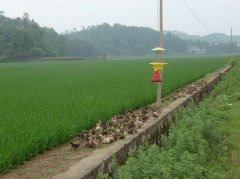
New Technology for Ecological Duck Farming in Rice Paddies: An Introduction to Efficient Duck Farming Methods
Natural ecosystems are diverse, with various organisms coexisting in harmony. We can raise many animals in rice paddies to increase income. Let's take a look at how to raise ducks in the fields. Also, beneath this beautiful ecology lie troublesome problems. For organic farms
-
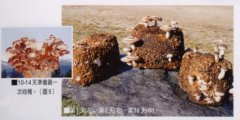
Practical Techniques for Shiitake Cultivation and New Techniques for Fast-Growing, High-Yield Production
The scientific name of shiitake is Lentinus edodes. It is a low-calorie food; eating 50 grams of shiitake per day provides only 15 calories. Its protein and fiber content are also high, and it is rich in calcium; in addition, shiitake contains two components that have been proven to have medicinal effects, namely
-

How to Graft New Varieties of Landscape Plants? Master These Five Key Techniques
Tree grafting is an artificial plant propagation method. During grafting, the following five points should mainly be noted.
-
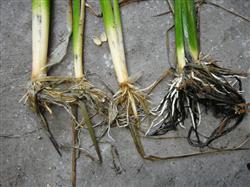
Detailed Explanation of New Early-Maturing Cultivation Techniques for Water Bamboo (Zizania latifolia) under Plastic Greenhouse Cover
The main diseases of water bamboo are rust, brown spot, and sheath blight. Disease control in water bamboo must be based on agricultural measures and integrated management. Select and retain disease-resistant varieties, carry out thorough winter field cleaning, plant at a reasonable density, strengthen fertilizer and water management, manually strip off yellow and diseased leaves, and at the same time apply chemical control rationally, spraying at the early stage of disease onset to protect...
-
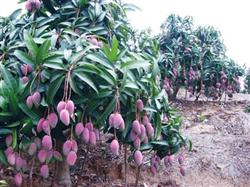
Integrated management with new techniques makes mangoes retain flowers and fruits, with more fruit set
Mango jujube sets fruit easily but retaining it is difficult; from the young fruit stage to the white-ripe stage it keeps dropping fruit, and puzzlingly, it always drops the large ones and keeps the small ones, which distresses jujube growers greatly. In recent years, various flower- and fruit-retention measures were tested on mango, and the following integrated management new techniques were developed to solve this problem: 1...
-
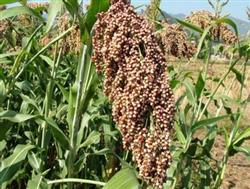
Detailed Explanation of Key Points of New High-Yield Sorghum Cultivation Techniques
1. Timely sowing to ensure full stands. The basis for determining sowing time is soil temperature and soil moisture. In early spring, when the soil temperature at a depth of 10 cm reaches 12°C and the moisture content is 15-20%, sowing can begin. When necessary, irrigate first to replenish soil moisture before sowing, or sow with water to supplement moisture, to prevent sprout drying and uneven emergence. In the main sorghum production areas of Liaoning, the western Liaoning...
-
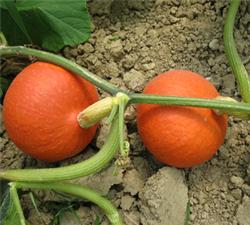
High-Quality New Pumpkin Varieties and Key Points of Spring Cultivation Techniques
Pumpkin is a nutritious and healthy vegetable, and the Western pumpkin (Cucurbita maxima) introduced from abroad has low fruit water content, high solids, high levels of non-reducing sugars and starch, a starch-to-total-sugar ratio exceeding 1, low crude fiber and high crude protein, so its eating quality and mouthfeel are excellent, and its quality greatly surpasses that of domestic local pumpkins, making it deeply...
条件筛选