-
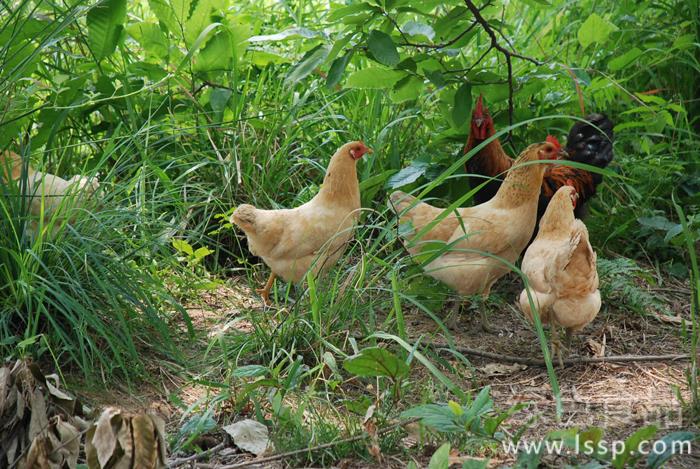
Free-range chickens are more popular than feedlot chickens, and new techniques bring high returns in raising them
Free-range chickens are more popular than feedlot chickens; new techniques bring high returns in raising free-range chickens
-

Detailed Explanation of New Lily Propagation Techniques and Methods
Lilies not only have dignified, vivid flowers, but their fleshy tender stems are also rich in nutrients and have special medicinal and health-care effects, making them a best-selling health food on the market. Several bulb propagation methods for lilies are as follows: 1. Seed propagation. Sowing mature lily seeds can quickly produce large numbers of lily bulblets for bulb production and cut flower cultivation. Lily species suitable for seed propagation include: Lilium brownii, Lilium longiflorum, diploid Lilium lancifolium, Lilium concolor, Lilium regale, Lilium formosanum, Lilium davidii, Lilium dauricum, Lilium tsingtauense, Lilium henryi, Lilium speciosum
-
Detailed Explanation of New Techniques for Green Ecological Pig Farming
I. Feed: Feed is an important transmission route for many pathogenic microorganisms. Feeding safe feed is the source of producing safe pork. The production of feed and feed additives shall be strictly managed in accordance with the law, monitoring and testing shall be strengthened, and prohibited drugs shall be strictly banned and severely investigated and punished. At the same time, the inspection and monitoring of feed raw materials shall be strengthened, and feeding feed that is moldy, deteriorated or seriously contaminated by highly toxic pesticides shall be prohibited. In addition, new green and safe feed and feed additives shall be developed. For example, planting pollution-free, high-yield and high-quality green feed, and using microbial preparations, enzyme preparations, acidifiers, Chinese herbal preparations and preparations extracted from natural plants approved by the national animal husbandry
-
Detailed Explanation of Key Points of New Cotton Field Management Techniques
1. Early hoeing and ridging: Cotton field management emphasizes earliness; the means to promote strong seedlings and early development is early hoeing and ridging, more hoeing and ridging, increasing soil temperature, strengthening roots and seedlings to promote early development. 2. Topdressing: After seedling thinning, topdress 10-15 kg; after squaring, topdress 20-25 kg. 3. Fine pruning: Cotton pruning is the key to increasing cotton yield. Generally, topping is done on July 5-10, and side-shoot topping on July 15-20, following the principle of not waiting for the time when branches have reached the standard, and not waiting for branches when the time has come. Leave the number of fruit branch segments according to variety requirements,
-
Detailed Explanation of New Key Techniques for Pruning the Stems and Vines of Japanese Honeysuckle
Pruning Japanese honeysuckle is an effective technical measure for regulating the growth of stems and vines, promoting flower bud differentiation, extending the plant's lifespan, and maintaining stable high yields. Pruned Japanese honeysuckle generally increases yield by 35-45%, with the highest reaching more than double. For Japanese honeysuckle plants entering the aging stage, pruning measures can extend the full-bloom period by 5-6 years. When Japanese honeysuckle enters the aging stage, its characteristics are sparse and pale leaves, many dead branches and weak flowers, and a shrinking canopy. At this stage, heavy pruning is mainly used for renewal and rejuvenation, to extend the plant's lifespan and maintain stable yields. Pruning should be strictly
-
A Complete Analysis of New Techniques for Scientific Silkworm Rearing
The silkworm is a completely metamorphosing silk-spinning insect among polyvoltine poikilothermic animals. Its larva, after 4 molts and 5 instars over 26-28 days, eats more than 20 grams of mulberry leaves in total, then matures, spins silk and cocoons. The cocoon is white, weighing about 1.8-2.3 grams, with a cocoon shell ratio of 20-23%, a silk length of 1000-1400 m and above; silk thickness 2.6-3.2 denier. Usually, rearing 1 sheet of silkworm eggs has 18,000-20,000 silkworms, requires 50-600 kg of mulberry leaves, and can produce 30-40 kg of silkworms. The currently more scientific new rearing techniques are the following five points
-
Introduction to the New Century Apricot Variety and Key Points of Cultivation Techniques
The New Century apricot is an American variety introduced in 1999 from the Zhengzhou Fruit Research Institute. Through trial plantings and observations at multiple sites in Guizhou Province, it has been confirmed that this variety has strong adaptability, early fruiting, high yield, large fruit size, rich sweet flavor, and excellent quality. The fruit ripens in mid-May, 13 days earlier than the Katy apricot and one month earlier than the Manao apricot. The fruit can be sold out before the wheat harvest, so it does not interfere with the busy farming season. It is expected to replace old varieties such as Luotuo Huang and Hong Hebao and become the leading early-maturing apricot variety in Guizhou. I. Variety Characteristics 1. Morphological characteristics. Young
-
What are the new techniques for summer rice breeding? Key points explained in one article
Summer rice seedling-raising techniques are very important, as the quality of the seedlings directly affects the growth and yield of rice in the field. 1. Select varieties. New rice varieties suitable for local growth should be selected that show good performance in traits such as strong seedling-stage growth, relatively strong tillering, a relatively short growth period, high yield, good glutinous rice quality, white color, and a strong aroma. In the Haiyang area, the main variety suitable for planting is glutinous rice Yizhixiang. 2. Seedbed selection. Plots should be selected that are flat, fertile, easy to manage, and convenient for irrigation and drainage. The seedling field and summer rice area should be managed at a ratio of
-
A Complete Analysis of New Techniques for Clearing Ponds and Removing Wild Fish
Currently, the commonly used pond-clearing drugs in production include quicklime, tea seed cake, bleaching powder, bleaching essence, trichloroisocyanuric acid, etc. 1. Quicklime pond clearing. Quicklime (CaO) reacts with water to form strongly alkaline calcium hydroxide, causing the pond water pH (acidity and alkalinity) to rise sharply to 11-12, thereby killing wild miscellaneous fish, harmful organisms and various pathogens. 2. Tea seed cake pond clearing. Tea seed cake is a round cake pressed from the residue left after oil extraction from the seeds of the oil tea plant. Method of use: break the tea seed cake into small pieces, soak in
-
Detailed Explanation of New Techniques for Ginger Seed Storage and Key Preservation Points
After harvesting ginger, first spread it out in a ventilated and dry place to air-dry for a few days, and once the surface water on the ginger pieces has dried, store it indoors. First select fine moist sand or sandy soil with a high sand content; the moisture level of the sand should be such that it can be squeezed into a ball by hand but no water seeps out. Use a wooden basin or enclose a ring on the ground with bricks, first spreading a 40 cm thick layer of moist sand on the bottom layer, then laying a 20 cm thick layer of ginger pieces, then spreading a 10 cm thick layer of moist sand over the ginger pieces, and then laying another layer of ginger. In this way, spread layer by layer, one layer of sand and one layer of ginger, until the pile height reaches 1-1.5 m, cover the surface with a 20 cm thick layer of sand, and every 20-
条件筛选