Detailed Explanation of Key Points of New High-Yield Sorghum Cultivation Techniques
1. Timely sowing to ensure full stands. The basis for determining sowing time is soil temperature and soil moisture. In early spring, when the soil temperature at a depth of 10 cm reaches 12°C and the moisture content is 15-20%, sowing can begin. When necessary, irrigate first to replenish soil moisture before sowing, or sow with water to supplement moisture, to prevent sprout drying and uneven emergence. In the main sorghum production areas of Liaoning, the western Liaoning...
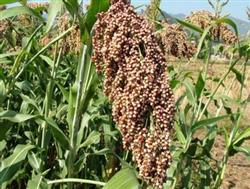
1. Timely sowing to ensure full stands
The basis for determining sowing time is soil temperature and soil moisture. In early spring, when the soil temperature at a depth of 10 cm reaches 12°C and the moisture content is 15-20%, sowing can begin. When necessary, irrigate first to replenish soil moisture before sowing, or sow with water to supplement moisture, to prevent sprout drying and uneven emergence.
In the western Liaoning region, the main sorghum production area of Liaoning, spring drought is often prone to occur, and making the most of spring soil moisture is the key factor in determining sowing time. In mountainous areas with severe spring drought, sloping fields and sunny plots should be sown early; low-lying waterlogged-prone areas, coastal areas, and plain plots can be sown appropriately later. Early-maturing varieties (Liaozha No. 1) can be sown after waiting for rain, and should be sown later rather than earlier, to prevent premature senescence and lodging in the later stage. Considering the entire province, the sowing period should be set from April 28 to May 4. While determining the sowing time, sowing quality should be improved by cleaning and sunning seeds before sowing, finely preparing the land, and applying sufficient base fertilizer, to ensure a full stand from a single sowing.
2. Reasonable close planting
The determination of planting density should be adapted to local conditions: first, according to local ecological and production conditions; second, according to the inherent characteristics of the variety. The hybrids used in Liaoning generally have a density of 6,500-7,000 plants per mu. Within the above range, fertile land is suitable for dense planting, and thin land is suitable for sparse planting; plots with high management levels are suitable for dense planting, and plots with poor management are suitable for sparse planting; sloping ridge land, low-lying land, and saline-alkali land should be appropriately reduced. In plots with missing seedlings, tillers can be retained, with two tillers per plant. For plastic film-mulched plots, large-ridge double-plant cultivation can be used.
3. Fertilizer and water management
Sorghum is a fertilizer-loving and fertilizer-tolerant crop. Generally, 3,000-4,000 kg of farmyard manure is applied per mu. According to the soil conditions and yield targets of the main sorghum production areas, the following fertilization standards should be determined:
In the Jinzhou and Jinxi areas, potassium deficiency is relatively serious, and attention should be paid to the application of potassium fertilizer. If the yield target is set at 600 kg per mu, then apply 44-66 kg of standard nitrogen, 13-18 kg of diammonium phosphate, and 16-25 kg of potassium sulfate per mu. In general production, it is customary to use diammonium phosphate and potassium sulfate as base fertilizer.
In the Chaoyang area, the soil is relatively poor, and the individual effects of nitrogen, phosphorus, and potassium fertilizers are all relatively obvious. Therefore, the fertilization characteristic should be to increase all kinds of fertilizers. If the yield target is set at 550 kg, then apply 64-66 kg of standard nitrogen, 14-15 kg of diammonium phosphate, and 17-18 kg of potassium sulfate per mu. In addition, applying sufficient farmyard manure and building soil fertility are very important.
In the Fuxin area, the soil is also very poor. When the yield target is determined at 550 kg, the fertilization amount is 58-60 kg of standard nitrogen, 11-12 kg of diammonium phosphate, and 16-17 kg of potassium sulfate per mu.
For topdressing sorghum at the jointing stage (young ear differentiation stage), generally when sorghum has 12-14 leaves, combine with intertillage and hilling to bury the fertilizer in the soil, promoting absorption and utilization. The jointing fertilizer accounts for two-thirds of the total application amount. Topdressing before flag leaf stage accounts for one-third of the total fertilization amount.
Other sorghum production areas can refer to the yield targets of the above three regions to determine reasonable fertilization standards.
Sorghum is a drought-tolerant crop with strong drought resistance, but this does not mean that yield will not suffer under drought conditions; it merely suffers less loss than corn, wheat, and other crops. Sorghum requires little water at the seedling stage, but when seeds germinate, it must be ensured that soil moisture is sufficient. When necessary, irrigate first to supplement moisture before sowing. During the period from the emergence of the 6th leaf to before jointing, drought is instead beneficial for seedling hardening and promotes deeper root growth. However, the booting stage to the grain-filling stage is the key water-demand period, with water demand accounting for 30% of total water demand. Water shortage during this period will seriously affect the number of grains per ear, thereby affecting yield. Therefore, during the jointing-booting stage and grain-filling stage, under drought and lack of rain, areas with conditions should irrigate in a timely manner. Only in this way can water promote fertilizer, fertilizer be realized through water, and the two promote each other, fully giving play to individual advantages and population uniformity, achieving the goal of increasing yield. In addition, sorghum has the strongest waterlogging tolerance among dryland grain crops. When waterlogging occurs, as long as drainage is timely, the impact on yield is not particularly great.
While focusing on the above three technical links, the entire field management should be incorporated into each technical link, such as checking fields and replanting missing seedlings, thinning and final singling, hoeing, ridging and hilling, and timely harvesting. All operational steps should be carried out in a timely manner to ensure high and stable sorghum yields.