Detailed Explanation of New Early-Maturing Cultivation Techniques for Water Bamboo (Zizania latifolia) under Plastic Greenhouse Cover
The main diseases of water bamboo are rust, brown spot, and sheath blight. Disease control in water bamboo must be based on agricultural measures and integrated management. Select and retain disease-resistant varieties, carry out thorough winter field cleaning, plant at a reasonable density, strengthen fertilizer and water management, manually strip off yellow and diseased leaves, and at the same time apply chemical control rationally, spraying at the early stage of disease onset to protect...
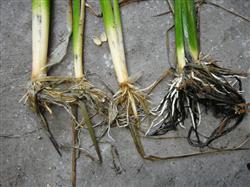 1. Sowing and plant setting. (1) Variety selection: choose early-maturing summer water bamboo varieties with a relatively low temperature requirement for shoot formation, such as Xiaolatai, Feng Hong Zao, and Zhejiao No. 2. (2) Field cleaning and fertilization: in mid-to-late December, cut off the aboveground residual stems and dead leaves level with the mud, clean the field, and burn them in a centralized manner to reduce the overwintering base of insect populations and pathogens. For fields with many weeds, 5-6 days before building the greenhouse, drain the standing water in the field and spray with 1 kg of 10% glyphosate aqueous solution mixed with 40 kg of water. Generally, apply 3000-5000 kg of decomposed organic fertilizer and 50 kg of 45% ternary compound fertilizer per mu. (3) Building the greenhouse: in warmer regions, water bamboo basically does not wither during the winter, so the greenhouse should be built before the frost period begins, generally around late December; in the Yangtze River Basin, where winter temperatures are lower, to prevent young seedlings in the greenhouse from forming shoots, the greenhouse should be built in mid-to-late January, when temperatures are about to rise. (4) Thinning seedlings and setting plants: when new seedlings reach about 30 cm in height, thin them so that each water bamboo clump retains 15-20 strong outer seedlings, remove other small seedlings on the clump, and at the same time press mud blocks into the center of the clump; thinning should control the basic plant population at about 35,000 plants per mu.
2. Water and fertilizer management. During the growth of water bamboo, the water level should always be maintained at 3-5 cm; in the later stage of shoot formation and swelling, the water level can be appropriately deepened to submerge the swelling water bamboo and delay the process of its skin turning green upon exposure to light, but irrigation should not be too early, otherwise it easily causes the shortened stem to elongate at the nodes and affects yield and quality. Fertilizer management should focus mainly on "promoting" growth; generally, after thinning seedlings and setting plants, apply 20-25 kg of 45% ternary compound fertilizer per mu; when 30% of the clumps in the population have tillers beginning to form and swell shoots, apply 15-20 kg of 45% ternary compound fertilizer per mu as shoot-forming fertilizer.
3. Temperature control. For greenhouses built before the New Year, sealing for heat preservation should be the main practice during the year; after the Beginning of Spring, temperatures change sharply, so they should still be sealed at night for heat preservation, while during the day frequent inspection is needed. When the weather is mild, uncover the film at both ends for ventilation and cooling and to supplement carbon dioxide; on clear and fine days, when the temperature inside the greenhouse exceeds 30°C, the side film and both ends should be uncovered for ventilation and air exchange; during continuous rainy weather, ventilation should also be strengthened, which helps produce strong seedlings. When the daily average temperature is 20-25°C, it is the suitable temperature for water bamboo shoot formation. When the daily average temperature reaches above 15°C around Qingming, all greenhouse film can be removed.
4. Earthing up to protect the shoots. Traditional techniques use deep irrigation to slow the rate at which the skin of water bamboo turns green; in recent years, Zhejiang Province has promoted the technique of earthing up to protect the shoots. The specific method: when tillers in a clump are found to begin forming and swelling shoots, immediately bank soil from between the rows to a height of 15-20 cm, not exceeding the water bamboo white eye. Earthing up should be done in stages; when one clump is seen forming shoots, earth up that clump; because plants form shoots at different times, it is necessary to harvest while earthing up. Harvest when the top heart leaf of the water bamboo tiller contracts and the leaf cushions on the left and right sides are level.
5. Pest and disease control. The main insect pests of water bamboo are the greater rice stem borer and the striped stem borer. Control methods: first, do a good job of winter field cleaning; after cutting off the aboveground dead plants and residual leaves, spray the water bamboo clumps and soil surface with 600-fold dilution of 20% triazophos emulsifiable concentrate to reduce the overwintering base of stem borers; second, during the water bamboo growing period, at the peak hatching stage of stem borer eggs, spray with 700-800-fold dilution of 80% shamiewie powder or 700-1000-fold dilution of 27% gaomieke emulsifiable concentrate. The main diseases of water bamboo are rust, brown spot, and sheath blight; when cleaning the field before building the greenhouse, burn diseased residual leaves, and increase potassium fertilizer to improve disease resistance; when seedlings are 10-20 cm tall, spray once for prevention with 600-fold dilution of 50% carbendazim wettable powder or 400-fold dilution of 70% mancozeb wettable powder, and spray 2-3 more times for prevention before shoot formation.