-
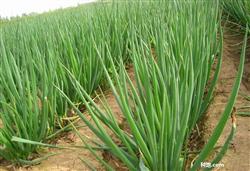
How should Welsh onion be managed during the growing process?
How are Welsh onions planted? What are the key points for managing Welsh onions? We would also like fellow gardeners who grow Welsh onions to share their experience. The traditional cultivation method for Welsh onions is mostly summer planting, autumn harvest and winter storage. In order to achieve a balanced year-round supply of Welsh onions, researchers have bred highly adaptable varieties, improved cultivation and management techniques, and applied some simple facilities (small...
-
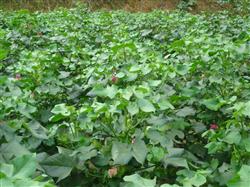
How should cotton be managed well in the middle and late stages?
How should cotton be managed well in the middle and late stages? Please introduce the management methods. In the middle and late stages, cotton can be managed by referring to the following methods: 1. Management during the flowering and boll-setting stage (1) Apply flowering and boll-setting fertilizer heavily and apply topping fertilizer. Cotton generally flowers around July 10. Fertilization during the flowering and boll-setting stage generally accounts for 50% of the topdressing amount during the growth period and can be appropriately advanced, applying as soon as flowers appear (July 10-15). On the basis of sufficient basal fertilizer or base fertilizer applied earlier, apply 40-45 kg per mu of compound fertilizer containing 15% each of nitrogen, phosphorus, and potassium, or 15-20 kg of urea, 15-20 kg of diammonium phosphate, and 10-15 kg of potassium chloride, or apply a formula fertilizer with the same content of nitrogen, phosphorus, and potassium. In cotton fields where flowering and boll-setting fertilizer is insufficient or there is a trend of fertilizer deficiency during the full flowering and boll-setting stage, applying topping fertilizer is beneficial for retaining summer bolls, increasing autumn bolls, and preventing premature senescence. In early August, apply 10-15 kg of urea as topdressing, no later than mid-August. In high-yield cotton fields, after the full boll stage, the root absorption capacity declines. In cotton fields with a trend of fertilizer deficiency, spray 300-500 times dilution (or 0.3-0.5 jin per mu) of potassium dihydrogen phosphate, or 15 ml of Lüzhi Feng (Shuofeng 481), or 10 ml of Duoxiao Fengchan Ling, and other plant growth regulators or foliar fertilizers, mixed with 30 kg of water, and spray 1-2 times. This has an obvious effect on increasing boll weight. (2) Irrigate in drought and drain in waterlogging. During the flowering and boll-setting stage, cotton is sensitive to water and is neither tolerant of drought nor waterlogging. Therefore, it is necessary to promptly meet the large water consumption demand of cotton fields. In high-yield cotton fields, as long as there is no rain for 7-10 days, irrigation should be carried out promptly. In general cotton fields, if the top leaves of the cotton plants show wilting at noon, they should be watered. When rainfall is heavy, drainage should be carried out promptly. (3) Intertillage and hilling. Before the cotton field closes in the early flowering stage, intertillage and hilling should be combined. This is beneficial for irrigation during drought and drainage during waterlogging in the full flowering and boll-setting period and helps prevent lodging in the later stage of high-yield fields. (4) Pruning. Top the plants early at the appropriate time, generally from July 15-20, and finish before July 25. Tip the side branches around August 10, no later than August 15. For row spacing above 1.1 m, retaining one vegetative branch (smooth shoot) during pruning gives the highest yield.
-
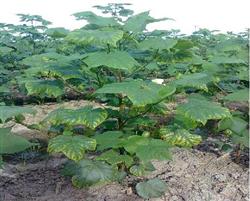
How should late-stage premature senescence in cotton be managed to prevent and control it?
How can management prevent and control late-stage premature senescence in cotton? Please provide methods. To prevent and control late-stage premature senescence in cotton, you can refer to the following methods: 1. Fertilizer and water management: According to the condition of the cotton plants, the climate and the soil conditions, apply the flowering and boll fertilizer heavily; if the flowering and boll fertilizer is insufficient, then apply a top-dressing fertilizer. After mid-August, if the maximum field water-holding capacity is below 60%, and in early September below 55%, water promptly to promote fertilizer with water and ensure the fertilizer effect is exerted in time. If cotton premature senescence is caused by soil potassium deficiency, while applying base fertilizer, increase the application of potassium sulfate or potassium chloride by 5-10 kg during the seedling and bud stages. When fertilizing, be sure to plow deeper than 20 cm, apply the fertilizer at the plow bottom, achieve deep fertilizer application, promote root penetration downward, reduce fertilizer loss, and improve fertilizer use efficiency. During the flowering and boll-setting stage, if drought occurs, water lightly, carefully clean the furrows and beds to prevent waterlogging again; if waterlogging occurs, drain promptly.
-
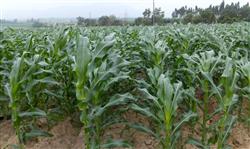
How can corn be managed better in the middle and late stages?
How should corn be managed well in the middle and late stages of cultivation? Please give guidance. The management of corn in the middle and late growth stages can refer to the following methods: Fertilization 1. Ear fertilizer. Generally, heavy nitrogen application is done at the large trumpet stage, accounting for about 50% of the total topdressing amount, with 30-40 kg of standard nitrogen fertilizer applied per mu. 2. Grain fertilizer. Generally accounts for about 10% of the total topdressing amount...
-
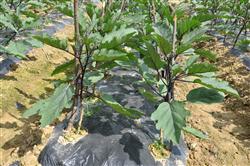
How should eggplants be managed during summer planting for the best results?
How should eggplants be managed well when planted in summer? Please explain. Summer eggplants, because their growing period falls in a season of high temperatures, frequent rain, and frequent pests, diseases, and weeds, have low and unstable yields. To achieve an ideal yield, the following field management measures should be carried out well: 1. Apply the "three" fertilizers properly: after the seedlings survive transplanting, apply a good seedling-promoting fertilizer, applying 1000 kg of 20% human excrement and urine per mu or applying 10-15 kg of compound fertilizer in holes; when the first eggplant fruit swells, apply a good first-fruit fertilizer, applying 1500 kg of human excrement and urine or applying 15 kg of compound fertilizer in holes; apply a good fruit-fattening fertilizer, applying 2000 kg of human excrement and urine or 20 kg of compound fertilizer when eggplants enter the fruiting stage.
-
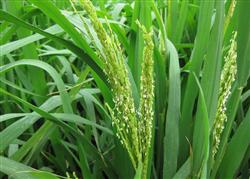
How should water be managed during the heading and grain-filling stage of rice?
How should water be managed during the heading and grain-filling stage of rice? Please explain. Mid-to-late July is when rice enters the heading and grain-filling stage, and scientific water management is quite critical for increasing rice yield and achieving high yields. For reference, see below: 1. The heading and flowering stage is a period when rice is relatively sensitive to water, second only to the late booting stage in sensitivity...
-
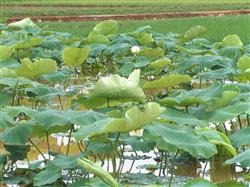
How should lotus root cultivation be managed?
How should lotus root cultivation be managed? Please give a detailed introduction. Lotus root cultivation can be managed by referring to the following methods: For topdressing lotus root, apply fertilizer 2-3 times. The first time is when 1-2 standing leaves have grown, the second time can be before the rows close, and the third time is when the rear ridge leaves appear. Per 667 sq m (mu), for the first application use 200...
-
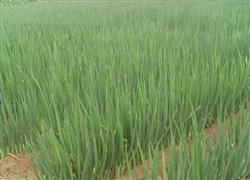
How should scallion cultivation be managed to achieve high yields?
How should scallion cultivation be managed to achieve high yields? Please provide an introduction to the methods. After scallions are planted between Grain in Ear (early June) and Minor Heat (early July), to obtain high-yield, high-quality marketable scallions, in addition to selecting good soil, crop rotation, and varieties, field management is especially important. Here are a few points: 1. Watering During the seedling recovery stage of scallions...
-
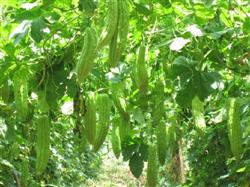
How should bitter melon be managed during cultivation to achieve high yields?
How should bitter melon be managed during cultivation to achieve high yields? Please provide an introduction to the management methods. The bitter melon root system prefers moist conditions and dislikes waterlogging. Normally, care should be taken to dig drainage ditches clear, and if a rainstorm occurs, standing water in the field should be drained promptly. Water use can be adjusted according to soil moisture conditions. Generally, on sunny days with strong sun and high evaporation, moisture disappears quickly,...
-
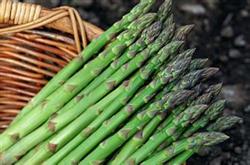
How should summer asparagus be managed so it grows well?
How should summer asparagus be managed properly? Please give guidance. Asparagus management has entered the stage of retaining spring mother stems. Retaining good spring mother stems and cultivating robust mother plants is the key to high yield and good quality of summer asparagus. The main technical measures for retaining spring mother stems are as follows: Retain at the proper time: The time for retaining spring mother stems should be determined separately according to the age of the asparagus plants. For asparagus with few spring spears and 1-2 year old plants, retention should be carried out around April 25 to the end of the month; for normal spring spear emergence and plants over 3 years old, retain in early May. As for the number of mother stems retained, retain 3-4 for two-year-old asparagus, 4-6 for 3-year-old asparagus, and 5-10 for asparagus over 4 years old; for larger crowns, a few more may be retained appropriately. Generally, solid stems with a diameter of 1-1.2 cm are selected for retaining mother stems.
条件筛选