How should summer asparagus be managed so it grows well?
How should summer asparagus be managed properly? Please give guidance. Asparagus management has entered the stage of retaining spring mother stems. Retaining good spring mother stems and cultivating robust mother plants is the key to high yield and good quality of summer asparagus. The main technical measures for retaining spring mother stems are as follows: Retain at the proper time: The time for retaining spring mother stems should be determined separately according to the age of the asparagus plants. For asparagus with few spring spears and 1-2 year old plants, retention should be carried out around April 25 to the end of the month; for normal spring spear emergence and plants over 3 years old, retain in early May. As for the number of mother stems retained, retain 3-4 for two-year-old asparagus, 4-6 for 3-year-old asparagus, and 5-10 for asparagus over 4 years old; for larger crowns, a few more may be retained appropriately. Generally, solid stems with a diameter of 1-1.2 cm are selected for retaining mother stems.
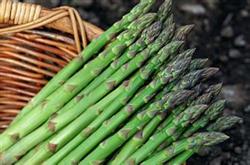
How should summer asparagus be managed properly? Please give guidance.
Asparagus management has entered the stage of retaining spring mother stems. Retaining good spring mother stems and cultivating robust mother plants is the key to high yield and good quality of summer asparagus. The main technical measures for retaining spring mother stems are as follows:
Retain at the proper time: The time for retaining spring mother stems should be determined separately according to the age of the asparagus plants. For asparagus with few spring spears and 1-2 year old plants, retention should be carried out around April 25 to the end of the month; for normal spring spear emergence and plants over 3 years old, retain in early May. As for the number of mother stems retained, retain 3-4 for two-year-old asparagus, 4-6 for 3-year-old asparagus, and 5-10 for asparagus over 4 years old; for larger crowns, a few more may be retained appropriately. Generally, solid stems with a diameter of 1-1.2 cm are selected for retaining mother stems.
Soil disinfection: Perennial asparagus is commonly contaminated by pathogens, which is the source of diseases such as stem blight, so soil disinfection must be taken seriously. Generally, 3-5 days before retaining mother stems, use 40% asparagus green powder at 600 times dilution to sprinkle and drench the crown and surrounding soil, so as to kill pathogens in the soil, reduce the pathogen base, and protect the retained mother stems from their attack.
Prevent disease and protect stems: When the retained spring mother stems grow to 5 cm high, apply 40% asparagus green powder at 50 times dilution to coat the stems, once every other day, for 3-4 consecutive applications; after the mother stems branch, spray 40% asparagus green powder at 200-300 times dilution, once every 2 days, for 3-4 consecutive sprays; after leaves unfold, spray 40% asparagus green powder at 400-600 times dilution, once every 3-5 days in the early stage and once every 5-7 days in the later stage, until the spring mother stems mature at the end of June. After that, spray again every 10-15 days depending on the growth of the mother stems. If rain occurs after coating or spraying, apply an additional coating or spraying once after the rain stops.
Apply more base fertilizer: After the spring mother stems are retained and grown into plants and begin to produce spears, apply organic fertilizer in time. Apply 1-1.5 tons of spent mushroom substrate or decomposed barn manure, 5 kg of compound fertilizer or 10 kg of urea, 5-7 kg of potassium fertilizer, and 5 kg of phosphate fertilizer per mu. Begin applying topdressing in late June. Apply once every 15-20 days in the early stage, and once every 10-15 days in the later stage, each time applying 7-8 kg of urea and 5 kg of potassium fertilizer or 10 kg of compound fertilizer per mu. During the interval between each topdressing, use foliar fertilizers such as "brassinolide" to spray the asparagus branches and leaves at 8-9 am or in the evening, which can enhance photosynthesis, improve resistance, and increase spear output.
Supporting management: In the middle and late stages of asparagus harvest, it coincides with the plum rain and high-temperature drought seasons, so attention should be paid to drainage prevention and moisture retention. When waterlogging occurs, dredge drainage in time and remove standing water; after rain, cultivate and weed in time to prevent surface soil compaction; in drought, irrigate with running water at the proper time to keep the soil moist, so as to improve yield and quality. At the same time, frequently prune lodging and withered yellow mother stems and some dense branches to keep the asparagus field ventilated. After late August, spear output decreases and mother stems wither and yellow, so harvesting should be stopped, clearing of the field should be done well, and management should enter the stage of retaining autumn mother stems.
Click to get more asparagus cultivation techniques
Click to get more vegetable cultivation techniques