How should Welsh onion be managed during the growing process?
How are Welsh onions planted? What are the key points for managing Welsh onions? We would also like fellow gardeners who grow Welsh onions to share their experience. The traditional cultivation method for Welsh onions is mostly summer planting, autumn harvest and winter storage. In order to achieve a balanced year-round supply of Welsh onions, researchers have bred highly adaptable varieties, improved cultivation and management techniques, and applied some simple facilities (small...
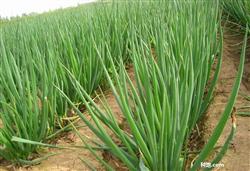 How are Welsh onions planted? What are the key points for managing Welsh onions? We would also like fellow gardeners who grow Welsh onions to share their experience.
The traditional cultivation method for Welsh onions is mostly summer planting, autumn harvest and winter storage. In order to achieve a balanced year-round supply of Welsh onions, researchers have bred highly adaptable varieties, improved cultivation and management techniques, and applied some simple facilities (small arched sheds, large sheds, simple solar greenhouses), etc., so that Welsh onions can be cultivated all year round and achieve better returns. Therefore, Zhongdi Network has compiled the cultivation methods and management key points for Welsh onions, listed in detail below for fellow gardeners' reference.
I. Selection of Welsh onion varieties:
For year-round cultivation, choose varieties that are cold-resistant, drought-resistant, heat-resistant, highly adaptable, with long white stalks and no tillering, such as Zhonghua Giant Welsh Onion, Zhangqiu Welsh Onion (Gaobiaobai), or the local farm variety Biangan Welsh Onion. Tillering varieties of Welsh onion are not suitable for year-round cultivation.
II. Cultivation methods for Welsh onions:
① From January to March, sow in a simple solar greenhouse, broadcast on flat beds, and young green onions come to market from March to May.
② In mid-to-late March, sow in small arched sheds, broadcast on flat beds, and young green onions come to market in June. They can also be transplanted in early-to-mid June, and harvested for market or stored for winter from October to November.
③ Sow and raise seedlings in the open field in early April, transplant densely in wide beds in mid-to-late June, overwinter in the open field, remove flower buds from March to April the following year, and green onions come to market from April to May.
④ Sow and raise seedlings from July to August, transplant from September to early November, plant densely (plant spacing 3 cm), overwinter in the open field, remove flower buds from March to April the following year, and green onions come to market from May to July.
⑤ Sow and raise seedlings in mid-to-late September, let the seedbed overwinter in the open field, and young green onions come to market from March to April the following year.
⑥ Sow and raise seedlings in mid-to-late September, transplant in mid-April the following year, harvest green onions for market from July to August, or transplant in June, and harvest for market and winter storage from October to November.
⑦ Sow in a solar greenhouse from late August to early September, cover the shed in mid-October, and young green onions come to market from December to February the following year.
III. Key management points for Welsh onions:
1. Seedbed management in winter and spring
Before overwintering, the seedlings should have 2-3 leaves. According to temperature and soil moisture, water once before the soil freezes, then cover with a layer of decomposed farmyard manure to preserve moisture and warmth and ensure the seedlings overwinter safely. In spring, as temperatures rise, the seedlings enter a period of rapid growth. First, thin the seedlings 1-2 times, with a spacing of about 3 cm. Second, in conjunction with watering, apply quick-acting nitrogen fertilizer or NPK compound fertilizer in 2-3 topdressings, 10-15 kg per 667 sq m each time, to promote rapid seedling growth, either for young green onions to come to market or to cultivate strong seedlings for transplanting.
2. Seedbed management in summer
Summer seedling raising occurs in a hot and rainy season. The key to management is to do well in three protections: first, prevent pests and diseases; second, prevent weeds, preventing weeds from crowding out the seedlings. After sowing and before emergence, spray 100 ml of 33% pendimethalin per 667 sq m to seal the soil, and combine with manual weeding 2-3 times to thoroughly eliminate weeds. Third, prevent waterlogging. The seedbed should be able to be watered in drought and drained in flooding, and must never accumulate water.
3. Transplanting management of Welsh onions
Before transplanting, apply sufficient base fertilizer: 6000 kg of decomposed high-quality farmyard manure, 30 kg of phosphate fertilizer, and 50 kg of NPK compound fertilizer per 667 sq m. Broadcast 1/3 of the total base fertilizer evenly, and apply 2/3 in concentrated furrows. When transplanting, grade the seedlings; large and small seedlings must not be mixed. For green onions to come to market, appropriate dense planting can be used, with row spacing of 60-70 cm and plant spacing of 3-4 cm. For scallions to come to market, use row spacing of 80 cm and plant spacing of 5 cm. After transplanting, cultivate and loosen the soil in time, level the ridges, break up compaction to promote root growth, and in conjunction with watering, topdress with quick-acting NPK compound fertilizer at 30 kg per 667 sq m. According to seedling growth, earth up in time to promote the formation of the white stalk.
IV. Pest and disease control for Welsh onions:
1. Underground pests of Welsh onions:
Mainly white grubs, mole crickets, and onion maggots. Before plowing the soil, combine with base fertilizer and apply 3 kg of 3% phoxim granules per 667 sq m; when transplanting, apply concentrated in the planting furrows. The peak damage period of onion maggots is generally from mid-April to early June and from early September to early November. During the larval stage, drench the roots with a 1000-fold solution of 50% phoxim emulsifiable concentrate, which works very well.
2. Aboveground pests of Welsh onions:
Mainly cabbage caterpillars, onion thrips, leafminers, and red spider mites. To control cabbage caterpillars, use 20-40 ml of 10% cypermethrin emulsifiable concentrate, 15-25 ml of 2.5% deltamethrin emulsifiable concentrate, or 10-30 ml of 20% fenvalerate emulsifiable concentrate, diluted with water and sprayed. To control onion thrips and leafminers, spray with a 1000-fold solution of 50% dimethoate emulsifiable concentrate or a 1000-fold solution of phoxim, a 4000-fold solution of Mieshabi, or a 1500-fold solution of fenvalerate. To control red spider mites, spray with a 1000-fold solution of Shamate. Stop applying pesticides 10 days before harvest and market.
3. Diseases of Welsh onions:
The main diseases of Welsh onions include rust, purple blotch, downy mildew, gray mold, and black spot. Control measures mainly involve applying more farmyard manure and phosphorus-potassium fertilizer to ensure robust plant growth. Cultivate and loosen the soil frequently, reduce soil moisture and humidity, drain promptly after rain, and regulate the field microclimate. Water frequently with small amounts, and prevent flooding irrigation. Control methods: for rust, use a 2000-fold solution of 25% triadimefon; for purple blotch, use a 500-fold solution of 50% carbendazim; for downy mildew, use an 800-fold solution of 25% metalaxyl or a 500-fold solution of chlorothalonil; for gray mold, use a 1000-fold solution of 20% dicloran or an 800-fold solution of 50% iprodione; for black spot, use an 800-fold solution of 50% carbendazim or a 1000-fold solution of 70% thiophanate-methyl. Spray every 5-7 days, for 2-3 consecutive times.
V. Soil treatment methods for continuous cropping land:
Welsh onions should not be continuously cropped, otherwise yield will be seriously affected. If continuous cropping is used, the soil must be treated.
① Apply more decomposed farmyard manure and phosphorus-potassium fertilizer to supplement the trace elements needed for Welsh onion growth, such as sulfur, zinc, calcium, magnesium, and iron, promoting robust growth of Welsh onions and improving disease resistance.
② Use fungicides to sterilize the soil, and before transplanting, apply phoxim pesticide in furrows to kill underground pests.
How to fertilize Welsh onions for high yield
Zhangqiu Welsh onion cultivation video