How should bitter melon be managed during cultivation to achieve high yields?
How should bitter melon be managed during cultivation to achieve high yields? Please provide an introduction to the management methods. The bitter melon root system prefers moist conditions and dislikes waterlogging. Normally, care should be taken to dig drainage ditches clear, and if a rainstorm occurs, standing water in the field should be drained promptly. Water use can be adjusted according to soil moisture conditions. Generally, on sunny days with strong sun and high evaporation, moisture disappears quickly,...
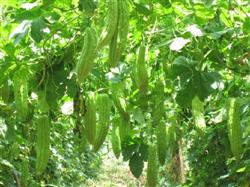
How should bitter melon be managed during cultivation to achieve high yields? Please provide an introduction to the management methods.
The bitter melon root system prefers moist conditions and dislikes waterlogging. Normally, care should be taken to dig drainage ditches clear, and if a rainstorm occurs, standing water in the field should be drained promptly. Water use can be adjusted according to soil moisture conditions. Generally, on sunny days with strong sun and high evaporation, moisture disappears quickly, so watering must be done promptly to ensure its physiological water requirements and avoid drought-induced wilting that affects plant growth and development and flowering and fruiting. During the high-yield period, apply ample nitrogen, phosphorus, and potassium fertilizers along with the water replenishment. A simple method is to broadcast various fertilizers on the surface of the bitter melon field. Fully decomposed farmyard manure can also be used. Pay attention to the principle of "small amounts, frequent applications" for fertilizer rates. When bitter melon enters the peak growth period, fertilization must be sufficient. During hot and dry seasons, water promptly. It is best to spread wheat straw on the bed surface to retain moisture, and also pay attention to preventing waterlogging.
I. Weeding: No weeds may be allowed in the open areas of the bitter melon field, on the surrounding field ridges, or in the ditches. Glyphosate-type chemicals can be used to kill them.
Plant training: Promptly remove old, yellow, and diseased leaves from the lower part of the trellis, as well as branches hanging down to the lower part that bear no fruit. If possible, branches in the upper part that have no fruit or female flowers should also be removed. Diseased and insect-damaged fruits should also be removed promptly. All removed leaves, branches, and fruits should be bagged and transported far away for destruction.
II. Promoting flowering: Frequently spray small amounts of agents such as "Kaihuajing", "Cuguoling", "Penshibao", "amino acids", brassinolide, borax, monopotassium phosphate, and calcium nitrate.
III. Harvesting
Bitter melon should be harvested promptly. Harvest when the young melon has grown fully, the wart-like protrusions on the rind have become prominent and swollen, and the tip of the fruit begins to shine.
IV. Pest and disease prevention
Bitter melon commonly develops nematode disease and fusarium wilt
(grafted seedlings generally do not develop the disease), powdery mildew, phytophthora blight, anthracnose, etc. The main insect pests are melon fruit fly and aphids. Powdery mildew: occurs during the flowering and fruiting period, covering the leaves with white powdery material, causing the leaves to lose green color and turn yellow, resulting in premature aging of the plant. Control method: When white powdery material appears on the leaves, spray the leaf surface once every 7-10 days with an aqueous solution of cyproconazole, triadimefon, Cui Bei, or sulfur suspension concentrate for control, spraying continuously 2-3 times, and note that the spray volume must be large.
Phytophthora blight: On leaves, it mostly starts from the leaf tip or leaf margin. The lesions are irregular in shape with indistinct edges, initially dark green and water-soaked, later turning brown. The lesions can expand to cover the entire leaf or more than half of it. When humid, a ring of white mold grows at the junction of the lesions. Control agents: chlorothalonil, Yike, Bordeaux mixture, Nongliling, Anke, dimethomorph, fosetyl-aluminum, sandofan, or Jinyinduomier by spraying, and remove diseased leaves and take them away for destruction.
Stem borers: Kill by spraying with triazophos, monosultap, bisultap, fipronil, chlorpyrifos, or Bt.
Aphids: Kill by spraying with imidacloprid, acetamiprid, or abamectin.
Melon fruit fly: The larvae bore into young melons to cause damage, deforming the young melons and causing them to change color prematurely, after which they rot and deteriorate and also give off a foul odor. Control method: During the young melon stage, spray the young melons 2-3 times with an aqueous solution of fipronil, or an aqueous solution of Nongdile, or an aqueous solution of Kung Fu, once every 4-5 days, and promptly remove deformed fruits and burn or bury them deeply outside the garden.
Click to get more bitter melon cultivation techniques
Click to get more vegetable cultivation techniques