-
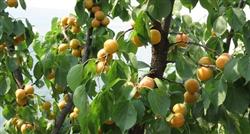
How to fertilize apricot trees for high yields? Detailed fertilization methods
How to fertilize apricot trees for high yields? Please explain in detail when to apply which fertilizer. To achieve high yields from apricot trees, you must manage fertilization at each stage well. For details, refer to the following methods: 1. Pre-bloom fertilizer. Fertilizer before bud break should be applied 15 days before flowering, with 500 g nitrogen, 300 g potassium, and 200 g phosphorus per apricot tree, mixed with human manure and urine...
-
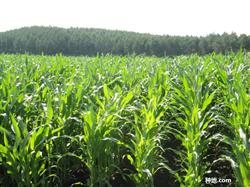
Summer Corn Fertilization Methods and Precautions
How should corn be fertilized in summer? Please advise that summer corn fertilization should follow the principles of "base fertilizer as the main part, topdressing as the supplement; within the base fertilizer, organic fertilizer as the main part, chemical fertilizer as the supplement; phosphorus and potassium fertilizers are mainly applied as base fertilizer, while topdressing is applied in stages; apply sufficient base fertilizer, apply seedling fertilizer early, and attach importance to the ear-setting fertilizer." The N:P:K ratio is preferably 1:0.5-0.8:0.5-0.8...
-
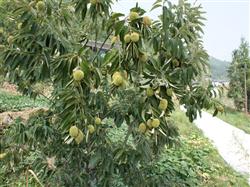
Chestnut Tree Summer Fertilization Methods and Technical Key Points
How should chestnut trees be fertilized in summer? Please provide guidance methods. For growing chestnut trees in summer, the following two fertilization methods can be used as reference: Soil fertilization method: For chestnut orchards with thin, poor soil and severe fertilizer deficiency, the soil fertilization method produces better results. Dig a circular ring trench within the drip line of the chestnut tree canopy for fertilization, with a trench width of 2...
-
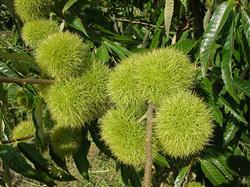
What are the scientific fertilization methods for chestnut trees?
How do you fertilize chestnut trees scientifically? Please give a detailed introduction. Chestnut, like other fruit trees, has the same fertilizer requirements, except that in addition to the three major elements of nitrogen, phosphorus and potassium, it is especially sensitive to the secondary element magnesium and the trace elements manganese and boron. If these are lacking or insufficient, serious physiological disorders occur that affect growth and development. According to measurements...
-
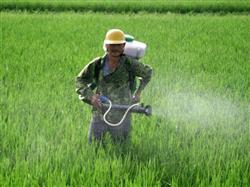
What precautions should be taken for foliar fertilization of rice?
What should be noted in foliar fertilization of rice? Please advise. Foliar fertilization has the advantages of low dosage, strong targeting, fast absorption, obvious effect and low cost. At present, rice is in its vegetative growth stage. How can the rapid growth of rice roots, stems, leaves and tillers be promoted? The author reminds farmers that when carrying out foliar fertilization on rice, they should...
-
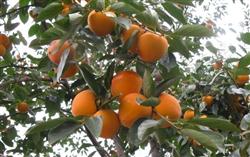
How to Fertilize a Persimmon Tree Well? A Detailed Guide to Scientific Fertilization Methods
How to fertilize a persimmon tree well? Please give guidance. The persimmon tree is a fruit tree that is widely cultivated, easy to manage, long-lived and high-yielding. It originated in our country, and is also cultivated in Japan, Korea and other countries. The persimmon tree is a deciduous tree, with a tree height of more than 10 m, a crown spread of about 16 m, and a lifespan of several hundred years. I. Root nutrition of the persimmon tree...
-
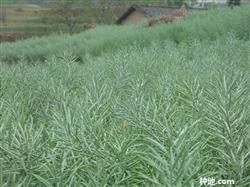
What are the key points of high-yield fertilization methods for rapeseed?
How should rapeseed be fertilized for high yield? Please introduce the following methods that can be referenced for fertilizing rapeseed: 1. Apply seedling fertilizer early. Seedling fertilizer should be applied appropriately early, and the application amount should account for 10%-15% of the total fertilization amount. Generally, apply 500 kg of decomposed human manure and urine per mu, plus 5-7 kg of urea or 10-15 kg of ammonium bicarbonate. When applying chemical fertilizer, it is best to dilute the fertilizer with clean water...
-
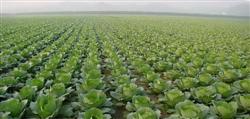
How to fertilize cabbage? A complete guide to scientific fertilization methods
How to fertilize cabbage? Is there any sharing of cabbage fertilization techniques? Producing 1000 kg of cabbage requires 2.0 kg of pure nitrogen, 0.72 kg of phosphorus pentoxide, and 2.2 kg of potassium oxide; for a yield of 3000-5000 kg of cabbage per mu, 6-10 kg of pure nitrogen, 2.2-3.6 kg of phosphorus pentoxide, and 6.6-11 kg of potassium oxide are required. Before planting...
-
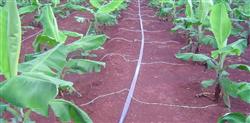
Detailed Guide to Irrigation and Fertilization Methods for Banana at Different Growth Stages
How to irrigate and fertilize bananas at each stage? Please give an introduction. For irrigation and fertilization of bananas at each stage, you can refer to the following methods: 1. Seedling stage. During the banana seedling stage, especially for tissue-cultured plantlets, the seedlings both need fertilizer and are sensitive to heavy fertilizer. Within 3 months after planting, follow the principle of "frequent application and light application." Begin fertilizing 10 days after planting when new leaves unfold, using...
-
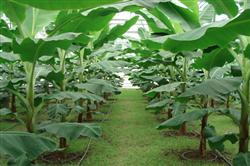
Scientific Fertilization Methods and Technical Points for Bananas
How to fertilize bananas scientifically when growing them? Please give a detailed introduction. Fertilizing bananas requires suitable fertilization according to the banana's growth stage. The following detailed analysis is for reference: (1) Growth and nutritional characteristics. Bananas have no taproot, and the root system is distributed most densely in the topsoil at a depth of 10-25 cm. Suckers begin to sprout after February each year...
条件筛选