What are the key points of high-yield fertilization methods for rapeseed?
How should rapeseed be fertilized for high yield? Please introduce the following methods that can be referenced for fertilizing rapeseed: 1. Apply seedling fertilizer early. Seedling fertilizer should be applied appropriately early, and the application amount should account for 10%-15% of the total fertilization amount. Generally, apply 500 kg of decomposed human manure and urine per mu, plus 5-7 kg of urea or 10-15 kg of ammonium bicarbonate. When applying chemical fertilizer, it is best to dilute the fertilizer with clean water...
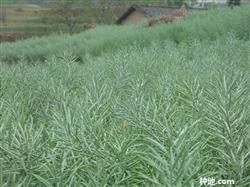
How should rapeseed be fertilized for high yield? Please introduce
The following methods can be referenced for fertilizing rapeseed:
1. Apply seedling fertilizer early. Seedling fertilizer should be applied appropriately early, and the application amount should account for 10%-15% of the total fertilization amount. Generally, apply 500 kg of decomposed human manure and urine per mu, plus 5-7 kg of urea or 10-15 kg of ammonium bicarbonate. When applying chemical fertilizer, it is best to dilute the fertilizer with clean water and pour it on.
2. Apply winter fertilizer steadily. Winter fertilizer should mainly be slow-release fertilizer. Use 3000-4000 kg of farmyard manure per mu, about 20 kg of compound fertilizer, and 300-500 kg of straw. Before fertilizing, first cultivate and weed, then fertilize, and bank the soil around the roots.
3. Apply bolting fertilizer heavily. Bolting fertilizer is one of the most effective fertilizers in the life of rapeseed, usually accounting for 30% of the total fertilization amount. At the same time, the following should be done: First, fertilize according to the seedlings. For fields with large seedlings, early yellowing due to nutrient deficiency, and insufficient soil fertility, apply heavily. Second, apply nitrogen and potassium fertilizers together. For fields with autumn growth and strong winter seedlings, apply 15-20 kg of urea and 5-6 kg of potassium chloride per mu in late January or early February of the following year. Third, for fields with severe fertilizer deficiency, it is best to apply bolting fertilizer in two applications, with an interval of 10-15 days, and use a slightly larger amount.
4. Apply flower fertilizer skillfully. Applying flower fertilizer helps make up for insufficient fertility in the middle and late stages. Specifically, it should be determined according to seedling conditions and soil fertility. For fields with stable growth after spring and insufficient fertility, apply 4-7 kg of urea per mu, or 8-10 kg of ammonium sulfate. For weak growth, apply early. For fields with good growth and sufficient fertility, no more fertilizer should be applied.
5. Boron fertilizer must be applied. Brassica napus rapeseed is a boron-loving crop, and hybrid rapeseed is relatively sensitive to boron. Boron fertilizer is generally better applied as a base application and foliar spray. When used as base fertilizer, mix 0.5 kg per mu with the base fertilizer. When spraying leaves, choose the bud and bolting stage and early flowering stage, use 150 g of borax each time per mu, dilute with 50-75 kg of water, and spray twice continuously.
6. Supplement with grain fertilizer. After rapeseed flowering, root activity decreases. Supplementing with grain fertilizer is an effective method to extend the lifespan of leaves and stems, increase grain weight, and improve yield. Generally, use 150 g of potassium dihydrogen phosphate and 0.5 kg of urea per mu each time, dilute with 50-60 kg of water, and spray 2-3 times continuously. Grain fertilizer can also be supplemented when applying pesticides for disease and pest control.
Click to get more rapeseed planting techniques
Click to get more grain crop planting techniques