-
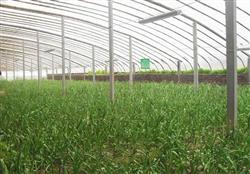
Cultivation Techniques for Intercropping Corn with Cucumber Followed by Garlic
Garlic is an essential seasoning in daily life; it is indispensable for cooking and stir-frying. In recent years, people have discovered many pharmacological effects of garlic, finding that it can prevent and treat a variety of diseases. American scientists have listed garlic as a basic health food. At present, garlic has become a worldwide vegetable, especially in...
-
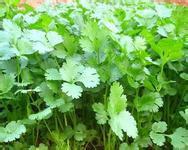
Detailed Explanation of the Intercropping Cultivation Technique for Chili Pepper, Loofah and Cilantro
By intercropping loofah and cilantro with chili pepper in greenhouses, greenhouse space can be used rationally, with a per-mu yield of 3000 kg of chili pepper, 1500-1800 kg of loofah and 550-600 kg of cilantro, giving considerable economic benefits. The cultivation technique is introduced as follows: 1. Variety selection. For chili pepper, choose the early-maturing superior varieties Wan Jiao No. 4 or Su Jiao No. 5...
-
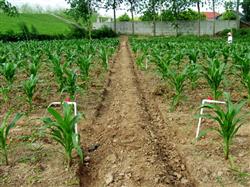
Detailed Explanation of Ginger and Corn Intercropping Cultivation Techniques
Ginger is a shade-tolerant crop, and high temperatures and strong light are unfavorable for its growth. Intercropping tall-stalk crops in a ginger field can make full use of the three-dimensional space of tall and short crops, provide shade for ginger, improve light energy utilization, and also improve land utilization, increasing yield per unit area. It does not affect the yield and quality of ginger, and can also...
-
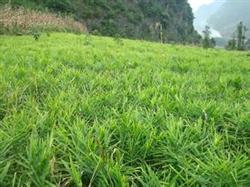
Intercropping and Relay Cropping Technique for Lettuce, Ginger, Watermelon and Bok Choy
1. Topdressing: generally 2 to 3 times. The first is in early to mid-June, applying 1000 kg of barnyard manure plus 15 kg of urea per mu between the rows, covered with a thin layer of soil. The second is in early to mid-July after the mother ginger is dug, applying 150 kg of decomposed rapeseed cake or 30 kg of compound fertilizer per mu; the third is in early September after the frame is removed, applying another dose of human excrement and urine to prevent nutrient deficiency...
-
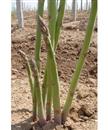
Detailed Explanation of Asparagus Intercropping and Relay Cropping Vegetable Cultivation Techniques
Asparagus brown spot disease is an important disease affecting asparagus quality and yield, and it occurs commonly in various regions. 1. Pathogen: Asparagus brown spot disease is caused by infection by fungi of the genus Cercospora in the Deuteromycotina. 2. Symptom identification: When plants are affected, stems, lateral branches, and cladodes all suffer damage; diseased leaves turn yellow, dry up, and fall...
-
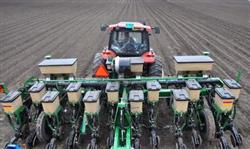
Detailed Explanation of Key Technical Points for Relay-Intercropping Corn Sowing
Improving sowing quality: To ensure full stands and strong seedlings of corn, generally apply 5 kg of diammonium phosphate and 1 kg of zinc sulfate per mu as seed fertilizer. Before sowing, spread out heaps of wheat straw evenly so as not to affect sowing and seedling emergence. When sowing, pay attention to the operating speed of the seeder to prevent missed sowing or sowing seeds on wheat stubble. Try to achieve "rows...
-
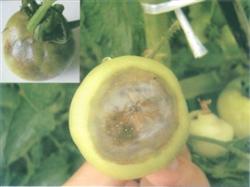
High-Efficiency Intercropping Cultivation Techniques for Spring Cauliflower and Pumpkin
I. Symptoms: 1. Seedlings: infected plants develop dark green water-soaked lesions that spread from the leaves to the main stem, causing the petioles and stems to become thin, dark brown, rotten and collapsed, with the whole plant wilting; when humidity is high, a white mold layer forms on the diseased parts. When the base of the young stem is affected, water-soaked constriction forms, and the seedling wilts or falls over. 2...
-
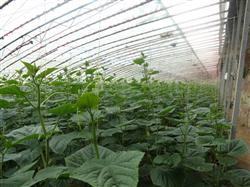
Detailed Explanation of Spring Cauliflower and Pumpkin Intercropping Cultivation Techniques
In spring, when it is time to train the pumpkins grown in arch sheds onto trellises, many vegetable growers choose single-line trellising. Single-line trellising simply means hanging the two vines of the pumpkin side by side, which makes trellising faster. However, because pumpkin leaves are relatively large, the vines already look crowded as soon as the fruit begins to set, which is unfavorable for pumpkin coloration. Vegetable growers in Jitai Town, Shouguang City, Shandong Province...
-
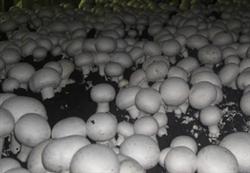
Cultivation Techniques for Intercropping Button Mushrooms in Winter-Warm Greenhouses with Cucumbers
To increase greenhouse income, we used the temperature and humidity conditions and limited space inside the greenhouse to carry out a three-dimensional planting trial of vegetables and button mushrooms. From October 1996 to May 1997, in a 420 sq m greenhouse, without affecting vegetable cultivation, we grew 200 sq m of button mushrooms, producing 2080 kg of button mushrooms, ...
-
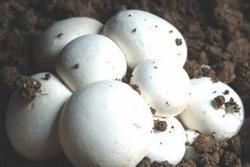
Key Management Techniques for Intercropping Cucumber with Button Mushrooms
Strictly control the temperature inside the shed. During fruiting, the daytime air temperature inside the shed should be kept at 20°C-30°C, and at night above 10°C. On cloudy days when light is insufficient and the shed temperature is low, use electric lights at night to appropriately supplement light and raise the temperature, installing one 100-watt bulb every 6 m. Because button mushrooms are cultivated on the ground and are mainly affected by ground temperature, the shed...
条件筛选