-
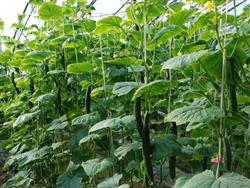
High returns from using the five-change planting method for overwintering cucumbers
Change dense planting of seedlings to rational sparse planting. In winter, temperatures are low and light is weak, so crop photosynthesis is relatively poor, and only rational sparse planting can achieve high yields. If plants are too dense, they will also grow tall and spindly as they compete for light, and the fruit-setting rate will decline. Poor ventilation also makes them prone to infection by multiple diseases, and dense leaves make spraying difficult. Once the disease spreads, it is very hard to cure completely. Flat beds...
-
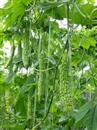
Key Cultivation Techniques for Intercropping Bitter Melon in Greenhouse Cucumber
Bitter melon is a heat-tolerant crop with few pests and diseases. Using a solar greenhouse for intercropping cucumber with bitter melon makes full use of the greenhouse's idle period, improves the utilization rate of greenhouse facilities, and increases economic returns. Variety selection. For cucumber, use Xintai Mici as the scion and black-seed pumpkin as the rootstock for grafted seedling raising....
-
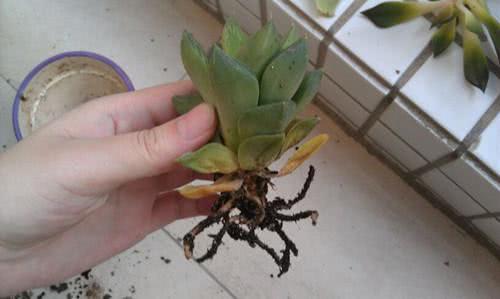
When succulents show this condition, you must repot them, otherwise you will be left with nothing but empty pots by winter
Autumn has arrived, and many gardening enthusiasts like to keep a few potted flowers at home. They not only decorate the room but also purify the air. Succulents are excellent potted plants, plump and especially cute, and keeping them at home...
-
How to overwinter and protect spinach seedlings in the north? Key technical points explained in detail
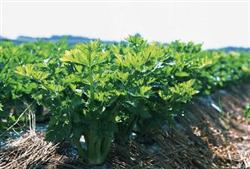
Celery, also known as Western celery, foreign celery, or American celery, is planted in autumn in the Shuyang area. The average yield per mu is 3000-4000 kg, and high-yielding fields can reach 5000 kg per mu. Its high-yield autumn cultivation techniques are briefly described as follows: 1. Select good varieties for sowing. Choose varieties that bolt late, have strong stress resistance, are not prone to softening, and have thick, solid stalks...
-

What to do when winter jujube has a low fruit-setting rate? Here are methods to teach you how to improve the fruit-setting rate
How to improve the fruit-setting rate of winter jujube
-
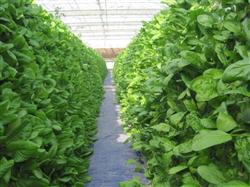
How to apply wintering fertilizer properly to spinach before overwintering
1. Sowing. Spinach is mainly broadcast-sown, though drilling is also possible. Under high-temperature conditions, germination is slow, so for early-autumn sowing it is best to soak the seeds to promote germination: soak the seeds for 12 hours, then treat them in a refrigerator at 4°C for 24 hours, and then keep them at 15-25°C to promote germination for several days; once most have germinated, they can be broadcast-sown. Sowing rate per mu...
-
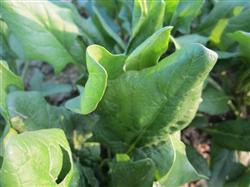
How to overwinter and preserve autumn spinach seedlings? A full analysis of the key technical points
Autumn spinach is an overwintering vegetable sown in autumn and harvested in spring. It begins overwintering at the end of November and turns green again in early March of the following year, a period lasting more than 100 days. Therefore, under long-term low-temperature and dry conditions, how to ensure safe overwintering is the key to achieving a bumper harvest. 1. Water the freezing water well. Watering the freezing water must achieve "one determination" and "two suitability...
-
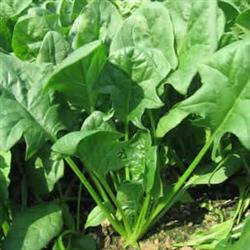
Key Techniques for Three-Dimensional Intercropping of Greenhouse Green Peppers, Loofah, and Cilantro
Summer spinach, also known as fu spinach, is difficult to cultivate and can only be grown on a small scale because it tends to bolt prematurely, and it also has the shortest leaf growth period of any crop in the year, resulting in unsatisfactory quality and yield, with pests and diseases hard to control. 1. Variety selection: It is advisable to choose varieties with strong drought resistance, heat tolerance, rapid growth, and low sensitivity to day length...
-
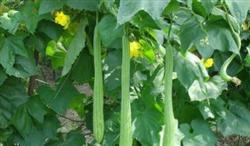
Dense-Planting Cultivation Techniques for Luffa (Sponge Gourd) in Winter-Warm Greenhouses during the Winter-Spring Season
Using winter-warm greenhouses for high-density off-season cultivation of luffa can greatly increase yields, with a per-mu yield of over 5000 kg and a per-mu income of 30,000-40,000 yuan. Variety selection: choose early-maturing varieties with strong cold tolerance, disease resistance and adaptability, such as Jiangshu No.1, Zaoza No.1, Cuilu Early Luffa, Yulu Early Luffa, and Wuye. Xiang...
-
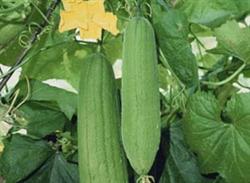
How can loofah be managed in deep winter to increase yield?
In winter, low temperatures causing low yields in various vegetables is what makes vegetable farmers feel most powerless! In Handong Village, Luocheng Subdistrict, Shouguang City, the author visited Master Zhu, an experienced loofah grower in the village. Thanks to proper management, although the loofah yield in Master Zhu's greenhouse was also affected by the low temperatures, it was...
条件筛选