How can loofah be managed in deep winter to increase yield?
In winter, low temperatures causing low yields in various vegetables is what makes vegetable farmers feel most powerless! In Handong Village, Luocheng Subdistrict, Shouguang City, the author visited Master Zhu, an experienced loofah grower in the village. Thanks to proper management, although the loofah yield in Master Zhu's greenhouse was also affected by the low temperatures, it was...
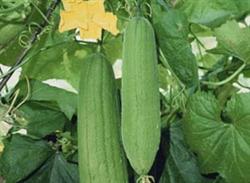
In winter, low temperatures causing low yields in various vegetables is what makes vegetable farmers feel most powerless! In Handong Village, Luocheng Subdistrict, Shouguang City, the author visited Master Zhu, an experienced loofah grower in the village. Thanks to proper management, although the loofah yield in Master Zhu's greenhouse was also affected by the low temperatures, it was much better than that of other loofah growers. He believes that, according to the cultivation model used by most loofah growers in Shouguang City, the low-temperature period happens to coincide with the peak fruiting period of loofah. Therefore, for overwintering loofah to fully achieve the high benefits of off-season production, management during the fruiting period is extremely important. Only by strengthening management can loofah yield be maximized!
1. Light and temperature regulation in January and February
Loofah loves strong light, tolerates heat and moisture, and fears cold. To prevent low-temperature cold waves from causing damage, light and temperature regulation must be done promptly for overwintering loofah grown off-season. When overwintering loofah enters the sustained peak period of flowering and fruiting, the plant also enters a stage where vegetative growth and reproductive growth proceed simultaneously and both flourish. Particular attention should be paid to strengthening light and humidity management in January and February, keeping the greenhouse temperature at: 24-30°C during the day, not exceeding 32°C at the highest; 12-18°C at night, with the short-term lowest temperature before dawn not lower than 10°C; during strong cold wave weather, the absolute minimum temperature in the greenhouse must not be lower than 8°C. Because loofah has strong moisture tolerance, ventilation for dehumidification can be reduced in frequency and volume in order to preserve heat. Generally, in greenhouses with good insulation, temperature is relatively easy to control, and the fruit grows faster.
2. Water and fertilizer supply during the fruiting period
After entering the sustained flowering and fruiting period, both vegetative growth and reproductive growth of the plant enter a vigorous stage. The plant volume gradually increases, cumulative fruit production rises, and water and fertilizer consumption gradually increases. To meet the water and fertilizer demands of high-yield loofah cultivation, the interval between watering and topdressing should gradually be shortened, and the amount of water and topdressing should increase accordingly. In the early part of the sustained peak flowering and fruiting period (January and February), water once every two harvests of tender fruit (that is, at an interval of 20-25 days), and apply decomposed chicken manure and human excrement, or humic acid type fertilizer, with the irrigation water. When necessary, carbon dioxide gas fertilizer can be released in the greenhouse. In the middle part of the sustained peak fruiting period of overwintering loofah from March to May, quick-acting fertilizer applied with water and quick-acting foliar fertilizer spraying should be alternated, that is, water about once every 10 days, applying quick-acting nitrogen-potassium-calcium compound fertilizer or organic quick-acting compound fertilizer with the water. Generally, apply 10-12 kg per 667 sq m of greenhouse field. At the same time, spray foliar fertilizer such as Fengshou No. 1 about once every 10 days to regulate plant growth.
3. Pruning and vine training
Both the main vine and side vines of loofah can bear fruit. For overwintering loofah cultivated under protection in winter-warm plastic greenhouses, under high-density planting conditions, single-vine pruning should be adopted. Before fruiting and in the early stage of sustained flowering and fruit setting, promptly remove the axillary buds in the leaf axils of the main vine, leaving no side branches (vines), and train one main vine per plant up to the trellis. In the middle part of the sustained peak flowering and fruiting period, in addition to using the main vine to bear fruit, short side vines with 2-3 nodes can also be kept to bear fruit. That is, keep one fruit on a side branch, keep 1 leaf after the fruit, and pinch out the growing tip, so that all side branches on the whole plant each keep one fruit. In the late part of the sustained peak flowering and fruiting period, only remove the thin and weak side branches early, protect the main vine and retain well-growing side vines, letting them bear 2-3 tender fruits before pinching, so that several side vines and the main vine on the same plant bear fruit at the same time.
4. Cultivating strong vines
Teacher Zhu said that under low-temperature and low-light conditions, loofah plants often show slow growth, thin and weak stems and vines, slow fruit growth, or fruit causing the plant to collapse. Therefore, cultivating strong vines is the key to escaping the low-yield predicament:
First is keeping fruit late. In low-temperature seasons, plants grow slowly. If fruit is kept too early, it naturally easily causes the plant to collapse. To ensure the balance between vegetative growth and reproductive growth during the fruiting period, Teacher Zhu believes that the first crop of loofah should preferably be kept when the plant has grown to 22-24 leaves. After loofah enters the fruiting period, to ensure coordinated vegetative and reproductive growth, it should also be changed to keeping one fruit every 4-5 leaves, so that premature aging generally will not occur. If thin and weak branches and vines appear during the loofah fruiting period, all young fruits should be removed promptly, first promoting vine growth, and then deciding whether to keep fruit depending on the situation.
Second is caring for the root system. Although loofah has a well-developed root system, when the soil temperature is low in winter, the roots grow slowly. If too much water and fertilizer are applied at one time, it is very easy to damage the roots, affecting root development and further causing thin and weak stem and vine growth. Therefore, when watering and fertilizing, the amount of water should be as small as possible, and flood irrigation must never be used. For fertilizer application, biological bacterial fertilizer or humic acid type fertilizer can be chosen to promote rooting and nourish the roots.
This winter has had relatively many consecutive cloudy days and foggy weather. In production, many vegetable farmers did not check the weather forecast in advance, watered one day, and then encountered temperature drops and cloudy snow the next day, resulting in root damage. Therefore, in winter vegetable management, special attention should be paid to weather changes. When deciding to water, at least ensure two or three days of clear, good weather after watering, and it should be done in the morning. After watering, close the greenhouse to raise the temperature and increase soil temperature.
In addition, disease-free vines should be cultivated. Gray mold, sclerotinia rot, and bacterial soft rot are the main diseases harming loofah growth in deep winter. During management, "prevention first, integrated control" should be followed to cultivate disease-free, strong loofah vines.