How to apply wintering fertilizer properly to spinach before overwintering
1. Sowing. Spinach is mainly broadcast-sown, though drilling is also possible. Under high-temperature conditions, germination is slow, so for early-autumn sowing it is best to soak the seeds to promote germination: soak the seeds for 12 hours, then treat them in a refrigerator at 4°C for 24 hours, and then keep them at 15-25°C to promote germination for several days; once most have germinated, they can be broadcast-sown. Sowing rate per mu...
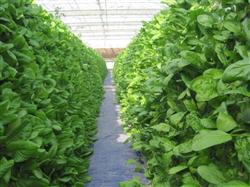 Autumn spinach is an overwintering vegetable sown in autumn and harvested in spring. It begins overwintering in November and turns green again in March to early April of the following year, a period of more than 100 days. Therefore, under long-term low-temperature conditions, how to ensure safe overwintering is the key to a bumper harvest.
Water the freezing water well. Watering the freezing water must meet the "one certain" and "two appropriate" requirements. "One certain" means deciding whether to water the freezing water based on the soil moisture content. Generally, when the absolute moisture content of sandy loam is below 15%, that of loam is below 17%, and that of clay is below 20%, the freezing water should be applied. "Two appropriate" means watering at the appropriate time and in the appropriate amount. The suitable time for watering the freezing water is when the soil plough layer thaws during the day and freezes at night. The appropriate amount means the amount of freezing water should not be too much or too little, and it is generally suitable when it connects with the subsoil moisture.
Apply the wintering fertilizer well. Applying wintering fertilizer can increase the nutrient content of the soil, serve the purpose of using winter fertilizer in spring, and promote weak seedlings to become strong. This is especially important for vegetable plots with little base fertilizer, poor soil fertility, and weak seedlings. Therefore, the wintering fertilizer should be applied together with the freezing water, generally 10 kg of urea or 20 kg of ammonium sulfate per mu, applied with the water.
Covering for cold protection. In the severe cold period in northern regions, the absolute low temperature is very unfavorable for the safe overwintering of vegetable seedlings, so coverings should be used to protect against the cold and ensure the seedlings overwinter safely. Covering can generally be carried out after the soil of the plough layer has completely frozen. The covering material is farmyard manure rich in organic matter and crushed and finely broken up, and about 1000 kg per mu is sufficient.