-
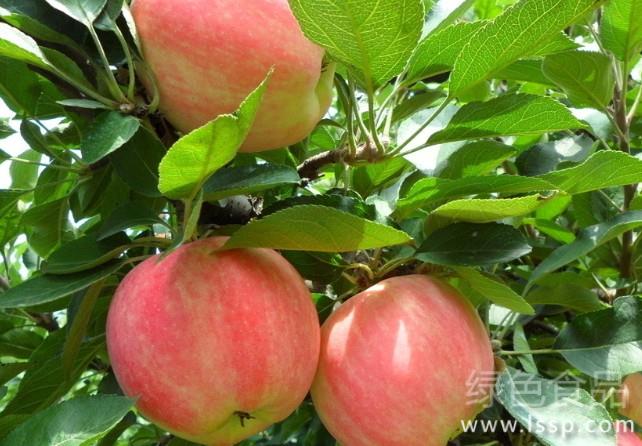
The apple fruit surface is rough, which affects its market appeal. How can the glossiness be improved?
The fruit surface is rough, affecting the apple's market appeal. How can the fruit surface glossiness be improved?
-
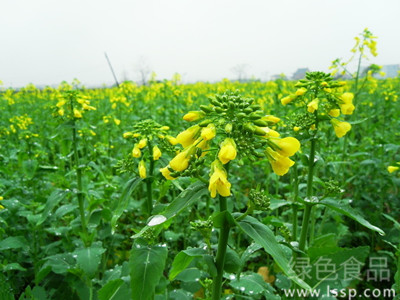
Improved Rapeseed Cultivation Method - High and Stable Yield, Low Cost Cultivation
Improved Rapeseed Cultivation Method - High and Stable Yield, Low Cost Cultivation
-

What to do when a larch improved seed base does not flower and sets little seed? Techniques for flowering and seed setting
Fund project: Construction project of the larch and Chinese pine improved seed base at Houzhenzi Forest Farm, Zhouzhi County
-

How can the planting efficiency of Chaenomeles speciosa be improved? Sharing of key technical points
Chaenomeles speciosa is a perennial deciduous shrub of the genus Chaenomeles in the rose family. It can serve as an ornamental plant and also has medicinal value; its medicinal material is called "Zhoupi Mugua" (wrinkled-skinned Chaenomeles fruit), with effects such as promoting meridian circulation and invigorating the stomach to resolve dampness. It is often distributed in Anhui, Hubei, Shandong and other places
-
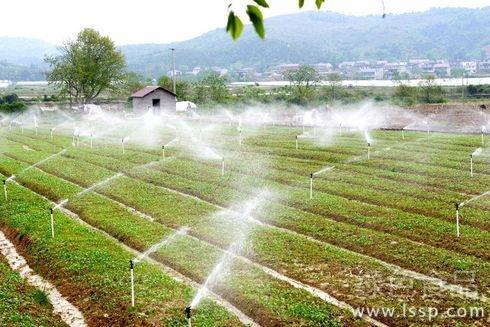
How Can Agricultural Water-Saving Technology Be Improved? Introduction to Five Models
Improvement Methods: Introduction to Five Agricultural Water-Saving Technology Models
-

Variety Characteristics of the Improved Tea Cultivar Ningzhou No. 2
It belongs to the clonal propagation group. It is a national-level improved cultivar. It was bred by the Jiangxi Provincial Xiushui Tea Research Institute. Morphological characteristics: shrub type, medium-leaf, medium-bud cultivar. The tree posture is open and spreading; spring buds sprout in late March, and the peak period of one bud and three leaves occurs in late April, with a 100-bud weight of 71 grams. It is suitable for producing famous green tea in the Jiangxi tea region. Green tea made from it has a fresh fragrance and mellow taste. Quality characteristics of fresh leaves of one bud and two leaves in spring tea: tea polyphenols 25.0%, water extracts 41.7%.
-
Which improved tea tree cultivars are suitable for making Dafo Longjing tea?
With the development of famous and high-quality tea production, the role and benefits of clonal improved cultivars have become increasingly prominent, and they have been rapidly promoted and are deeply welcomed by tea farmers. In order to help the broad community of tea farmers rationally select improved tea seedlings when developing new tea gardens and distinguish inferior or fake tea seedlings, a brief introduction is now given to some improved cultivars suitable for making Dafo Longjing tea. (1) Yingshuang is a national-level improved cultivar, a small tree type, medium-leaf clonal improved cultivar bred and completed by the Hangzhou Tea Research Institute. Its main characteristics are early development, with the picking period for famous tea around March 20, medium bud density, strong white bud ability, and a long growth period; tea can still be picked during the Frost's Descent season, with strong tenderness retention, slightly weak stress resistance, and high yield. It is especially suitable for making famous and high-quality tea, such as Longjing tea; the green tea made from it has high aroma and a strong, fresh taste.
-
Anhui's 29 leading cotton varieties for this year's improved seed subsidy
Based on variety promotion in the project areas, provincial variety demonstrations and expert review, the Anhui Provincial Agricultural Bureau researched and selected 29 leading varieties for the 2008 cotton improved seed subsidy project. The specific varieties are as follows: 26 hybrid cottons, namely E-zamian No. 11, CCRI 53 (Zhongza 003), Wanmian 25 (Lingza No. 1 F1), Chuzamian 180 (D180F1), Nannong No. 6 (Nankang No. 6, GKz23), Jiza 6268, Wanmian 23 (Dangza No. 1 F1)
-
Introduction to Xinqiu 2, a Recommended Variety under the Cotton Improved Seed Subsidy Program
National Cotton Approval 2007008 Characteristics: A transgenic insect-resistant mid-maturity hybrid first-generation variety. In the Yellow River basin cotton region, the spring-sowing growth period is 120 days. Emergence is relatively late, seedling vigor is weak, mid-season vigor is strong, and late-season vigor declines, with average leaf function. The plant type is compact, plant height 100 cm, leaves medium-sized and dark green, the first fruiting branch node is at 7.5 nodes, bolls per plant 17.6, boll ovoid, boll opening smooth, single boll weight 6.0 g, lint percentage 41.6%, seed index 10.1 g, pre-frost boll rate 96.5%.
-
Demian 998 is a recommended variety for the cotton improved seed subsidy program.
National Approved Cotton 2010005 characteristics: a transgenic insect-resistant gene mid-early maturing hybrid variety, with a growth period of 120 days under late spring sowing in the Yellow River Basin cotton region. Strong emergence, large cotyledons, robust seedlings, strong growth throughout the growth period, good uniformity, concentrated boll setting, and smooth boll opening. Plant height 106.2 cm, plant type relatively loose, stems thick and sturdy with many hairs, leaves medium-sized and dark green, bolls oval and relatively large, first fruiting branch node at 6.9 nodes, bolls per plant 17.3, single boll weight 6.4 g. Lint percentage 41.6%, seed index 11.5 g, pre-frost flower rate
条件筛选