How Can Agricultural Water-Saving Technology Be Improved? Introduction to Five Models
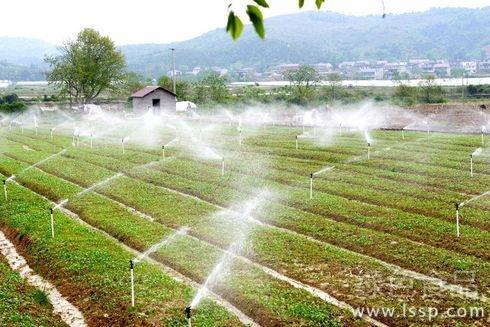
Water-saving agriculture
China is a major agricultural country. Farmland is a major water user, accounting for about 80% of the country's total water consumption, but less than 30% of that is actually used by crops. A large amount of water evaporates during irrigation. Therefore, irrigation methods should be improved and water-saving agriculture should be developed.
Water-saving agriculture is agriculture that improves water use efficiency; it is a systematic project for the integrated development and utilization of water, soil and crop resources. The criteria for measuring water-saving agriculture are crop yield and quality, water use efficiency and water productivity.
1. Integrated water and fertilizer management is a new technical model of irrigation and fertilizer application. Under pressurized irrigation conditions, irrigation and fertilization are combined; according to a scientific formula, chemical fertilizers are dissolved in the irrigation water, and according to the crop's demand for water and nutrients and the soil moisture and nutrient status, water and nutrients are delivered to the soil around the crop roots at the right time and in the right amount. There are many ways to apply pressurized irrigation, and the most suitable for combining with fertilization is micro-irrigation, including four forms: drip irrigation, micro-sprinkler irrigation, subsurface irrigation and small-pipe irrigation. This water-saving model has turned the irrigation of land that has lasted for thousands of years into the irrigation of crops, and turned fertilizing the land into fertilizing the crops.
2. Economic plant hedgerows involve planting perennial woody or herbaceous plants with a certain economic benefit on field ridges or slopes, thereby controlling soil erosion and increasing economic benefits. This model is suitable for development on all kinds of sloping farmland in various regions; the key is to select hedgerow species suited to the local climate and soil conditions.
3. High-efficiency rainwater-harvesting cultivation is a technical model that adopts the technical route of proactive drought resistance and rainwater harvesting and storage to combat drought, combines the collection and storage of natural precipitation runoff with advanced agronomic technical measures, and provides supplementary irrigation during the critical water-demand period and dry periods of crops, achieving artificial regulation of rainwater resources in time and space and their efficient use in agriculture. The main technologies of this water-saving model include: rainwater harvesting and water-saving irrigation with water cellars, rainwater harvesting and water-saving irrigation and fertilization on the film surface of solar greenhouses, rainwater harvesting and water-saving irrigation in orchards, and mulching for rainwater harvesting, evaporation suppression and soil moisture conservation.
4. Drought resistance and seedling protection is a technical model of mechanized deep soil loosening (plowing) to store water, conserve soil moisture, resist drought and protect seedlings, with the use of natural precipitation as the core, and is mainly promoted in rain-fed agricultural areas. This model refers to the use of large and medium-sized tractors to pull deep-loosening plows and other agricultural machinery to carry out deep plowing and deep loosening of the soil, increasing the thickness of the plow layer and improving the soil's water storage and moisture conservation capacity, so as to achieve the goal of resisting drought and protecting seedlings.
⟧ 5. Drip irrigation under film is a water-saving model that organically combines drip irrigation technology with film mulching technology. After the irrigation water is filtered and clarified through filtration facilities, it is delivered through a low-pressure pipeline system and special emitters on the end-level pipes laid as drip tubes (tapes) under the plastic film, carrying out irrigation under the film for crops from emergence after sowing through the whole growth period. It combines the advantages of plastic film cultivation technology and drip irrigation technology, adding nutrients and pesticides to the irrigation water in appropriate proportions and delivering them uniformly and accurately at a relatively small flow rate to the soil surface or soil layer near the crop roots. At the same time, the heat-preserving and moisture-conserving effects of the plastic film create a good environment of water, fertilizer, air and heat for crop growth.