-
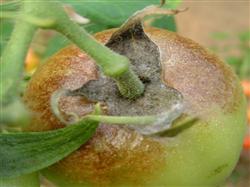
Identification and Control Methods of Tomato Late Blight
Tomato late blight, which vegetable growers call persimmon blight, is a devastating disease of tomatoes. - Symptom identification: The disease can occur in both seedlings and adult plants. When seedlings are affected, dark green water-soaked lesions appear on the leaves and quickly spread to the petioles and stems, making them thinner and dark brown, causing the whole plant to wilt or break at the stem. When humidity is high, the diseased area...
-
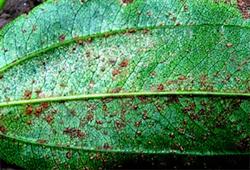
Identification and Control Methods of Jujube Rust Disease Explained in Detail
(1) Symptoms: Jujube rust disease only damages the leaves. In the early stage, pale green small spots are scattered on the underside of the leaves, later gradually becoming raised and dark yellow, which are the uredinia of the pathogen. The uredinia are irregular in shape and mostly occur on both sides of the midrib, at the leaf tip and base. After the surface of the lesion ruptures, yellow urediniospores are scattered. On the upper side of the leaf, corresponding to the uredinia, green...
-
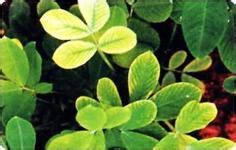
Symptom Identification and Control Methods for Peanut Web Blotch
I. Causes of Iron Deficiency in Peanuts Peanut is one of the crops that is relatively sensitive to iron. Although iron is not a component of chlorophyll, it is an indispensable condition for chlorophyll synthesis, a component of cytochrome oxidase and peroxidase related to respiration, and participates in the oxidation-reduction processes within the plant. It is...
-
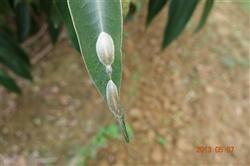
Symptom Identification and Control Techniques for the Litchi Fruit Borer
The litchi fruit borer is a major pest of longan and litchi. Its larvae bore into tender shoots, flower clusters and fruits. Damage during the young fruit stage causes severe fruit drop, while damage at maturity leaves the fruit stalk filled with insect frass, affecting quality. When tender shoots and flower clusters are damaged, their tips wither, affecting new shoot growth and flowering and fruiting the following year. This pest occurs in southern Fujian...
-
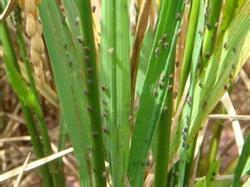
Detailed Explanation of Rice Pest and Disease Identification and Control Methods (Part 2)
The brown planthopper, also known as the brown rice planthopper, is commonly called roundworm, soft-shell roundworm, spindle worm, or midge. Scientific name Nilaparvata lugens (Stal), order Homoptera, family Delphacidae. The brown planthopper is one of the main pests on rice in China, causing damage in all major rice-growing regions across the north and south of the country. Every year it occurs and causes damage mixed with the white-backed planthopper, and the two planthoppers do not...
-
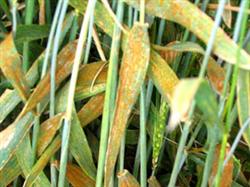
What Does Wheat Rust Look Like? Symptoms and Identification Methods
What does wheat rust look like? Wheat rust is also called jaundice. It is divided into 3 types: stripe rust, leaf rust, and stem rust. It is the most widespread and most damaging class of disease on wheat. After wheat is infected with rust, chlorotic spots first appear on the surface of the wheat leaves or stems, and later yellow or reddish-brown powder pustules grow out, namely the pathogen's uredinia...
-
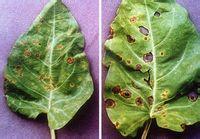
Symptom Identification and Control Methods of Brown Spot Disease in Water Spinach
Symptoms initially appear as small yellowish-brown spots, which later expand into circular to oval, or irregular dark brown lesions, 4-8 mm in diameter, with distinct edges. In severe cases, the lesions merge with each other, and the diseased leaves turn yellow, wither and die. Disease conditions: It is prone to occur in rainy and humid weather or during off-season cultivation. Control methods...
-
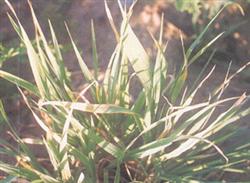
Symptom Identification and Control Methods of Wheat Rosette Stunt
I. Disease Development Pattern Wheat rosette stunt is a viral disease spread by the vector Laodelphax striatellus (small brown planthopper). There are two peak periods of virus transmission and infection by the small brown planthopper on wheat: the first peak period is after wheat emergence, and the second peak period is after wheat turns green. As temperatures gradually rise, the overwintering generation of small brown planthoppers begins to feed and move on wheat seedlings, spreading the virus.
-
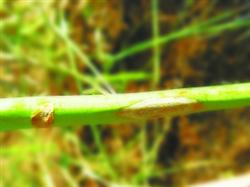
Detailed Guide to Symptom Identification and Control Methods for Asparagus Stem Blight
Asparagus is a valuable vegetable with excellent taste and quality. With the continuous improvement of people's living standards, the demand for asparagus in domestic and international markets is growing. Because asparagus has strong drought tolerance, it is particularly suitable for cultivation in the Tianjin area. However, as the number of planting years increases and the area expands, the occurrence of stem blight becomes more and more severe, with some fields...
-
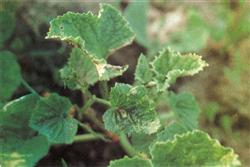
What to Do When Open-Field Melons Get Mosaic Virus Disease? Symptom Identification and Control Methods
Symptoms: In the early stage of the disease, the leaves show mosaic mottling interwoven with yellow-green and dark green, the leaves become smaller, and the leaf surface is wrinkled, uneven, and curled. The main vine is distorted and stunted, the plant is dwarfed, the melons are small, and the fruit surface has mottled patches of alternating light and dark, or slight bump-like protrusions. Causes: The incidence of mosaic virus disease has been relatively high in recent years...
条件筛选