What Does Wheat Rust Look Like? Symptoms and Identification Methods
What does wheat rust look like? Wheat rust is also called jaundice. It is divided into 3 types: stripe rust, leaf rust, and stem rust. It is the most widespread and most damaging class of disease on wheat. After wheat is infected with rust, chlorotic spots first appear on the surface of the wheat leaves or stems, and later yellow or reddish-brown powder pustules grow out, namely the pathogen's uredinia...
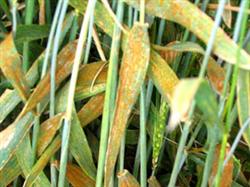
What does wheat rust look like? Wheat rust is also called jaundice. It is divided into 3 types: stripe rust, leaf rust, and stem rust. It is the most widespread and most damaging class of disease on wheat. After wheat is infected with rust, chlorotic spots first appear on the surface of the wheat leaves or stems, and later yellow or reddish-brown powder pustules grow out, namely the pathogen's uredinia; the pustules rupture and release powder resembling iron rust, hence the name rust disease. Later, black pustules or powder pustules grow out, namely the pathogen's telia.
The specific symptoms of each rust disease are as follows: (1) Stripe rust: It mainly damages leaves, and can also occur on leaf sheaths, stems, and ears. Chlorotic stripes first form, and then uredinia gradually form within the stripes. The uredinia are bright yellow and oval. They are smaller than those of stem rust and leaf rust, and on the leaf blade they are arranged longitudinally along the leaf veins in lines, very neatly; this is the most typical symptom of this disease. Later, the epidermis ruptures slightly and releases bright yellow powder, namely urediniospores. When wheat is about to mature, dark black, relatively flat but raised spots form inside or at the edges of the uredinia, arranged in rows; these spots are not easy to rupture, namely telia. On wheat seedling leaves, stripe rust has uredinia that are not arranged in stripes; initially they spread outward from the original infection point in a concentric circle pattern, and later become densely packed into patches. (2) Leaf rust: It mainly occurs on the upper surface of leaves, and can also infect leaf sheaths. The uredinia are orange-red at first and yellow-brown later, round or oval, irregularly scattered in the middle or at the tip of the leaf blade, smaller than those of stem rust but larger than those of stripe rust, and the epidermis ruptures inconspicuously. After rupture, orange-red urediniospores are released. When wheat matures, telia are produced again in the places where uredinia were originally produced. Telia are generally produced on leaf sheaths, and sometimes also on the underside of leaves; they are oval or long oval, relatively flat, dark black, and the epidermis is generally not easy to rupture. On the leaves of resistant varieties, tiny yellowing and dead spots occur, and no uredinia are produced, or only extremely tiny and poorly developed uredinia are produced; at the early stage of occurrence, the leaf tissue around the uredinia generally shows very little discoloration, and at the later stage, part or all of the wheat leaf turns yellow and dies. (3) Stem rust: It mainly occurs on stems and leaf sheaths, less on leaves, and in severe cases it can also occur on ears. At first, brownish-red, long oval or round pustule-like small spots are produced under the epidermis, slightly raised, namely uredinia. The uredinia are irregularly scattered, and when the disease is severe they can merge with each other into larger elongated spore pustules, later becoming rust-brown; the epidermis ruptures and turns outward like lips, releasing a large amount of rust-brown powder, namely urediniospores. On resistant varieties, uredinia are sometimes not produced, and only yellow or brown dead spots appear. At the later stage of wheat growth, near the uredinia or at the original sites, oval or elongated black spots are produced, namely telia. After maturity, the epidermis ruptures, exposing black rust-powder-like material, namely teliospores.