-
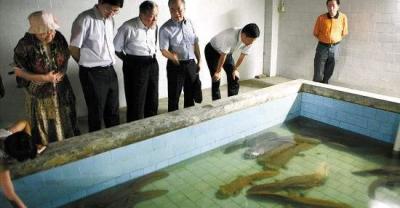
Four Points for Good Overwintering Management in Turtle Farming, with Strong Potential in the Exotic Pet Market
The basic principle of overwintering management for turtles is to do a good job of freezing prevention and warmth retention. 1. Natural overwintering Turtles begin hibernation when the water temperature drops below 15°C, not eating and not moving. Turtles...
-

Tropical Fish Keeping: These Four Key Points Cannot Be Ignored
The weather in Shenzhen has been changeable these past few days, cold one moment and hot the next, and many customers' beloved fish have fallen ill, listless, refusing to eat and unwilling to swim, which is really distressing, most...
-

Detailed Explanation of Year-Round Bamboo Rat Farming Techniques and Four-Season Management Key Points
Year-Round Bamboo Rat Farming Techniques January: The main goal of feeding management is to keep warm, improve the breeding rate and the survival rate of young rats. (1) Use plastic film to block wind at the doors and windows of the rat house. Large and medium...
-

Four Key Points for Spring Management of Greenhouse Cucumbers
Four Key Points for Spring Management of Greenhouse Cucumbers
-
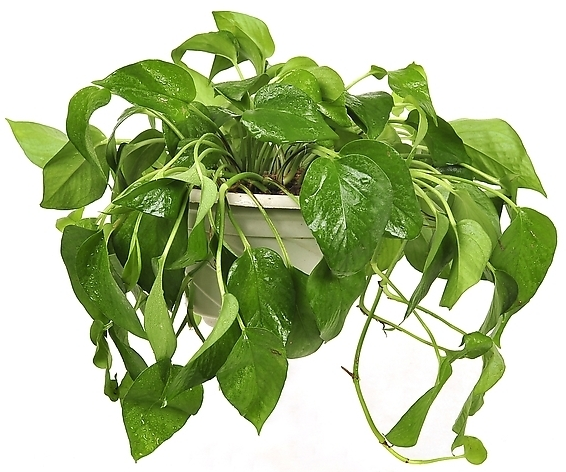
Four Key Points to Note When Growing Pothos and Spider Plants
Pothos is a shade-loving plant. Because pothos can absorb benzene, formaldehyde and other substances from the air, it is widely grown indoors. So what points should be noted when growing pothos and spider plants? Next, let the editor of Yiqizhuangxiu.com briefly introduce them for everyone! Temperature in winter
-

Cymbidium Orchid Growing Methods and Four-Season Care Points
Cymbidium orchids have large blooms, brilliant colors, and an elegant, delicate fragrance, making them very popular. Many people want to grow cymbidium orchids themselves. The editors at Yiqizhuangxiu.com remind you that when growing cymbidium orchids, you must first master some relevant knowledge. Let's take a detailed look together with the editors at Yiqizhuangxiu.com.
-

A Complete Guide to the Four Key Points of Winter Pear Orchard Management
Four Key Points of Winter Pear Orchard Management
-

Four key points to grasp in winter management of Pinellia ternata
1. Check the seed tubers: Normally, the tubers of Pinellia ternata begin to take root and sprout about half a month after planting. Sometimes, due to low temperatures, tuber rot may occur, so the growth of the seed tubers should be checked in a timely manner. For spots where sprouts have still not emerged, the soil can be gently scraped open by hand or with a bamboo strip, wooden stick, etc. Any seed tubers that have not rooted or whose rootlets are yellow-black are inferior and should be dug out and replanted in a timely manner. 2. Prevent waterlogging and drought: If continuous overcast and rainy weather occurs in winter, the soil is prone to waterlogging and oxygen deficiency, which is not only unfavorable for the tubers of Pinellia ternata to take root underground, but also causes disease and rot. Therefore,
-
Four key points for fish farming at the start of spring
1. Fertilization: In early spring, when the pond water temperature stabilizes at 8°C to 10°C, start applying additional fertilizer to cultivate natural food organisms in the water. The amount of fertilizer should be determined based on the fertility of the water and the quality of the fertilizer. Generally, apply 60 to 90 kg of human and animal manure per mu, or 100 to 150 kg of livestock manure. If chemical fertilizer is used, follow a nitrogen-to-phosphorus-to-potassium ratio of 1:1:0.5. When applying, first crush it, mix it with water, and splash it evenly over the entire pond. The total amount per mu is 3 to 7 kg, with each application spaced 5 to 10 days apart. Keep the pond water a yellowish-brown or yellow
-
Four key points to note when introducing pet rabbits
As the pet rabbit market grows increasingly prosperous, more and more people are introducing pet rabbits, but all kinds of problems have emerged along with this. Some people spend a lot of money to buy so-called pet rabbit breeding stock, only to find that when the breeding season arrives, the rabbits do not come into heat; after inquiring carefully, they learn that the rabbits have been sterilized and simply cannot reproduce, wasting more than half a year for nothing. Some people buy rabbits that cannot survive at all, because no breeding techniques were provided, so they just feed them like ordinary rabbits; the result is that a sudden change in living conditions, combined with an abrupt switch in feed, causes the young rabbits to fall ill and die one by one.
条件筛选