Detailed Explanation of Year-Round Bamboo Rat Farming Techniques and Four-Season Management Key Points
Year-Round Bamboo Rat Farming Techniques
January: The main goal of feeding management is to keep warm, improve the breeding rate and the survival rate of young rats.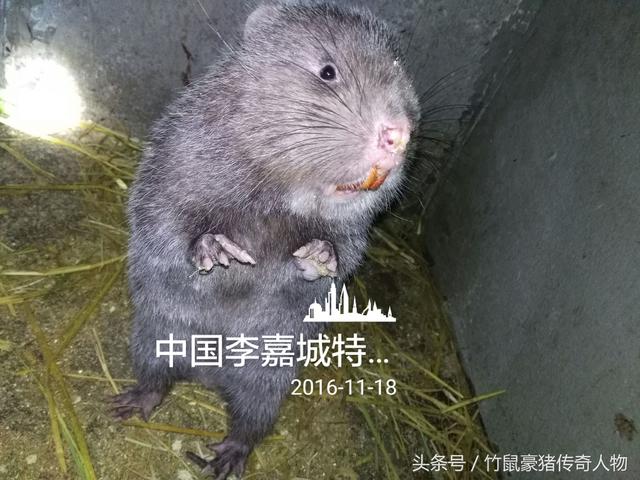
(1) Use plastic film to block wind at the doors and windows of the rat house. Cover large, medium and small pools with plastic film to keep warm. When a cold wave comes, properly light a fire indoors for heating, and at the same time move all bamboo rats into the small pools and the warm-keeping troughs of the large and medium pools, thicken the
bedding straw, and cover with double-layer plastic film to keep warm.
(2) Pay special attention to caring for lactating female rats and young rats, and be sure to feed a supplementary nutritious meal at night.
(3) Sometimes January also has "returning south wind days," when the room is very stuffy and damp, and air humidity is high. The plastic film should be uncovered to let water vapor in the nest pools dissipate.
(4) Ensure there is enough fresh green feed. In the south, this is the sugarcane harvesting season, so feeding all sugarcane should be avoided because the feed would be too monotonous.
(5) If there is continuous fine rain and the moisture of green and roughage cannot be dried, rinse with potassium permanganate water or lime water before feeding.
(6) If there is a long period of dry, cold north wind and the air is dry, mix warm salt water with concentrated feed for feeding, and appropriately increase succulent feed to prevent bamboo rats from lacking water.
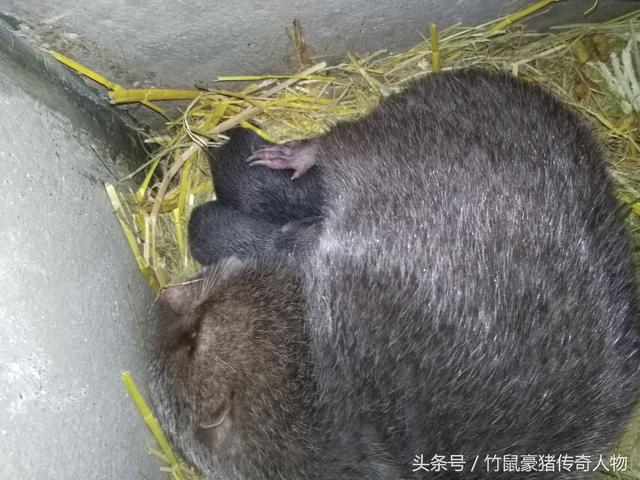
(7) Check once every night. If they are found sleeping in piles, properly spread them out to prevent weak and small rats from sleeping underneath and being crushed to death.
February: The main goal of feeding management is still to keep warm, while also preventing interruption of green and roughage, doing synchronized estrus well, and improving the conception rate.
(1) This month is the Spring Festival holiday, and feeding management is easily relaxed, so duty feeding personnel must be seriously arranged.
(2) Carefully make a supply plan for green and roughage, and collect it before the holiday to keep it fresh. When combining with rough dry feed, note that it needs to be soaked and softened in water.
(3) The warming measures are the same as in January.
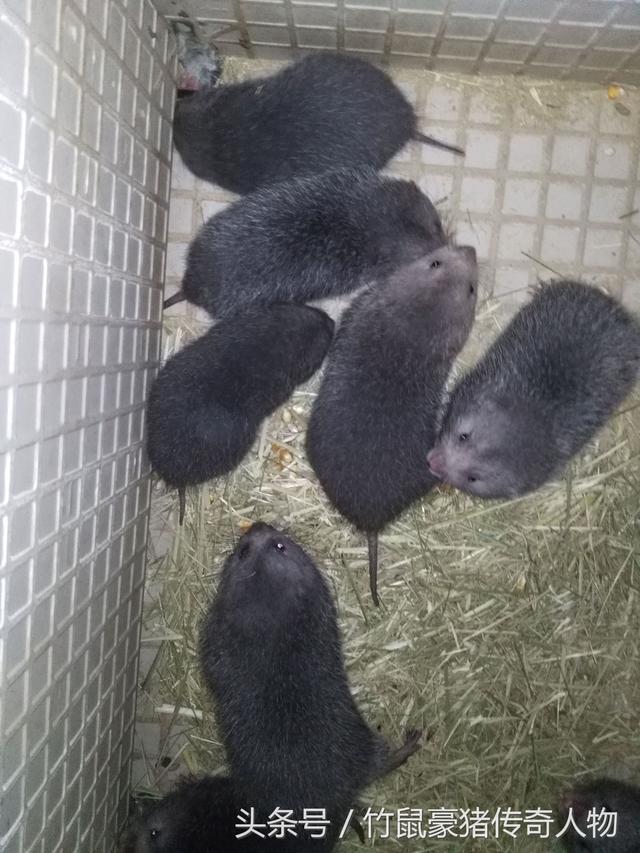
(4) Weaned young rats are concentrated in medium pools for care, and female rats that have not yet been mated are fed synchronized estrus drugs.
(5) Pay attention to preventing feed mildew and poisoning.
March: The main goals of feeding management are to prevent colds and diarrhea, and to do the second selection well.
(1) This month the temperature rises and spring farming is busy, so feeding management is easily neglected. In rural areas, feed is often given and then nothing else is done. As a family bamboo rat farm, there should be a dedicated person in charge, so that spring farming production and bamboo rat feeding
are both handled well.
(2) This month the temperature changes greatly at noon and at night, with alternating cold and heat, making colds and diarrhea likely. Disease prevention work should be done well.
(3) Green feed and succulent feed are relatively lacking, so attention should be paid to supplementing multiple vitamins and water.
(4) Most young rats born in last autumn and winter already weigh 750-1000 grams, which is the best time for the second breeding selection. According to the second selection procedure, the offspring of high-yielding female rats should be selected and retained for pairing.
(5) For those raising a small number, before pairing they should exchange male and female rats with other farmers to prevent inbreeding.
(6) Formulate the year's farming plan, and do well in culling old breeding stock and supplementing new breeding stock.
April: This month is warm spring with blooming flowers and is the peak season for mating and breeding. Improving the conception rate is the main goal of feeding management this month.
(1) Carefully check pregnancy. Separate out all adult female rats that are not pregnant and carry out a second synchronized estrus, striving to have all of them mated by the end of this month.
(2) Do feeding management well around improving the conception rate.
(3) Adjust the production structure and plant green and roughage feed according to plan.
(4) As the temperature rises, all plastic film covering doors, windows and pool surfaces can be removed. Carry out a major cleaning of the bedding straw and accumulated manure in the bamboo rat nest rooms and pools, and replace with clean bedding straw.
(5) Pay attention to preventing feed mildew and poisoning.
May: This month is the last month of the peak season for natural estrus and mating, and it is also a month with more bamboo rat diseases, so the main goals of feeding management are to improve the conception rate and prevent disease.
(1) Carefully mix feed and increase nutrition to promote natural estrus.
(2) Strengthen cleaning and hygiene, disinfect feed and remove mildew, and reduce the occurrence of disease.
(3) Feed medicated feed and do disease prevention work well.
(4) Add antibacterial drugs such as ciprofloxacin to the concentrated feed to prevent pasteurellosis and gastrointestinal diseases.
June: The weather is already hot. The main goal of feeding management is to improve the bamboo rat living environment and pay attention to feed and drinking water hygiene.
(1) Keep bamboo rat nest pools cool, shady and dry, prevent direct sunlight, keep the pool ground dry, and keep nest straw fresh with no mildew or rot.
(2) Green and roughage should be fresh. In large and medium pools, a large amount of green bamboo and wood can be placed so that bamboo rats feel as if they have returned to nature.
(3) Carefully check the cleanliness and hygiene of feed and drinking water, and appropriately use disinfectant preventive drugs.
(4) It is not suitable to transport seedlings in large quantities over long distances.
(5) Feed more green, tender and fresh feed, save concentrated feed, and reduce feeding costs.
July: It has entered the hot summer period. The main goal of feeding management is to lower temperature and relieve heat.
(1) Seriously implement the ten measures for cooling and relieving heat in summer for bamboo rats in question 136.
(2) Seriously prevent bamboo rat heatstroke and feed supplementary cooling and heat-relieving feed.
(3) Male rats kept separately should no longer be placed with female rats for mating.
(4) Those kept in small pools should be moved to large pools, and bamboo rat farms with poor cooling conditions should stop mating and breeding.
August: It has entered Major Heat, the hottest weather of the year. Feeding management is mainly cooling and relieving heat.
(1) Continue to implement the ten measures for cooling and relieving heat in question 136.
(2) Use cooling feed and cooling drugs flexibly.
(3) If conditions permit, move breeding rats to a cool basement for raising.
(4) Stop mating and breeding. In arranging synchronized estrus timing, births should avoid August.
(5) Long-distance transport of breeding rats by vehicle is prohibited.
September: Although it is the Beginning of Autumn, the south still has sustained high temperatures, and feeding management still takes cooling and relieving heat as the main goal.
(2) Continue to implement the ten measures for cooling and relieving heat in question 136.
(3) In the last ten days of the month the weather turns cooler, so seize the time for mating and breeding.
(4) More agricultural and sideline products are fed, so pay attention to preventing poisoning caused by pesticide contamination.
(5) Prevent both stuffiness and wind.
October: There is a large temperature difference between noon and night, the climate is dry and cool, it is the peak breeding season, and it is also a month with frequent colds and diarrhea. Feeding management should take improving the conception rate and preventing colds and diarrhea as the main goals.
。
(1) At noon, pay attention to opening the doors and windows of the rat house to lower temperature and dissipate heat, and at night close the doors and windows in time to keep warm and prevent catching cold.
(2) Carefully provide feed and ensure nutrition to promote estrus and mating.
(3) Collect and dry corn cobs for storage, and do a good job of storing winter feed.
(4) Pay attention to preventing feed mildew and poisoning.
(5) In the second half of the month, seed selection, introduction of breeding stock and long-distance transport can be carried out.
(6) Commercial meat rats are fattened and sent to market.
November: The weather turns cold and cold waves are frequent. Keeping warm and improving the survival rate of newborn rats become the main goals of feeding management this month.
(1) Doing well in cold prevention and warmth keeping and preventing cold wind invasion is the focus of feeding management this month. Practice has proved that when the weather suddenly turns cold and bamboo rats are blown by cold wind, they can die in batches.
(2) For female rats giving birth and young rats, pay attention to supplementary feeding of concentrated feed at night to improve the survival rate, while also preventing death from cold, hunger and disease.
(3) Check every night. If huddling for warmth is found, add bedding straw to the nest rooms and separate the huddling bamboo rats to prevent crushing deaths.
(4) When the temperature is below 12 degrees, use warm boiled water or warm porridge to mix concentrated feed for feeding.
(5) Carry out bamboo rat herd sorting. Separate thin and weak bamboo rats and culled old breeding rats, fatten them for about 20 days, and sell them as commercial meat rats.
(6) Keep feed green and fresh. When feeding dry feed, combine it with succulent drinks to ensure bamboo rats do not lack water.
December: Winter is severely cold. Keeping warm and fattening is the main goal of feeding management this month.
(1) The doors and windows of the rat house should be sealed tightly with plastic film so that cold wind cannot blow into the nest rooms. The bedding straw in the nest rooms should be twice as thick as usual.
(2) When the temperature is 15 degrees, the surface of the feeding pool should be half-covered with cardboard or plastic film; when the temperature is 10 degrees, it should be fully covered with plastic film; when the temperature is 5 degrees, the pool surface should be covered with double-layer film, and a fire should be lit indoors or an electric stove used for heating. A
chick brooder umbrella can also be used for heating (large and medium pools with warm-keeping troughs do not need fire heating).
(3) Check female rats giving birth and lactating twice a day, morning and evening, and judge whether the young rats are hungry or cold by observing the female rat's feed intake.
(4) Add oil feed, fried soybeans, sunflower seeds, hemp seeds, etc. to increase cold resistance and speed up fattening.
(5) Use warm boiled water or hot porridge to mix concentrated feed and feed while hot. At the same time, pay attention to supplementing succulent feed to prevent the food from being too dry and causing bamboo rats to die from lack of water.
(6) Commercial meat rats are sold after fattening.
(7) Do a good summary of the year's scientific feeding management.
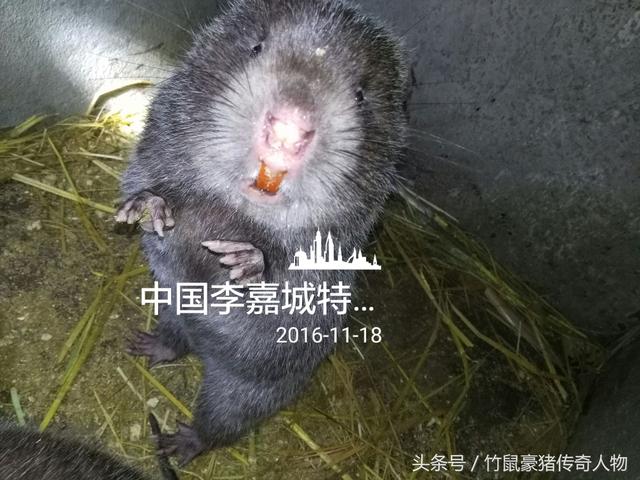
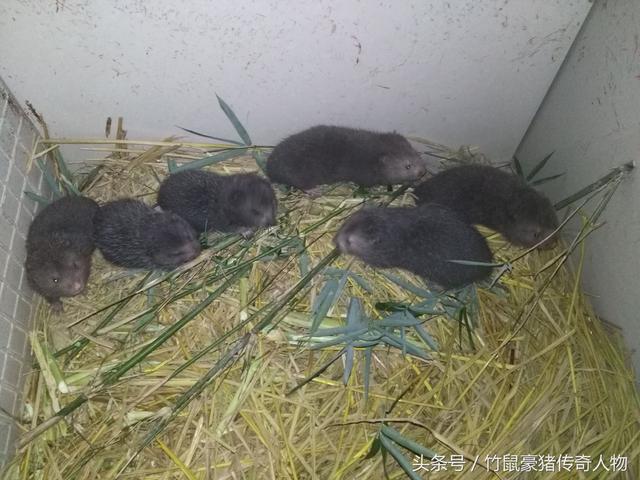
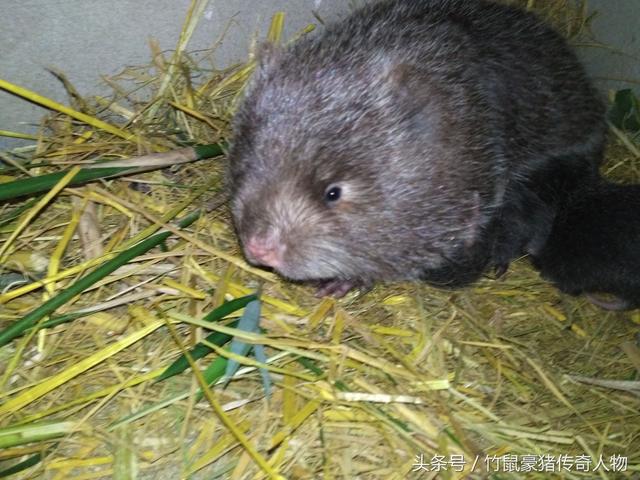
Focused on farming porcupines and bamboo rats for many years. Year-round supply of high-quality porcupine seedlings and bamboo rat seedlings, favorable prices, door-to-door delivery, comprehensive farming technology, and pen construction guidance. On-site inspection and learning are available, and long-term buyback contracts can be signed. Contact phone/WeChat: 14707076492 Li Jiacheng
If you think this article is useful
Please share and forward it to your friends
Thank you