Four Key Points to Note When Growing Pothos and Spider Plants
Pothos is a shade-loving plant. Because pothos can absorb benzene, formaldehyde and other substances from the air, it is widely grown indoors. So what points should be noted when growing pothos and spider plants? Next, let the editor of Yiqizhuangxiu.com briefly introduce them for everyone!
Temperature
In winter, pothos can overwinter safely at temperatures above 10°C, and generally grows normally at temperatures above 20°C. Therefore, an ordinary home environment is quite suitable for pothos growth. The original growing conditions of pothos are in forests shaded by towering trees, so its tendency to lean toward the sun is not strong. But in the north during autumn and winter, in order to make up for the lack of temperature and photosynthesis, its light exposure should be increased. The method is to place the pothos in the spot indoors with the best light, or move it to a sealed balcony at noon to sunbathe. At the same time, when the temperature is low, windows should be opened as little as possible, because the leaves may be frostbitten within an extremely short time.
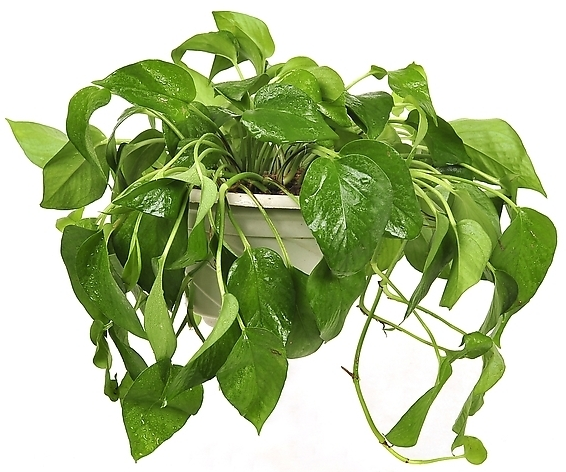
Four Key Points to Note When Growing Pothos and Spider Plants
Light
Pothos does not have a strong tendency to lean toward the sun, so when growing it, it should be placed in a spot indoors with relatively good light, and at noon it can be put in the sun for a while. In the north, at a room temperature above 10°C, pothos can overwinter safely, and at a room temperature above 20°C, pothos can grow normally. For an ordinary household, reaching this temperature is not a big problem. What needs attention is avoiding too great a temperature difference, and also making sure the leaves do not get close to heating equipment.
Water
When growing pothos, do not water too much. You can spray water at the rooting area, which can reduce the evaporation rate of water. Water every day to keep the soil moist, but there must be no standing water that breeds mosquitoes. In autumn and winter, the amount of watering should be strictly controlled according to room temperature. Before heating is turned on, the temperature is relatively low and the soil of the plant evaporates relatively slowly, so watering should be reduced, and the amount of water should be controlled between 1/4 and 1/2 of the original. Even after heating is turned on, watering should not be too frequent. When watering, pour less into the pot; water should seep through the coir. In addition, water should also be sprayed at the places where aerial roots grow on the coir pole, to reduce insufficient water absorption by the roots caused by excessively fast evaporation. For winter watering, water that has been left to sit for a day after being drawn is better; water that is too cold easily damages the roots.
Fertilizer
For fertilizing the leaves of pothos, because ordinary inorganic fertilizers are difficult to absorb, a special fertilizer needs to be used. In the autumn and winter seasons in the north, plants mostly grow slowly or even stop growing, so fertilizing should be reduced. Before the beginning of winter, mainly apply liquid inorganic fertilizer by watering or spraying, about once every 15 days. After the beginning of winter, fertilization should mainly be foliar spraying, mainly sprayed through the stomata on the leaf surface, so that fertilizer is absorbed through the stomata on the leaf surface, and the fertilizer effect can act directly on the leaf surface. Foliar fertilizer should use a special fertilizer; ordinary inorganic fertilizers are not easily absorbed by the leaf surface. Beida Huhuashen series and Japan-produced Huayifan, etc. can all be used as foliar fertilizer.
Growing Methods and Points to Note for Large-Leaf Pothos
Growing Methods and Points to Note for Large-Leaf Pothos - Cutting Selection and Treatment
For cuttings, it is best to choose semi-lignified branches that grow robustly and are free of pests and diseases, cut them into 10-13 cm lengths, cut the lower incision into a slanted cut, and keep 2-3 leaves at the upper end, cutting the leaves in half to reduce water evaporation and help the cuttings survive.
(This article is sourced from a website, for more please visitGrowing Methods and Points to Note for Large-Leaf Pothos
Growing Methods and Points to Note for Large-Leaf Pothos - Cutting Substrate
The cutting substrate requires loose, breathable, well-drained loam or sandy soil with high humus content. Vermiculite is best, as it allows fast rooting and a high survival rate. Before cutting, use 2% formalin or 5% potassium permanganate to disinfect the soil well.
(This article is sourced from a website, for more please visitGrowing Methods and Points to Note for Large-Leaf Pothos
Growing Methods and Points to Note for Large-Leaf Pothos - Cutting Method
Quickly dip the lower end of the prepared cuttings in ABT rooting powder or indolebutyric acid, then insert them into the previously prepared substrate, with 1/2 of the cutting going into the soil, water thoroughly so that the cuttings make close contact with the substrate, and then cover with plastic film.
(This article is sourced from a website, for more please visitGrowing Methods and Points to Note for Large-Leaf Pothos
Growing Methods and Points to Note for Large-Leaf Pothos - Management After Cutting
(1) After cutting, take care to keep the soil moist and the air temperature relatively high. Soil moisture of around 50% is suitable, while air humidity of 80%-90% is best.
(2) In the early stage of cutting, keep the shade degree of the shade shed at around 80%. This can both prevent direct strong sunlight and ensure sufficient scattered light, so as to facilitate photosynthesis of leafy cuttings and benefit rooting.
(3) Through the above treatment, roots generally form after 20 days, and the film can be removed to increase light. At the same time, on sunny days in summer, still pay attention to spraying the leaf surface and shading, and in winter pay attention to cold protection. About 10 days after rooting, they can be moved into pots for normal management.
(This article is sourced from a website, for more please visitGrowing Methods and Points to Note for Large-Leaf Pothos
Growing Methods and Points to Note for Large-Leaf Pothos - Temperature
In the north, at a room temperature above 10°C, pothos can overwinter safely, and at a room temperature above 20°C, pothos can grow normally. For an ordinary household, reaching this temperature is not a big problem. What needs attention is avoiding too great a temperature difference, and also making sure the leaves do not get close to heating equipment.
(This article is sourced from a website, for more please visitGrowing Methods and Points to Note for Large-Leaf Pothos
Growing Methods and Points to Note for Large-Leaf Pothos - Humidity
This refers to the water content of the air in the plant's growing environment. Under the condition of ensuring normal temperature, increasing humidity is extremely beneficial to plant growth.
The following methods can be used to increase temperature. Place the plant near a humidifier, with the humidifier running for more than 5 hours each day, so the plant can enjoy the mist sprayed out by the humidifier; use a sprayer adjusted to the mist setting to spray water on the plant's leaves, stems and aerial roots, several times a day; keep an appropriate amount of water in the flowerpot saucer, and increase the plant's local temperature through its evaporation; use a cold wet towel or toilet paper to gently wipe the leaf surface or gently apply it to the leaf surface for a short time (1-2 hours per day); cover the plant with transparent plastic film to create a small greenhouse effect, supplementing the plant's water through evaporation of water vapor from the soil, for no more than 2 hours per day, as too long a time will affect the plant's ventilation and photosynthesis.
Growing Methods and Points to Note for Large-Leaf Pothos
Growing Methods and Points to Note for Large-Leaf Pothos - Water
In autumn and winter, the amount of watering should be strictly controlled according to room temperature. Before heating is turned on, the temperature is relatively low and the soil of the plant evaporates relatively slowly, so watering should be reduced, and the amount of water should be controlled between 1/4 and 1/2 of the original. Even after heating is turned on, watering should not be too frequent. When watering, pour less into the pot; water should seep through the coir. In addition, water should also be sprayed at the places where aerial roots grow on the coir pole, to reduce insufficient water absorption by the roots caused by excessively fast evaporation. For winter watering, water that has been left to sit for a day after being drawn is better; water that is too cold easily damages the roots. When growing in water, the amount of water must not be too much; just enough to submerge the roots, because too much water easily causes the stems and leaves to rot.
Growing Methods and Points to Note for Large-Leaf Pothos
Growing Methods and Points to Note for Large-Leaf Pothos - Soil
In winter, it can grow well under bright scattered light indoors, with sturdy stem nodes and brilliant leaf color. During the growing period, it has relatively high water requirements. In addition to normally replenishing water to the potting soil, the leaf surface should also be sprayed frequently. For plants cultivated in a column-and-vine style, more water should also be sprayed on the coir column so that the coir absorbs water fully for absorption by the aerial roots winding around the stem. A nitrogen-phosphorus-potassium compound fertilizer can be applied once every 2 weeks, or a 0.2% potassium dihydrogen phosphate solution can be sprayed weekly, to make the leaves emerald green and the markings more vivid.
Pothos likes moisture. During the growing season, watering should keep the potting soil moist at all times. Never let the potting soil dry out, otherwise it easily causes yellow leaves and a poor plant shape. If too much watering causes standing water in the potting soil, it easily causes root rot and withered leaves, especially when the room temperature is low in winter, when even more attention should be paid to controlling watering. In summer, while watering sufficiently, also pay attention to frequently spraying the leaf surface. In winter, when the climate is dry, the leaves also need to be sprayed and washed once every 4-5 days with warm water, to wash away dust on the leaf surface and help keep the leaves glossy and emerald green.
(This article is sourced from a website, for more please visitGrowing Methods and Points to Note for Large-Leaf Pothos
Growing Methods and Points to Note for Large-Leaf Pothos - Fertilizing
In the autumn and winter seasons in the north, plants mostly grow slowly or even stop growing, so fertilizing should be reduced. Before the beginning of winter, mainly apply liquid inorganic fertilizer by watering or spraying, about once every 15 days. After the beginning of winter, fertilization should mainly be foliar spraying, mainly sprayed through the stomata on the leaf surface, so that fertilizer is absorbed through the stomata on the leaf surface, and the fertilizer effect can act directly on the leaf surface. Foliar fertilizer should use a special fertilizer; ordinary inorganic fertilizers are not easily absorbed by the leaf surface. Beida Huhuashen series and Japan-produced Huayifan, etc. can all be used as foliar fertilizer.
Growing Methods and Points to Note for Large-Leaf Pothos
Growing Methods and Points to Note for Pothos: Propagation of Pothos
Pothos can be propagated by cuttings and stem burial, that is, in late spring and early summer select robust pothos vines, cut 15 cm to 30 cm branches, remove the leaves of the basal 1 to 2 nodes (do not damage the aerial roots), then insert them into the growing pot soil. After burying the soil well and watering, first place them in a shaded place. After that, for a period of time, spray water on the leaf surface every day or cover with plastic film to retain moisture. The room temperature must not be lower than 20°C, and the survival rate is generally above 90%.
What Are the Growing Methods and Points to Note for Pothos
Growing Methods and Points to Note for Pothos: Soil Culture
To grow flowers well, soil is very important. The reason many flower lovers cannot grow flowers well and keep having them die is that soil is a very important link. So when flower lovers grow spider plants, if conditions permit, it is recommended to use nutrient soil, or soil with good water permeability of your own. Having covered soil, next let's talk about the growing environment and watering. From the habits of pothos, we can also see that pothos is shade-tolerant but avoids direct sunlight, so when choosing a growing environment, a ventilated place with scattered light is best. Watering is a very interesting thing, and many flower lovers cannot get it right. Here it should be said that with different soil, different pots, and different regions, the amount and frequency of watering are all different. Flower lovers should mainly judge whether to water based on the moisture of the soil. A little dryness is not scary, but do not have standing water every day.
(This article is sourced from a website, for more please visitWhat Are the Growing Methods and Points to Note for Pothos
Growing Methods and Points to Note for Pothos: Hydroponics
Actually there are two kinds of hydroponics. One is pure hydroponics, and the other is filling a pot or teacup with vermiculite and then filling it with water. Of these two, the vermiculite one is relatively simpler. There is no special trick; the main thing is the environment, which can refer to soil culture. As for watering and such, that no longer exists, and flower lovers can water freely.
(This article is sourced from a website, for more please visitWhat Are the Growing Methods and Points to Note for Pothos
Growing Methods and Points to Note for Pothos: Temperature
The suitable temperature for growing pothos is 20 to 30 degrees, and it must not be lower than 15 degrees at the lowest. Around 10 degrees it will freeze to death. Of course, most households have growing temperature conditions suitable for pothos. The thing is to pay attention to keeping it warm in winter. If the climate is too cold, pothos can be kept warm by reducing window opening.
(This article is sourced from a website, for more please visitWhat Are the Growing Methods and Points to Note for Pothos
Growing Methods and Points to Note for Pothos: Light
Because pothos originally grew in dark primeval forests and likes shade by nature, its light requirement is not strong. Therefore, when growing pothos, it is usually enough to place it indoors where it can see sunlight. It can also be taken into the sun at noon for a while, so that it can carry out photosynthesis better, and then taken back indoors for display. Although pothos is very shade-tolerant, it is also not good to put it in a dark place for a long time. At least about every half a month, it should be exposed to strong light.
(This article is sourced from a website, for more please visitWhat Are the Growing Methods and Points to Note for Pothos
Growing Methods and Points to Note for Pothos: Water
When growing pothos, do not water too much. At most, just spray water at its roots. As long as the soil is kept moist, that is enough. If standing water occurs, it will breed mosquitoes and other pests, seriously affecting the growth and ornamental effect of pothos. In summer, water appropriately more, with the principle of keeping the potting soil moist but not waterlogged. In winter, watering should be restrained, once every two or three days is enough. When indoor heating is turned on, water appropriately more. When the indoor temperature is too low, take care to reduce watering. When watering is not possible, the plant can be cooled by sprinkling water on the leaves.
(This article is sourced from a website, for more please visitWhat Are the Growing Methods and Points to Note for Pothos
Growing Methods and Points to Note for Pothos: Fertilizer
For fertilizing pothos, ordinary inorganic fertilizers are very difficult to absorb, so special fertilizers must be chosen, such as Beida Huhuashen and Japan's Huayifan. And because pothos growth slows in winter, fertilizer should be applied less. During the growing period of pothos, fertilizer can be appropriately increased. When fertilizing, spraying liquid fertilizer can be used as the main method.
(This article is sourced from a website, for more please visitWhat Are the Growing Methods and Points to Note for Pothos
The Editor Also Recommends
The Uses of Pothos: Counting the Four Major Uses of Pothos
Reasons for Yellowing Pothos Leaves and Solutions
Growing Methods for Pothos: How to Grow Pothos Well
What Are the Benefits of Growing Pothos? The Four Major Uses of Pothos
Pothos is a large evergreen climbing plant, and it can be called an essential green plant in offices and homes. So many people love growing pothos indoors; does growing pothos have many benefits? Today the editor will chat about the four major uses of pothos, so you can also understand the benefits of growing pothos.
The Four Major Uses of Pothos
First, growing pothos first has a decorative effect. Growing such a pot of pothos indoors or outdoors, seeing its vivid emerald green can give people an aesthetic sense of pleasure and make people feel relaxed and comfortable physically and mentally. Therefore, its decorative effect is very prominent.
Second, the second benefit of pothos is its air-purifying effect. Pothos is a large evergreen climbing plant. Like spider plants and ivy, it has a very strong ability to purify air. Pothos can absorb benzene, trichloroethylene, formaldehyde and other substances from the air. Placing pothos in a newly renovated home is simply the most suitable choice. According to environmental scientists' research, one pot of pothos in a room of 8~10 square meters is equivalent to an air purifier. It can be seen that pothos has quite a strong air-purifying ability.
Third, pothos can invite air flow and let indoors be ventilated and breathable. Why say this? Plants themselves also breathe, absorbing carbon dioxide and exhaling oxygen. Pothos is generally placed by the window. When there is too much wind outside, it blocks some of it. If there is no wind, it itself will also release new oxygen. The oxygen enters the space where we live, making us more energetic and making the indoor air fresher.
Fourth, the use of growing pothos is absorbing kitchen odors. This is actually also one aspect of purifying air. Placing pothos in the kitchen can effectively absorb some cooking fume odor caused by stir-frying and cooking, and remove some other kitchen odors. Let our kitchen maintain fresh air. diyju.com
Suitable Places to Put Pothos
1. Pothos is suitable for placing where family members come into contact most. Beside the living room TV and on the living room table are both very good choices.
2. Place it in the kitchen, where there is the most cooking fume.
3. Windowsill position. If you pay careful attention, we can find that the plants generally placed on the windowsills of ordinary homes are pothos, because its volume is especially small, so it fits just right on the windowsill. It will neither crush the windowsill nor block the host from viewing the beautiful scenery beyond the windowsill.