Cymbidium Orchid Growing Methods and Four-Season Care Points
Cymbidium orchids have large blooms, brilliant colors, and an elegant, delicate fragrance, making them very popular. Many people want to grow cymbidium orchids themselves. The editors at Yiqizhuangxiu.com remind you that when growing cymbidium orchids, you must first master some relevant knowledge. Let's take a detailed look together with the editors at Yiqizhuangxiu.com.
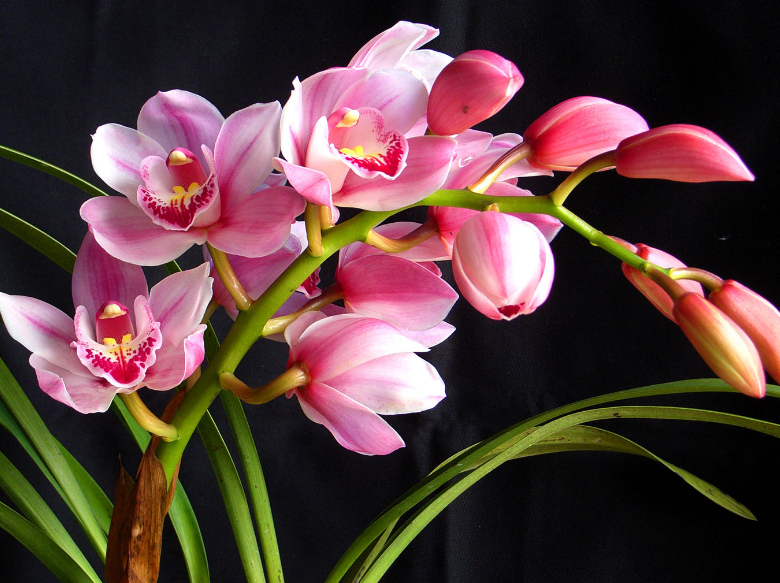
Cymbidium Orchid Growing Methods and Four-Season Care Points
How to Grow Cymbidium Orchids
Cymbidium orchids are relatively tolerant of low temperatures; 10 to 30 degrees is basically no problem. Above 30 degrees, it is best to use ventilation, humidity, and shading to reduce damage. In summer, autumn, and the rainy season, daytime temperatures should not exceed 30 degrees. Once the temperature exceeds 30 degrees, increase air circulation, lower the leaf surface temperature, and there must also be a clear day-night temperature difference to stimulate flower bud differentiation. At night it should not exceed 14 degrees, otherwise the flower buds cannot differentiate, and even if they do differentiate, they will wither early. In spring, ensure air circulation during the day; placing them in a cooler environment can extend the flowering period, because outdoor temperatures at night are usually below 10 degrees, so do not place them outdoors.
After the surface of the potting soil dries, water thoroughly, soaking it through at once. Normally, scatter water around the orchid pot to increase air humidity. Unless the environment is especially dry, do not spray water on the leaves, otherwise brown spots will appear on the leaves. During the flowering period and when no new shoots are growing, reduce water and just keep the potting soil slightly moist. After new shoots emerge, the water requirement increases. Temperature also affects watering accordingly: when the temperature is low, reduce the amount of watering; when the temperature is high, increase it accordingly. No fertilizing is needed during the flowering period. During the bud stage, apply solid fertilizer and liquid fertilizer alternately, but the concentration must be low. Standard liquid fertilizer is generally diluted 1000 times, once every two weeks. A small amount of solid fertilizer is enough. Do not apply fertilizer in winter.
Cymbidium orchids like light. From late October through the entire winter, they can receive direct sunlight. In spring, provide 30% shade, and in summer also provide 30% to 40% shade. If grown on a balcony, the balcony should also avoid excessively high temperatures and overly intense sunlight in autumn and winter. Insufficient light is unfavorable for growth.
If the cultivation environment is poor, cymbidium orchids are prone to pest and disease damage. Common diseases include Fusarium disease, black rot, soft rot, anthracnose, gray mold, and southern blight, so spray a fungicide once every half month to prevent disease occurrence. Special attention must also be paid to the cleanliness of the environmental sanitation, water sources, planting materials, and tools.
The pseudobulbs of cymbidium orchids generally contain more than 4 leaf buds. To prevent nutrients from being dispersed, the newly emerging small shoots and their growing points must be thoroughly removed. This operation should begin after the flowering period ends, removing shoots once a month, and stop before the new flowering period, so that nutrients can be concentrated, the mother pseudobulb strengthened, and the flowers made larger and more numerous.
Four-Season Care Points for Cymbidium Orchids
1. Spring Management
In spring, as temperatures begin to rise, maximize ventilation so that plants still in bloom are kept in a cooler environment. Because temperatures fluctuate greatly during the Spring Festival, do not rush to move them outdoors; this protects and promotes the growth of new shoots. Wait until there is sufficient light before moving them outdoors for cultivation. Water once a day, while blooming plants only need the potting soil kept moist. Fertilize once every 10 to 15 days. Spring is a great time for repotting or division propagation after flowering, so do it promptly. To reduce nutrient consumption, the flower stems should be cut off immediately after the flowers fade, otherwise the growth of new shoots will be affected.
2. Summer Management
Summer is the early stage of flower bud differentiation in cymbidium orchids. Because high temperatures are unfavorable for flower bud differentiation, pay attention to cooling to promote flower bud differentiation. Keeping the summer temperature below 28°C is beneficial for growth. Because summer sunlight is intense, provide 30% shade to protect the leaves from sunburn. Water twice a day; if it is hot and dry, spray the leaves. Before July, apply liquid fertilizer once about every 15 days. Adding solid compound fertilizer once a month can help the growth of new shoots, and spraying insecticide and fungicide once a month can effectively prevent and control pests and diseases.
3. Autumn Management
In autumn, the temperature difference begins to increase. Starting in October, they should be moved indoors for cultivation to prevent the low nighttime temperatures from slowing plant growth. At this time, provide sufficient sunlight to increase the accumulation of nutrients. As the weather gradually turns colder in autumn, generally water once every 1 to 2 days, keeping the substrate as moist as possible to protect the newly developing flower buds. During flower bud growth, apply more phosphorus and potassium fertilizer to promote plump, sturdy flower buds.
4. Winter Management
This period is when cymbidium orchids begin to bloom. Be careful that the nighttime temperature does not exceed 20°C, otherwise the buds will drop. In winter, let them receive sufficient sunlight to make the plants sturdy. In winter, water once every 3 to 4 days, maintaining humidity at 60% to 70%. Pay attention to preventing and controlling flower-eating snails. Stop fertilizing during the flowering period.
Four-Season Care Points for Cymbidium Orchids and Cymbidium Orchid Flower Language
Many people grow a cymbidium orchid at home as a partial decoration, because cymbidium orchids have upright plants, emerald green leaves, and large, brilliant flowers, giving them great ornamental value. Below, let's talk about the four-season care points for cymbidium orchids and the cymbidium orchid flower language.
Four-Season Care Points for Cymbidium Orchids
1. Spring Management
In spring, as temperatures begin to rise, maximize ventilation so that plants still in bloom are kept in a cooler environment. Because temperatures fluctuate greatly during the Spring Festival, do not rush to move them outdoors; this protects and promotes the growth of new shoots. Wait until there is sufficient light before moving them outdoors for cultivation. Water once a day, while blooming plants only need the potting soil kept moist. Fertilize once every 10 to 15 days. Spring is a great time for repotting or division propagation after flowering, so do it promptly. To reduce nutrient consumption, the flower stems should be cut off immediately after the flowers fade, otherwise the growth of new shoots will be affected.
2. Summer Management
Summer is the early stage of flower bud differentiation in cymbidium orchids. Because high temperatures are unfavorable for flower bud differentiation, pay attention to cooling to promote flower bud differentiation. Keeping the summer temperature below 28°C is beneficial for growth. Because summer sunlight is intense, provide 30% shade to protect the leaves from sunburn. Water twice a day; if it is hot and dry, spray the leaves. Before July, apply liquid fertilizer once about every 15 days. Adding solid compound fertilizer once a month can help the growth of new shoots, and spraying insecticide and fungicide once a month can effectively prevent and control pests and diseases.
3. Autumn Management
In autumn, the temperature difference begins to increase. Starting in October, they should be moved indoors for cultivation to prevent the low nighttime temperatures from slowing plant growth. At this time, provide sufficient sunlight to increase the accumulation of nutrients. As the weather gradually turns colder in autumn, generally water once every 1 to 2 days, keeping the substrate as moist as possible to protect the newly developing flower buds. During flower bud growth, apply more phosphorus and potassium fertilizer to promote plump, sturdy flower buds.
4. Winter Management
This period is when cymbidium orchids begin to bloom. Be careful that the nighttime temperature does not exceed 20°C, otherwise the buds will drop. In winter, let them receive sufficient sunlight to make the plants sturdy. In winter, water once every 3 to 4 days, maintaining humidity at 60% to 70%. Pay attention to preventing and controlling flower-eating snails. Stop fertilizing during the flowering period.
Cymbidium Orchid Flower Language
Cymbidium orchids have a full plant form, emerald green leaves, and beautiful waxy flowers, making them a high-end everyday flower for winter and spring. They are evergreen perennial epiphytic herbs. They are the general term for the large-flowered epiphytic species in the genus Cymbidium of the orchid family. The pseudobulbs are thick and stout, oblong, slightly flattened; they bear 6 to 8 strap-shaped leaves, 70 cm to 110 cm long and 2 cm to 3 cm wide. The flower stems are nearly upright or slightly curved, 60 cm to 90 cm long, bearing 6 to 12 flowers or more. The flower scapes range from 40 to 150 cm. The leaf color ranges from light green to dark green. Standard flower stems are 3 to 5 per pot, each bearing 6 to 20 flowers. Among them, the green varieties are mostly fragrant.
Cymbidium orchids are also known as tiger-head orchids, Cymbidium hybridum, and cicada orchids, and are plants of the genus Cymbidium in the orchid family. Cymbidium orchids have long, jade-green leaves and bold, unrestrained, magnificent flowers, and are a world-famous "new star of orchids." They have the delicate elegance of Chinese orchids and the rich variety of tropical orchids. The Japanese people call them "East Asian orchids," while Europeans and Americans also call them "new beauty orchids." In short, cymbidium orchids are very likable.
The flower language and symbolic meaning of cymbidium orchids are: abundance and peace, nobility and grace. Different colors also carry different meanings: yellow represents everything going as wished, pink represents passion, light green represents aspiration, and white represents infatuation.
The above are the four-season care points for cymbidium orchids and the cymbidium orchid flower language introduced for everyone. We hope it can help you. For more home knowledge, please stay tuned.
Key Growing Points for Cymbidium Orchids
Cymbidium orchid is a general term for varieties in the genus Cymbidium that have been bred through artificial hybridization, with brilliant colors and large flowers. They have the delicate elegance of Chinese orchids and the rich variety of tropical orchids. They sell very well in flower markets and are deeply loved by flower enthusiasts. How do you grow cymbidium orchids? How should cymbidium orchids be cared for through the four seasons? Come learn with the editor. We hope it helps you in life!
Red Cymbidium Orchid
[How to Grow Cymbidium Orchids]Cymbidium orchids are relatively tolerant of low temperatures; 10 to 30 degrees is basically no problem. Above 30 degrees, it is best to use ventilation, humidity, and shading to reduce damage. In summer, autumn, and the rainy season, daytime temperatures should not exceed 30 degrees. Once the temperature exceeds 30 degrees, increase air circulation, lower the leaf surface temperature, and there must also be a clear day-night temperature difference to stimulate flower bud differentiation. At night it should not exceed 14 degrees, otherwise the flower buds cannot differentiate, and even if they do differentiate, they will wither early. In spring, ensure air circulation during the day; placing them in a cooler environment can extend the flowering period, because outdoor temperatures at night are usually below 10 degrees, so do not place them outdoors.
After the surface of the potting soil dries, water thoroughly, soaking it through at once. Normally, scatter water around the orchid pot to increase air humidity. Unless the environment is especially dry, do not spray water on the leaves, otherwise brown spots will appear on the leaves. During the flowering period and when no new shoots are growing, reduce water and just keep the potting soil slightly moist. After new shoots emerge, the water requirement increases. Temperature also affects watering accordingly: when the temperature is low, reduce the amount of watering; when the temperature is high, increase it accordingly. No fertilizing is needed during the flowering period. During the bud stage, apply solid fertilizer and liquid fertilizer alternately, but the concentration must be low. Standard liquid fertilizer is generally diluted 1000 times, once every two weeks. A small amount of solid fertilizer is enough. Do not apply fertilizer in winter.
Cymbidium orchids like light. From late October through the entire winter, they can receive direct sunlight. In spring, provide 30% shade, and in summer also provide 30% to 40% shade. If grown on a balcony, the balcony should also avoid excessively high temperatures and overly intense sunlight in autumn and winter. Insufficient light is unfavorable for growth.
If the cultivation environment is poor, cymbidium orchids are prone to pest and disease damage. Common diseases include Fusarium disease, black rot, soft rot, anthracnose, gray mold, and southern blight, so spray a fungicide once every half month to prevent disease occurrence. Special attention must also be paid to the cleanliness of the environmental sanitation, water sources, planting materials, and tools.
The pseudobulbs of cymbidium orchids generally contain more than 4 leaf buds. To prevent nutrients from being dispersed, the newly emerging small shoots and their growing points must be thoroughly removed. This operation should begin after the flowering period ends, removing shoots once a month, and stop before the new flowering period, so that nutrients can be concentrated, the mother pseudobulb strengthened, and the flowers made larger and more numerous.
Green Cymbidium Orchid
[Four-Season Care Points for Cymbidium Orchids]1. Spring Management
In spring, as temperatures begin to rise, maximize ventilation so that plants still in bloom are kept in a cooler environment. Because temperatures fluctuate greatly during the Spring Festival, do not rush to move them outdoors; this protects and promotes the growth of new shoots. Wait until there is sufficient light before moving them outdoors for cultivation. Water once a day, while blooming plants only need the potting soil kept moist. Fertilize once every 10 to 15 days. Spring is a great time for repotting or division propagation after flowering, so do it promptly. To reduce nutrient consumption, the flower stems should be cut off immediately after the flowers fade, otherwise the growth of new shoots will be affected.
2. Summer Management
Summer is the early stage of flower bud differentiation in cymbidium orchids. Because high temperatures are unfavorable for flower bud differentiation, pay attention to cooling to promote flower bud differentiation. Keeping the summer temperature below 28°C is beneficial for growth. Because summer sunlight is intense, provide 30% shade to protect the leaves from sunburn. Water twice a day; if it is hot and dry, spray the leaves. Before July, apply liquid fertilizer once about every 15 days. Adding solid compound fertilizer once a month can help the growth of new shoots, and spraying insecticide and fungicide once a month can effectively prevent and control pests and diseases.
3. Autumn Management
In autumn, the temperature difference begins to increase. Starting in October, they should be moved indoors for cultivation to prevent the low nighttime temperatures from slowing plant growth. At this time, provide sufficient sunlight to increase the accumulation of nutrients. As the weather gradually turns colder in autumn, generally water once every 1 to 2 days, keeping the substrate as moist as possible to protect the newly developing flower buds. During flower bud growth, apply more phosphorus and potassium fertilizer to promote plump, sturdy flower buds.
4. Winter Management
This period is when cymbidium orchids begin to bloom. Be careful that the nighttime temperature does not exceed 20°C, otherwise the buds will drop. In winter, let them receive sufficient sunlight to make the plants sturdy. In winter, water once every 3 to 4 days, maintaining humidity at 60% to 70%. Pay attention to preventing and controlling flower-eating snails. Stop fertilizing during the flowering period.