-
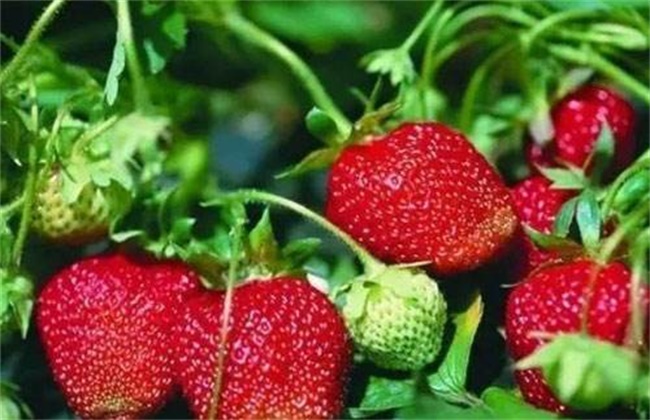
What Affects Strawberry Fruit Enlargement? Analysis of Five Major Factors
Five Major Factors Affecting Strawberry Fruit Enlargement
-

Which hard-flesh peach varieties are good? Five recommendations suitable for the Yangtze River Basin
1. Qinwang. Average single fruit weight 210 grams, maximum fruit weight 350 grams, fruit size relatively uniform. The base color of the peel is yellow-red; at maturity, 80%-100% of the fruit surface turns bright red, the appearance is colorful, and the fruit surface has little fuzz. The fruit is round, the suture line is medium, the fruit shape is relatively symmetrical, the fruit apex is concave, and the stem cavity is medium-deep. The flesh is red-white, with 75% red blush. The flesh is especially hard and does not crack, the texture is fine, and the resistance to browning is strong. Soluble solids 13.7%, tastes sweet with slight acidity, slight aroma, excellent quality. Semi-clingstone, small stone, no stone cracking, edible rate 9
-
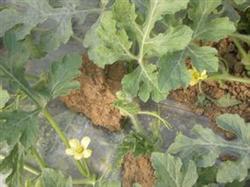
Five observations to tell whether a watermelon has set fruit
First, look at the female flower's morphological features. In early-maturing watermelon varieties, the ovary is generally round (a few are oblong); female flowers with few hairs, a thick and long fruit stalk, and larger petals set fruit easily. For oval-fruited melons (mostly mid- to late-maturing varieties), the ovary is oblong, and female flowers with many hairs, a thick and long fruit stalk, and large petals set fruit easily; otherwise they set fruit with difficulty...
-
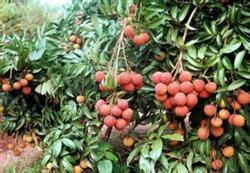
Five key management measures for post-harvest lychee care
In May and June, some early-maturing lychee varieties are soon harvested, and it is time to enter the post-harvest management period. Fruiting consumes a large amount of nutrients in lychee, and picking the fruit damages the branches, giving the tree a kind of "internal injury." Therefore, timely management after harvest is needed so the lychee can be replenished with nutrients early and lay the foundation for a bumper crop next year. Otherwise the tree...
-
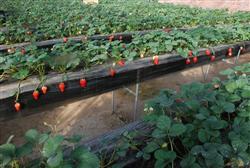
Five timely measures for spring strawberry management
Strengthening spring management is the key to promoting high quality, early ripening and increased yield in strawberries. The specific measures involve doing a good job of the "five timely actions." 1. Remove cold-protection covers in good time. The strawberry is a temperate evergreen plant, and its root system begins to grow when the soil temperature is 1°C to 2°C. In practice, generally when the air temperature is around 5°C, it is time to...
-
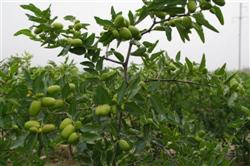
Five common mistakes to avoid in jujube tree management
1. Focusing only on winter pruning while neglecting summer management. Winter pruning of jujube trees can adjust tree vigor, improve ventilation and light conditions inside the canopy, help concentrate nutrients, and improve the quality of jujube fruit the following year. "Winter pruning grows the tree, summer management sets the fruit." The main summer management measures: removing sprouts, pinching tips, bending branches, and thinning out overly dense branches and vigorous upright branches. Some jujube growers...
-
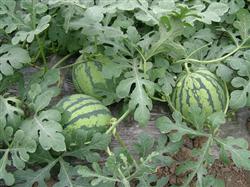
Five scientific measures for spring cultivation of mini watermelons
Cultivating mini watermelons in early spring has become a planting project favored by many melon growers, but due to climate and other reasons, the cultivation of mini watermelons still requires very scientific methods. Below, we explain 5 measures for scientifically cultivating mini watermelons: 1. Temperature management. Because the natural temperature in early spring is low, after transplanting the focus should be on keeping warm, keeping the greenhouse film tightly closed...
-
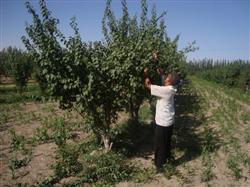
Five Key Points of Apricot Tree Management After Harvest
1. Thinning branches: Thin out overly dense perennial branches inside the canopy and new apricot shoots sprouting from scaffold branches. When branches are well spaced, red apricots hang in clusters; when branches are crowded, the fruits hang empty. Therefore, any branch in an unsuitable position or not planned to be kept as a renewal branch should be thinned out as early as possible. 2. Pinching: Pinching means cutting off the terminal bud at the tip of an apricot shoot. Generally, pinch off...
条件筛选