What Affects Strawberry Fruit Enlargement? Analysis of Five Major Factors
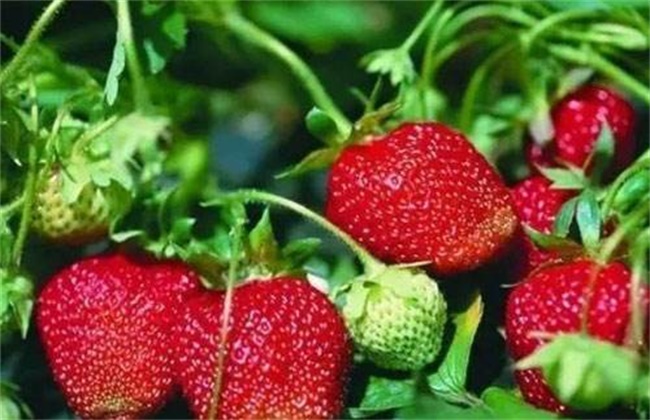
Strawberry is one of our favorite fruits, with a sweet and sour taste and high nutritional value, and it is grown over a fairly wide range. When growing them, many farmers find that their strawberries enlarge slowly, or even fail to enlarge at all. Below, we bring you the five major factors affecting strawberry fruit enlargement. Let's take a look.
1. Seeds
Seeds play an important role in the growth and development of strawberry fruit. They are the basis for fruit set and normal fruit development. Fruit growth depends on the regulation of auxin, and auxin is present in pollen. After pollination, the auxin needed for the fruit to continue growing is produced by the developing seeds. So seeds are extremely important for fruit growth and development. On the same fruit, if some seed-bearing parts cannot continue to grow while other parts grow normally, deformed fruit will appear.
2. Nutritional Status of the Plant
Vigorous plant growth is the basis for ensuring fruit size and yield. In the early stage of strawberry flowering, if a sufficient assimilation area cannot be formed, the plant will be short of nutrients, which leads to poor flower organ development in strawberries, with short styles and a low pollen germination rate, affecting pollination and fertilization, resulting in a low fruit-setting rate and deformed fruit. During fruit enlargement, the fruit consumes a large amount of nutrients, the plant's vegetative growth is inhibited, assimilation capacity decreases, and the synthesized nutrients are reduced, which also affects fruit enlargement, causing small fruit and low yield.
3. Temperature
Temperature is closely related to fruit growth and ripening. The suitable temperature for strawberry growth and development is 18-25 degrees C. The minimum temperature is 12 degrees C. Flower buds are most susceptible to low and high temperatures. If the temperature is below 0 degrees C or above 40 degrees C, the pollination and fertilization process will be affected. For the same variety, within the suitable temperature range, when the daily average temperature is higher, the actual time needed from flowering to fruit ripening is shorter and the fruit is smaller; when the temperature is lower, the time needed is longer and the fruit is larger.
4. Light
Strawberry fruit development requires sufficient light. With sufficient light, the plant grows well, photosynthesis is strong, assimilation efficiency is high, more carbohydrates are transported to the fruit, the fruit enlarges rapidly, and the sugar content is high with good quality. The more sunny days during the fruit ripening period, the better. If the fruit ripening period encounters cloudy and rainy weather, the sugar content and vitamin C content of the fruit will also decrease significantly.
5. Water
Strawberries contain more than 90% water. During the fruit development period, water uptake gradually increases, and when the fruit ripens in large quantities, the demand for water rises sharply, so the amount of soil moisture has an extremely important effect on fruit growth and development. With sufficient water, the fruit enlarges quickly, the fruit surface is smooth, and with light, the fruit is soft and juicy; when soil moisture is insufficient, the fruit is small, the fruit surface is shriveled, and the skin wrinkles.
The above is an introduction to the five major factors affecting strawberry fruit enlargement. We hope it helps you. To learn more related knowledge, please stay tuned to us.