Five Key Points of Apricot Tree Management After Harvest
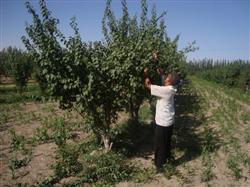
1. Thinning branches: Thin out overly dense perennial branches inside the canopy and new apricot shoots sprouting from scaffold branches. When branches are well spaced, red apricots hang in clusters; when branches are crowded, the fruits hang empty. Therefore, any branch in an unsuitable position or not planned to be kept as a renewal branch should be thinned out as early as possible. 2. Pinching: Pinching means cutting off the terminal bud at the tip of an apricot shoot. Generally, pinch off...
 Topdressing: After bearing a heavy crop, the apricot tree has consumed a large amount of nutrients, and after fruit drop it enters the flower bud differentiation stage, which requires an adequate nutrient supply. Therefore, fertilizer should be applied promptly to replenish nutrients in time.
Orchard cleaning: Along with topdressing, promptly clean up weeds, fallen leaves, rotten fruit, and diseased or pest-damaged fruit in the orchard, and bury them deep to prevent the spread of pests, diseases, and eggs.
Pest control: Apricot trees are most prone to red spider mites. After red spider mites damage the leaves, they can cause early defoliation, affecting flower bud differentiation, resulting in fewer flowers, fewer fruits, and low yields the following year. To control red spider mites, use 15% pyridaben 1000-fold solution or 1.8% abamectin 3000-4000-fold solution.
Summer pruning: Remove upright branches, crossing branches, overlapping branches, as well as diseased, pest-damaged, and weak branches to reduce nutrient consumption by the tree. For trees with a narrow branching angle, use ropes to pull branches or use bricks and stones to weigh them down.
Soil improvement: After the apricot fruit is harvested, the entire orchard should be cultivated, with deep plowing combined with fertilization. Deep plowing can improve soil structure, promote root growth, enhance cold resistance, and reduce the overwintering population of pests.
【