Five observations to tell whether a watermelon has set fruit
First, look at the female flower's morphological features. In early-maturing watermelon varieties, the ovary is generally round (a few are oblong); female flowers with few hairs, a thick and long fruit stalk, and larger petals set fruit easily. For oval-fruited melons (mostly mid- to late-maturing varieties), the ovary is oblong, and female flowers with many hairs, a thick and long fruit stalk, and large petals set fruit easily; otherwise they set fruit with difficulty...
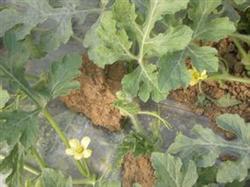
First, look at the female flower's morphological features. In early-maturing watermelon varieties, the ovary is generally round (a few are oblong); female flowers with few hairs, a thick and long fruit stalk, and larger petals set fruit easily. For oval-fruited melons (mostly mid- to late-maturing varieties), the ovary is oblong, and female flowers with many hairs, a thick and long fruit stalk, and large petals set fruit easily; otherwise they set fruit with difficulty, and even if a fruit sets, the melon is small and of poor quality.
Second, look at the ovary's growth rate. On the second day after pollination, the fruit stalk elongates and bends downward, and the ovary visibly swells; on the third day after pollination, the ovary's transverse diameter reaches 2 cm and is glossy, indicating the female flower has set fruit. If, 2 to 3 days after pollination, the fruit stalk is still thin and short, the ovary grows slowly, and the color is dull, such a young fruit will not hold.
Third, look at the plant's growth condition. If the leaves curve slightly inward at noon and spread out in the evening, the leaf posture is slightly flat, the internode length is no greater than the leaf length, and the plant is compact, it sets fruit easily. If the plant's internodes lengthen, the leaves are thin and narrow, and the petioles are longer than the leaves, it indicates the plant is growing excessively, which easily delays the appearance of female flowers and makes fruit setting difficult. If the plant's growth is too weak, it easily causes female flowers to appear too early, and the ovary becomes smaller and round; although fruit sets easily, it often develops into a deformed melon, or the young fruit gradually shrivels later and drops.
Fourth, look at where the female flower is borne. If the node of a female flower opening that day is 30 to 50 cm from the vine tip, the vine is 0.6 to 0.8 cm thick, and the internode length is no greater than the leaf length, it indicates the plant is growing normally and sets fruit easily. If the petioles are longer than the leaves and the node of a female flower opening that day is more than 60 cm from the vine tip, it indicates the plant is growing excessively and does not set fruit easily. If the node of the female flower is less than 20 cm from the vine tip, it indicates the plant's growth is too weak, and it also does not set fruit easily.
Fifth, look at fertilizer and water management. Applying too much chemical fertilizer as base fertilizer, applying little or no organic fertilizer, or applying too much nitrogen fertilizer and no or little phosphorus and potassium fertilizer during the growing period often causes excessive vegetative growth and delayed fruit setting. Watermelon has strict water requirements around flowering. If, around noon, the small leaflets at the leaf or vine growing tip close inward, the leaf color is grayish and dull, and the growing tip droops, it indicates the plant lacks water, which easily causes flower drop and fruit drop. If the small leaflets at the leaf or vine growing tip spread out, the leaf margin color becomes lighter, and the growing tip clearly turns upward, it indicates there is too much soil moisture, and the plant is prone to excessive vegetative growth, which affects fruit setting.