-
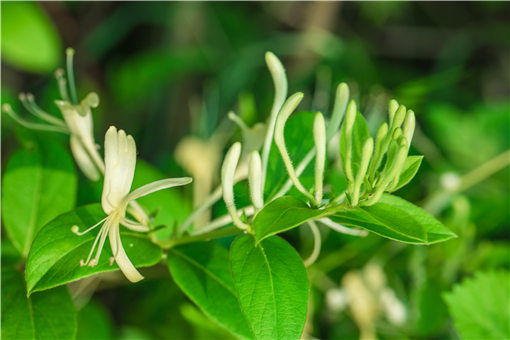
What medicinal herbs to plant this spring for good prospects? These five are recommended
Which medicinal herbs are suitable for planting this spring? These five have great prospects!
-

Detailed Explanation of Five-Clawed Dragon Planting Techniques and Management Methods
Planting Techniques for Five-Clawed Dragon
-

Five Key Measures for High-Yield Cultivation of Pinellia ternata
Pinellia ternata, also known as three-leaf pinellia, three-step jump, and hemp jade fruit, uses its tubers for medicinal purposes and is a commonly used Chinese medicinal herb. To achieve high yield in artificial cultivation of Pinellia ternata, the following measures must be taken: 1. Pre-planting sprouting, mulching during seedling stage. Pinellia ternata is generally sown in spring from February to April. Since temperatures are relatively low at this time and seed tubers sprout slowly, seed tubers should be pre-sprouted before planting. Sprout indoors using a hotbed, maintaining the sprouting temperature at around 20°C, and sprouts will emerge in 15 days; alternatively, build a plastic shed outdoors for sprouting at 20-25°C, treating continuously for 15
-
What are the five main causes of low yields in Gastrodia elata (tianma)
Recently, the editor has often received consultation calls from people saying that the Gastrodia elata they cultivate does not yield much, with some even below 3 kg/sq m. The reporter specifically consulted Cao Debing, a Gastrodia elata expert at the Provincial Academy of Agricultural Sciences, about these issues. According to him, based on the growth principles of Gastrodia elata, there are many causes of low yields. He listed the following five causes, and farmers can check their own production conditions to see whether any of the following situations apply: 1. Armillaria mellea has been subcultured many times, becoming aged and degenerated. Armillaria mellea is the only source of nutrition for Gastrodia elata, so the quality of Armillaria mellea directly has an irreversible impact on Gastrodia elata. In general production, it is required to use detoxified, isolated pure strains, or to use such strains to cultivate fungal material before planting, so as to ensure results; however, in order to reduce costs, some farmers either use ordinary strains, or use old fungal material as "starter", mixing in some new linden wood to let it "transfer the fungus". If a pure strain was used the first time, this method can be used the next year, but it must not exceed three years. Unlimited continuous "fungus transfer" will inevitably lead to strain degeneration and reduced vigor, causing reduced Gastrodia elata yields.
-
Getting the five key steps right in Gastrodia elata cultivation can effectively increase yield
To achieve stable and high yields of Gastrodia elata, the first thing is to get the five pre-planting steps right: First, choose the site. Gastrodia elata cultivation can be adapted to local conditions, whether indoors, in air-raid shelters, semi-basements, or chicken coops. Because Gastrodia elata likes dark, damp, and cool environments, choose places with good ventilation and shade as much as possible, with semi-basements and outdoor trenches giving the best results. You can lay a layer of bricks before use, or increase the thickness of the bottom sand layer to enhance its water permeability. Second, if the indoor floor is concrete, use high-quality Armillaria mellea fungal material (spawn). Armillaria mellea fungal material
-
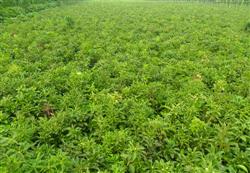
Five key technical points for successful Atractylodes macrocephala cultivation
Atractylodes macrocephala, also known as Yuzhu, Dongzhu, Zhezhu, etc., is a plant of the Asteraceae family. Its rhizome can be used as medicine and has effects such as strengthening the spleen, drying dampness, and preventing miscarriage, making it a valuable Chinese medicinal herb. Growing Atractylodes macrocephala in rural areas is a path to wealth with low investment, a short production cycle, smooth sales, and high economic returns. 1. Site selection and land preparation. Atractylodes macrocephala prefers a cool climate...
-
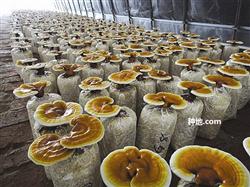
To grow Reishi mushrooms for three harvests a year, these five points need attention
Reishi (Ganoderma lucidum) is a medicinal fungus and one of China's nine legendary herbs. With the development of modern medicine, its medicinal value is constantly being discovered, and market demand is growing day by day, so artificial cultivation of Reishi has attracted widespread attention. Below, OPE Sports introduces the five key points that must be mastered to achieve three harvests a year with Reishi...
条件筛选