-
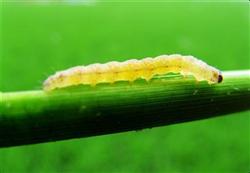
How to prevent and control common rice pests and diseases? A detailed practical guide
Rice bacterial leaf blight is a bacterial disease of rice leaves. The pathogen is Xanthomonas oryzae pv. oryzae in the prokaryote kingdom. The bacterium invades through wounds and water pores in the roots, stems and leaves, and reproduces and causes damage in the vessels of the vascular bundles. Seedlings and tillering stages are the most susceptible. Seedling leaves mostly show leaf blight symptoms. In susceptible varieties...
-
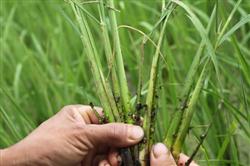
Key Technical Points for Controlling Diseases, Pests and Weeds in the Field After Rice Seedling Broadcasting
Southern rice black-streaked dwarf disease is a viral disease mainly transmitted by the white-backed planthopper. It mainly harms staple grain crops such as rice and corn. Once a crop is infected, the plant becomes stunted, tillering increases, and in the later growth stage the diseased rice cannot head or set grain, sometimes resulting in a complete loss of harvest, seriously threatening the safety of our county's grain production. In order to scientifically...
-
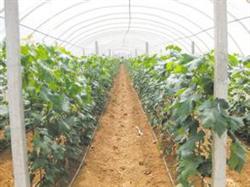
What pesticides are used to control common diseases of greenhouse grapes
Pesticide control measures for various diseases of greenhouse grapes: Control method for grape downy mildew: clean up the orchard, spray 5 degrees Baume lime sulfur mixture before bud break, spray once every half month starting from the young fruit stage, and spray 40% metalaxyl 800-1000 times dilution when the disease occurs. Control method for grape white rot: clean the orchard, starting from June every...
-
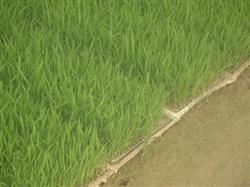
How to prevent and control pests and diseases during the rice seedling-raising period
During the rice seedling-raising stage, phenomena such as stunted rooting, yellowing, and stalled growth are prone to occur. For fields where stunted rooting has already occurred, drainage should be carried out immediately to increase temperature and aeration and reduce toxicity, and at the same time quick-acting nitrogen, phosphorus, and potassium fertilizers should be applied, along with supplementary micro-fertilizers, with zinc fertilizer being the key; where deficiency symptoms are present, the corresponding deficient nutrient fertilizer should be applied promptly. Withdraw the water and sun the field, or use circuitous...
-
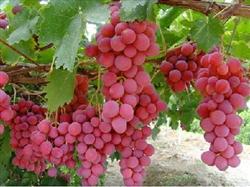
How to prevent and control grape diseases in the rainy season? A detailed guide to practical methods
The peak period for many diseases such as grape downy mildew, white rot and anthracnose is summer. The occurrence of downy mildew can cause grape leaf drop, dead branches, rotten fruit and even death. Therefore, China Agricultural Technology Network reminds you to strengthen vineyard management during the rainy summer season and to prevent and control diseases in good time. 1. Clean the vineyard: if in the vineyard...
-
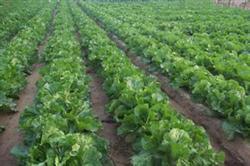
How to prevent diseases in autumn-planted Chinese cabbage? Early preparation is key
As the saying goes: turnips in the first fu, mustard in the second fu, and Chinese cabbage sown at the start of autumn. The season for planting autumn Chinese cabbage has arrived again, and it should be planted at the right time to ensure good quality and high yield. The key points of autumn Chinese cabbage cultivation techniques are introduced as follows: For variety selection, generally choose tall, late and mid-maturing varieties for plots with good fertilizer and water conditions; for fertile...
-
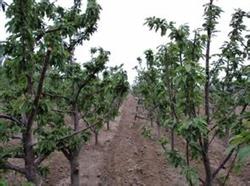
Identification and Control Methods for Common Cherry Diseases and Pests
Many of the diseases and pests affecting cherries are the same as those of other stone fruit trees, so their control methods can be used for reference. The main diseases harming cherries are shot hole disease, crown and root collar rot, and gummosis. Crown and root collar rot mostly occurs on trees in their first fruiting stage, causing the crown and root collar to decay. Control methods: mainly avoid piling soil around the root collar for long periods, and control underground pests that gnaw and wound the bark. At the same time, check frequently; when diseased plants are found, scrape and treat them promptly, and after scraping, disinfect with Bordeaux mixture or lime sulfur mixture. For severe crown and root collar rot, the aboveground growth can also be restored through spring bridge grafting. The main pests harming cherries include the red-necked longhorn beetle, the golden-line jewel beetle, the small clearwing moth, the spherical scale insect, and the phalera caterpillar. The small clearwing moth has one generation per year, and its larvae cause damage within the cortex of large branches. Control measures mainly include spraying during the peak emergence period of adults, whitewashing the branches and trunk to prevent egg laying, and promptly spraying or digging out larvae when their frass is found in the field.
-
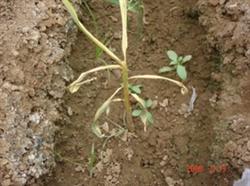
How to prevent and control ginger pests and diseases? A full analysis of practical techniques
(1) Ginger blast 1. Pathogen: a bacterial disease, Ralstonia solanacearum. 2. Symptoms of diseased plants: leaves first droop and lose their luster, then turn withered yellow from bottom to top, and finally die. The stem first becomes water-soaked at the base, turns yellow, dies, and breaks off at the base and falls over. The rhizome is water-soaked, turns brown and rots, and when squeezed a white juice flows out with a foul odor.
-
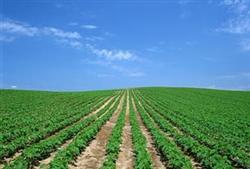
What are the main diseases of mung bean? Detailed explanation of control methods
When planting mung bean, chemical fertilizers cannot be used as fertilizer, and nitrogen-containing fertilizers should be avoided even more. Moreover, sowing cannot be done before rain, and when sowing, the seedlings should be even, so that balanced nutrition can be ensured. The field should be inspected in time, and areas with missing seedlings should be replanted in time, with seedlings thinned at the 4-leaf stage. In poor plots, during the seedling stage every...
-
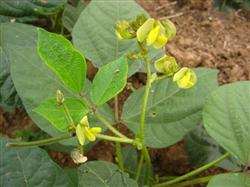
Mung bean diseases are frequent during the flowering period, and growers need to control them promptly
At present, mung beans have entered the flowering and pod-setting stage, and diseases and pests have been found in some fields, among which mung bean leaf spot, viral disease, damping-off, and soybean aphids cause relatively serious damage to mung beans. 1. Mung bean leaf spot: mainly damages leaves, with light brown or dark brown lesions appearing on the leaves, and obvious yellow halos at the edges,...
条件筛选