-
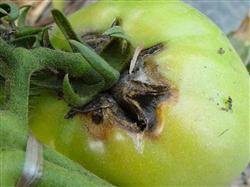
Key Technical Points for Preventing Physiological Diseases of Autumn Tomatoes
Early blight: After onset, concentric ring-patterned lesions appear on the leaf surface, dark brown, water-soaked. Before and after onset, spray with a 500-fold dilution of 70% mancozeb wettable powder, or a 400-fold dilution of 75% chlorothalonil wettable powder, once every 7 days, for 3 to 4 consecutive sprays.
-

The grass you can grow on your roof insulates against sound and prevents leaks, is free of pests and diseases, and is highly effective for treating bites, burns and scalds
Imagine: in the countryside, how beautiful it would be if your roof were completely covered with grass! Some farmers would start to worry about the roof leaking. If you plant Sedum lineare, there is no need to worry at all. Sedum lineare is a succulent...
-
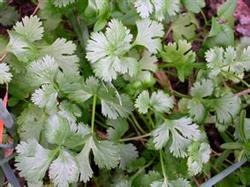
What are the common diseases of cilantro? Detailed explanation of prevention and control methods
Coriander (cilantro) is used as a seasoning vegetable; it is nutritious and simple to cultivate and manage. The key points of coriander cultivation techniques are introduced as follows: Characteristics of coriander. Coriander belongs to the Apiaceae family. It can withstand low temperatures of -1°C to 2°C, and its suitable growing temperature is 17°C to 20°C. Above 20°C it grows slowly, and at 30°C it stops growing. Coriander has requirements for soil...
-
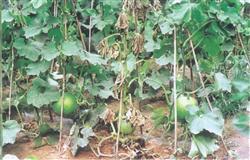
What are the control methods for winter melon pests and diseases?
Fusarium wilt is the most serious disease affecting autumn-planted winter melon. It strikes when the plant begins to flower and set fruit, causing the vines to wither and die. This disease is a fungal disease, and when it occurs severely, it spreads aggressively and rapidly, affecting entire patches and killing whole plants, resulting in heavy losses. Close attention must be paid to its control in order to protect the stems and vines and promote flowering and fruit set....
-
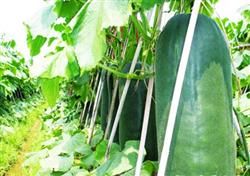
How to identify and control common diseases and pests of winter melon?
Spring-planted winter melon is rich in nutrients; every 100 grams of fresh melon contains 96.6 grams of water, 0.4 grams of protein, 19 mg of calcium, 12 mg of phosphorus, 18 mg of vitamin C and other nutrients. In recent years, demand for winter melon has been increasing in various places. Spring-planted winter melon has high yields, and some varieties can reach up to 10,000 kg, after...
-
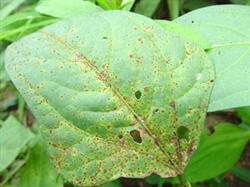
How to prevent and control diseases of yardlong beans? A detailed guide to practical methods
I. Main symptoms The yardlong bean can be infected by pathogens throughout its entire growing season, but its resistance weakens and susceptibility increases from the beginning of flowering to the fruiting period. The disease mainly attacks the leaves; in the early stage of the disease, chlorotic yellow-white spots appear on the leaves, and the spots gradually increase until they densely cover the entire leaf. The plant is short and stunted, with few and small pods, and its growth...
-
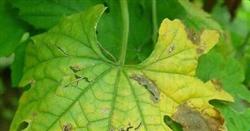
Act quickly to prevent and control diseases in eggplant, melon and bitter gourd
New leaves become smaller, narrow and elongated, shrunken, hardened and distorted; diseased plants are obviously stunted and find it hard to set fruit; even if fruit is set, it is deformed and hardened with a mottled surface.%26rdquo; Recently, a farmer brought a diseased bitter gourd vine and anxiously went to the municipal plant protection station for consultation and told this author about it, asking what disease it was and seeking a solution...
-
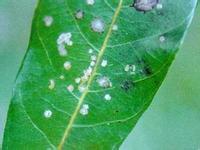
Methods for Controlling Pests and Diseases of Lychee and Longan in Autumn and Winter
I. Pest species during the autumn shoot stage and their control. Autumn shoots are next year's fruiting branches; if they are eaten bare by pests, it will seriously affect next year's flower bud formation. The main pests of autumn shoots are leaf-eating types, including various geometrid moths and various leaf-rolling insects. Among them, the eriophyid mite (felt disease) and the longan psyllid, etc., cause the most serious damage from September to November each year...
-
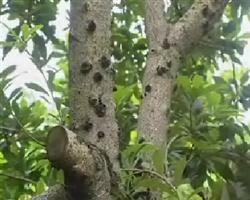
What are the common pests and diseases of Chinese bayberry (Myrica rubra)? These several will affect tree vigor
Pests and diseases such as canker, brown spot, leaf roller, and pine caterpillar have a huge impact on the vigor and yield of Chinese bayberry trees. In production, prevention should be the main approach, with integrated control. In addition to measures such as increasing the application of organic fertilizer and potassium fertilizer and doing a good job of winter orchard cleaning, during the growing season effective measures should be taken promptly according to the occurrence patterns of pests and diseases to...
-
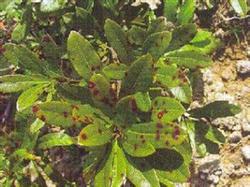
A Detailed Guide to the Main Diseases of Chinese Bayberry (Yangmei) and Their Control Methods
I. Chinese Bayberry Crown Gall Disease 1. Symptoms: Chinese bayberry crown gall disease is a bacterial disease. It mainly affects the branches and trunks of 2-3 year old fruiting trees, mostly forming tumors on the branches and trunks. The tumors are nearly spherical, vary in size, are very hard and corky, and range in color from brown to dark brown. Generally, the tumors on the branches and trunks begin to enlarge in early April, and from July to August...
条件筛选