Common pest and disease control methods in lily cultivation
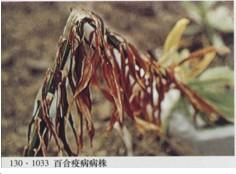
Lily blight, also known as lily foot rot, is distributed in Hebei, Gansu, Shaanxi, Shandong, Zhejiang, Jiangxi, Henan, Hubei, Hunan, Sichuan, Guizhou, Yunnan, Tibet and other provinces and regions. 1. Damage symptoms: It mainly attacks stems, leaves, flowers, scales and bulbs. When the stem is infected, water-soaked brown rot appears at first, gradually...
 I. Diseases
1. Penicillium: This disease is caused by Penicillium entering through wounds on the bulb tissue and is spread during storage.
Symptoms: During storage, white spots grow on the rotten areas of the scales, and then fuzzy greenish-blue patches develop. Once infected, rotting will gradually increase throughout the entire storage period, even at a low temperature of -2°C. The pathogen will eventually invade the basal plate of the bulb, making the bulb worthless or causing the plant to grow slowly. Although infected bulbs look unhealthy, as long as the basal plate of the bulb remains intact, the plant's growth during planting will not be affected. After planting, Penicillium infection will not transfer to the stem, nor will it infect other plants from the soil.
Control methods: Do not plant bulbs whose basal plates have already been infected; infected bulbs should be planted as soon as possible, and before planting they must be soaked for 30 minutes in an aqueous solution of a fungicide such as one-thousandth captan, chlorothalonil or carbendazim, then planted out; maintain suitable soil moisture before and after planting; store the bulbs at the recommended minimum temperature.
2. Bulb and scale rot and stem disease caused by Fusarium: This disease is caused by two fungi, Fusarium oxysporum and Cylindrocarpon destructans. These fungi infect the underground parts of the plant through wounds or parasitic insects; the wounds are mainly caused by splitting of the bulb and the base of the stem. These fungi can spread on the bulb, and the pathogen can also infect through the soil; some varieties are particularly sensitive to infection.
Symptoms: Plants with bulb and scale rot grow very slowly, and the leaves are pale green. Underground, brown spots appear at the top of the scales or where the scales join the basal plate, and these spots gradually begin to rot (scale rot). If the basal plate is infected, the entire bulb will rot. Stem rot is the symptom of Fusarium infection in the above-ground part; the identifying sign is that the basal leaves turn yellow before maturity, and the yellowed leaves later turn brown and fall off. On the underground part of the stem, orange to dark brown spots appear, which then enlarge and finally extend into the interior of the stem. After that the stem rots, and finally the plant dies before maturity.
Control methods: Disinfect infected soil; plant mildly or moderately infected bulbs as quickly as possible, and the soil temperature should be low.
3. Rhizoctonia: This disease is caused by Rhizoctonia solani. This fungus mainly infects plants from the soil and is most active under conditions above 15°C and humid. This fungus can harm many other plants, such as tulips, irises, chrysanthemums and tomatoes, so many soils will be infected with Rhizoctonia.
Symptoms: If the infection is mild, it only harms the leaves in the soil and the green leaves at the lower part of young shoots, and sunken light brown spots appear on the leaves. Generally speaking, although the plant's growth is somewhat affected, it can still continue to grow. In severely infected plants, the growth of the upper part is hindered, and the white leaves underground as well as the lowest leaves above ground will rot or wilt and drop off, leaving only brown scars on the stem. Young leaves and growing points are often harmed; infected plants will have inhibited rhizome development, which in turn hinders the plant's growth, resulting in unsatisfactory flowering or even no flowers, because the flower buds have dried up at a very early stage.
Control methods: Disinfect soil suspected of infection with a soil disinfectant, and after disinfection it must be ensured that the soil is no longer infected, especially in summer when the soil temperature is high; if the previous crop has already shown infection, ordinary soil disinfectants cannot be applied, and before planting the soil should be pre-treated with an agent for controlling Rhizoctonia (fully incorporated into the soil to a depth of 10 cm).
4. Phytophthora: This disease is usually caused by the fungus Phytophthora nicotianae and its varieties. Phytophthora has not been found in the Dutch bulb cultivation industry. But under subtropical climates, it affects many kinds of plants, so this fungus exists in most cultivation soils. This fungus is commonly present in soil where tomatoes and gerberas have been grown, and it can survive in moist soil for many years. Soil and plants being too wet and high temperatures (above 20°C) will promote the occurrence of this disease.
Symptoms: Foot rot of the plant (Phytophthora) will hinder growth or cause sudden wilting. The infected area at the base of the stem develops soft rot, becoming dark green to brown and extending upward, the leaves turn yellow, and discoloration begins at the base of the stem. Similar soft rot infection often occurs on the above-ground stem as well, causing the stem to collapse or bend.
Control methods: Disinfect infected soil with an ordinary soil disinfectant; during cultivation, fungicides that control Pythium can also effectively control foot rot; ensure the soil has good drainage conditions and prevent the crop from remaining wet for a long time after watering; in summer the soil temperature should be as low as possible.
5. Pythium rot: This kind of root rot is caused by Pythium. This fungus is very active under moist conditions and at temperatures of 20-30°C. They exist in the soil and on bulb roots; unsuitable cultivation conditions, such as poor soil structure, high soil salt content or soil that is too wet, will promote the occurrence of this disease.
Symptoms: Such fungi can attack the root system of plants in an area and cause root rot; infected plants are short, the lower leaves turn yellow, the upper leaves become narrower, the leaf color is paler, and they often wilt, especially under high-temperature transpiration. Plants affected by root rot have shrunken flower buds. These plants often show bud drop in winter. Moreover, the flowers are smaller, often cannot open fully, or the flowers are difficult to color. If the plant is pulled up, transparent, light brown rotten spots can be seen on the bulb and the rhizome, or they have already become completely soft and rotten.
Control methods: Disinfect infected or suspected infected soil with an ordinary soil disinfectant; keep the soil temperature low in the early cultivation period and adopt correct cultivation procedures throughout the cultivation period; after the crop has emerged or where Pythium infection may have occurred, a fungicide for controlling Pythium that can be easily sprayed onto the crop can be used, preferably in the evening; if infection has been observed, keep the greenhouse and soil temperature as low as possible to limit crop transpiration, which can be achieved through ventilation and shading, and keep the soil as slightly moist as possible.
6. Staphylococcus: "Fire" spots are caused by Staphylococcus bacteria. In a humid environment, Staphylococcus develops and produces spores, and the spores can quickly spread to neighboring plants through wind or rain. The spores will not germinate on dry plants, so dry plants will not be infected.
Symptoms: Small dark brown round spots 1-2 mm in diameter can be seen on the leaves. Under moist conditions these round spots quickly develop into larger circular or oval clearly defined spots. These spots are visible to the naked eye on both sides of the leaf. The infected tissue gradually dies (withers and becomes papery). Infection can begin not only from the middle of the leaf but also from the leaf margin, causing the leaf to become deformed and its growth to be hindered. The stem can also be infected, and eventually the buds completely rot or develop abnormally. In the early stage of infection, raised areas appear on the outer petals of the initially infected buds. Opened flowers are extremely sensitive to infection and show gray, water-soaked, circular spots, which become "fire spots."
Control methods: Keep the plants as dry as possible, reduce planting density, and increase ventilation and heating; in seasons when the disease is prone to occur, fungicides for controlling Staphylococcus (such as benomyl) can be used alternately at an early stage; remove weeds and plant residues to ensure cleanliness and hygiene.
II. Pests
1. Aphids
Symptoms: In infected plants, the lower leaves develop normally, while the upper leaves curl and become deformed in the early stage of development. Aphids only harm young leaves, especially the downward-facing leaves, and also harm young buds, producing green spots; the flowers become deformed and remain partly green.
Control methods: Remove weeds, because weeds are often hosts of aphids; if aphids appear, spray the crop with an insecticide every week. Alternate the agents to prevent aphids from developing resistance.
III. Physiological diseases
1. Leaf scorch: Leaf scorch occurs when the balance between water uptake and evaporation in the plant is disrupted. This is the result of calcium deficiency in young leaf cells when water uptake or transpiration is insufficient. The cells are damaged and die. At the same time, poor root systems, high salt content in the soil, and growth that is too fast relative to the root system, as well as sharp changes in relative humidity in the greenhouse, will affect this process. Large bulbs of sensitive varieties are more prone to it.
Symptoms: First, the young leaves curl slightly inward, and after a few days yellow to white spots appear on the scorched leaves. If the leaf scorch is mild, the plant can still continue to grow normally, but if the leaf scorch is very severe, the white spots can turn brown, and the leaves bend where the damage occurs. In very severe cases, all the leaves and young shoots will drop off, and the plant will not develop further; this is called "the most severe scorch."
Control methods: Ensure the plant has a good root system; the soil should be kept moist before planting; it is best not to use sensitive varieties, or use small bulbs; the planting depth should be suitable, with 6-10 cm of soil above the bulb; during periods of increased sensitivity, avoid large differences in temperature and relative humidity in the greenhouse, and try to keep the relative humidity at around 75%; prevent overly rapid growth; ensure the plant can maintain stable transpiration.
2. Bud drop and flower bud shrinkage: Bud drop occurs when the plant cannot get enough light. Under conditions of insufficient light, the stamens inside the flower bud produce ethylene, causing flower bud abortion. If the root system's living conditions are poor, the risk of bud shrinkage will increase.
Symptoms: Bud drop occurs when the flower buds grow to 1-2 cm. The color of the flower buds turns pale green, and at the same time the pedicel connected to the stem shortens, after which the flower buds drop off. In spring, the lower flower buds are affected first, while in autumn the higher flower buds will drop first.
Flower bud shrinkage can occur throughout the entire growth period. The flower buds turn completely white and dry up. These dried flower buds sometimes drop off; if flower bud shrinkage occurs in the early stage of development, then later tiny white spots will appear on the leaf axils.
Control methods: Do not cultivate varieties prone to bud drop in environments with poor light; to prevent flower bud shrinkage, the bulbs must not dry out during cultivation; ensure the plant's root system grows well.
3. Nutrient deficiency: During the cultivation of lilies, symptoms of one or more nutrient deficiencies may be encountered, some of which can be judged by changes in leaf color. If the corresponding elements are supplemented in time, these symptoms can be prevented or alleviated.
1) Nitrogen deficiency (N)
Symptoms: The plant grows slowly; the leaves are uniformly pale green to yellow.
Solution: Quick-acting nitrogen fertilizers can be used to adjust it fairly quickly, such as calcium nitrate [Ca(NO3)2], urea [CO(NH2)2] or potassium nitrate (KNO3). These fertilizers can be mixed with irrigation water or sprayed on, followed by leaching.
2) Calcium deficiency (Ca)
Symptoms: The plant grows slowly, and the leaf color becomes lighter; the leaf tips bend downward, and sometimes the tips turn brown; the leaves are sometimes pale green with white spots; root development is poor.
Solution: Lime can be added to the soil before planting for prevention; there are also some other fertilizers that help slow the occurrence of calcium deficiency symptoms, namely: magnesium carbonate (MgCO3), magnesium oxide (MgO), magnesium hydroxide (Mg(OH)2).
3) Phosphorus deficiency (P)
Symptoms: The plant grows slowly; the leaves are pale green and lack luster; the tips of old leaves turn reddish brown.
Solution: Phosphorus deficiency is relatively difficult to remedy during cultivation. Before cultivation, the phosphorus content in the soil should be suitable, and calcium hydrogen phosphate (CaHPO4) can be used to supplement it. This fertilizer does not contain fluorine. It can be spread on the soil before preparing the soil.
4) Potassium deficiency (K)
Symptoms: The plant grows slowly and is somewhat short; the growth rate is not as good as that of normal plants; the young leaves are dark yellow-green with brown tips; some small white necrotic spots are distributed over the entire leaf; further on, the leaf tips wither.
Solution: Fertilizers such as potassium nitrate can be used to make up for it, and this fertilizer can be provided mixed in the irrigation solution.
5) Magnesium deficiency (Mg)
Symptoms: Magnesium deficiency appears relatively quickly, and it is most obvious on the oldest leaves. The main manifestations are that the plant grows slowly; the leaves are pale green and bend downward; sometimes there are brown-white spots along the length of the leaf.
Solution: Magnesium sulfate can be used for remediation, dissolved in irrigation water and provided to the plants, or directly spread on the ground between the plants.
6) Iron deficiency (Fe)
Symptoms: Symptoms of iron deficiency can occur in any type of soil. In lilies, iron deficiency symptoms are especially likely to appear in Oriental hybrids and Longiflorum hybrids. They manifest as: yellowing between the leaf veins; the symptoms are mainly concentrated in the upper part of the plant; they are likely to occur during periods of rapid growth; in severe cases, the top leaves of Longiflorum hybrid lilies will turn white.
Solution: Chelated iron can be used for prevention. Their effectiveness mainly depends on the pH value of the soil. The two more commonly used chelated irons are EDDHA and DTPA. Because EDDHA is suitable for a soil pH range of 3.5-9, it can be used in any type of soil. DTPA is suitable for a soil pH range from acidic to 7; when the pH value in the soil is higher than 7, its effectiveness will be greatly reduced. According to the severity of the symptoms shown by the plants, 3-5 grams of chelated iron can be used per square meter. After use, if it is not completely leached away, EDDHA will leave dark brown spots on the leaves. DTPA can be used together with fertilizers; this chelated iron has two forms, 3% and 6%. Because sunlight will decompose chelated iron, dissolved chelated iron should be protected from sunlight.
7) Manganese deficiency (Mn)
Manganese deficiency is not very obvious in lilies, and its impact on plant growth is not great.
Symptoms: The newest leaves at the very top of the plant become lighter in color; the leaf tips sometimes turn yellow or light brown.
Solution: This can be solved by providing the plants with chelated manganese or manganese sulfate (MnSO4H2O).
4. Toxicity
During lily cultivation, excessive amounts of potassium, magnesium, iron, copper, boron and molybdenum will not show any symptoms on the leaves. However, excessive manganese will turn the leaf veins purple, and at first small purplish-red spots appear on the tips of old leaves. Manganese excess occurs after soil steam sterilization and is more serious when the soil pH is low. This situation can be balanced by adding lime to the soil (wait at least 1 week before planting), raising the soil pH value above 6.5, or waiting at least 3 weeks before planting. If the calcium level in the soil is high, it will cause the plant's uptake of iron, phosphorus and magnesium to be blocked.