Control Methods for Mosaic Virus Disease in Black-Skinned Chewing Cane
How should black-skinned sugarcane be given micronutrient fertilizers? Please advise. A major reason for the low yield and poor quality of continuous cropping of chewing cane is the lack of medium and trace elements such as magnesium, silicon, calcium, zinc, boron, iron, molybdenum and manganese in the soil, resulting in an insufficient supply of medium and trace elements, which causes poor growth of chewing cane, not only stunted plants and shortened internodes...
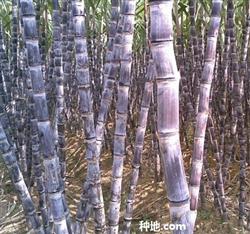 How should mosaic virus disease in black-skinned chewing cane be controlled? Please give guidance.
Mosaic virus disease in black-skinned chewing cane occurs early, strikes fiercely and causes severe damage. Many black-skinned chewing cane seedlings show yellowing with alternating green and yellow leaves, new roots shrink and gradually die, no new leaves grow, and development is slow. If control is not carried out in time, it will spread rapidly, aggravate the damage, make the stem nodes slender, cause the cane skin to become mottled, and eventually form "mottled-skin cane," losing its edible value and commercial value. Therefore, control of mosaic virus disease must be carried out promptly to protect black-skinned chewing cane seedlings.
The specific control methods are as follows: First, spray the leaves 2~3 times with a mixture of 1500-fold plant virus vaccine, 1500-fold natural brassin, and 4000-fold Jinji Suiguan (30% difenoconazole·propiconazole), spraying once every 10~15 days, evenly wetting all leaves, until water droplets begin to drip down. Second, drench the roots 2~3 times with a mixture of 300-fold zinc sulfate, 1500-fold 35% endosulfan, 300-fold magnesium sulfate, and 300-fold potassium nitrate, drenching once every 10~15 days, with 2~3 kg per hole each time. In this way, it is possible to inhibit and weaken the virus activity in the black-skinned chewing cane seedlings, kill the virus, eliminate the aphids and thrips that transmit mosaic virus disease, control the onset of disease in black-skinned chewing cane seedlings, and accelerate the recovery of diseased plants to normal growth, so that the yellowed leaves turn dark green, the stems are strong and the leaves are thick, the root system is well developed, growth is vigorous, the plants are robust, and they successfully enter the jointing and elongation stage.
Click to get more sugarcane cultivation techniques
Click to get more fruit cultivation techniques